
Pográny
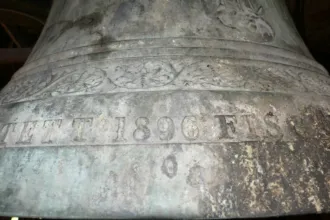
Millennium Bell
Other - other
The Roman Catholic parish church of All Saints in Pográny is one of the oldest in the area, having undergone several reconstructions. Its oldest bell is known from 1673, but during the First World War almost all the bells of the church were confiscated, but fortunately one of the...
Read More

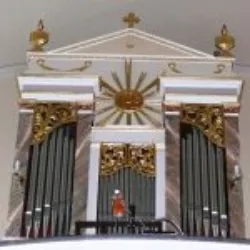
Károly Klöckner's church organ
Other - other
The oldest known organ in Pográny was a seven-stop organ. It was first mentioned in 1767, but it had an older origin. The church visitation record of that time also mentions the local organist, the 30-year-old Ferenc Török from Gúta, whose brother Miklós also often helped him. In...
Read More
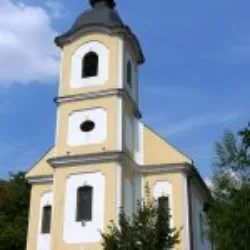
All Saints' Church of the Árpád era in Pogrányi
Other - other
The village's All Saints' Church was originally Romanesque (the year 1075 is incorrect, the church probably dates back to the 12th century). It was enlarged in the 14th century, mentioned again in 1340, and its lattice vault resting on semicircular guardian stones was completed i...
Read More
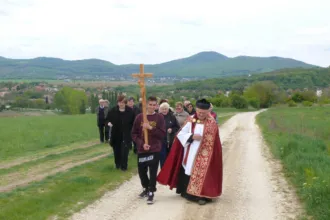
Pográny border crossing holidays
Other - other
In most places, the majority of church ceremonies take place in the church and other church buildings. There are fewer village festivals (farewell processions, resurrection processions, Lord's Day processions, etc.). These can be linked to the inner areas of settlements or church...
Read More
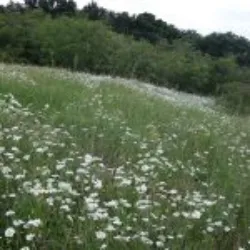
Mali slope steppe
Other - other
The Mál in Pográny is the foreland of the 356 m high Koloni-hegy. It is made of Jurassic and Triassic limestone, which is mined. Its surface is covered with karst phenomena, as well as collapsed dolines, deep chimneys, karst cracks, cave-like cavities and abandoned mining and lim...
Read More
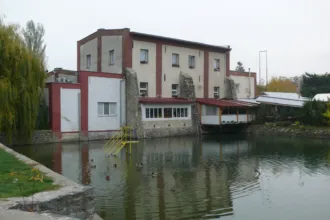
Pogrányi thermal spring
Other - other
In the middle of the village lies a lake, whose local name is Nagypatak (formerly also called Mocsolya). It is fed by several thermal springs and cold water springs. Old literature also calls it an ore water lake, and some of its springs also have folk names: Kis Harang, Nagy Har...
Read More
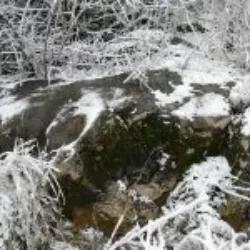
"God's Seat" Cult Site
Other - other
Zoboralja also has its own cultic places, to which the community consciousness and tradition associate certain spiritual values or emanations. The best known is the now-defunct Istenfábnyoma, blown up by the mine under Zsibrica in Zsére, which is already mentioned in the 1626 Nit...
Read More
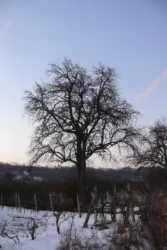
Traditional fruit trees
Other - other
One of the documentable and characteristic features of local production and food habits are the species and varieties of various fruit trees. Fruit trees in the vicinity of Nyitra are already mentioned in the 2nd Zobor Letter of 1113, and five pears and a rowan tree also appeared...
Read More
The historical village structure of Pográny
Other - other
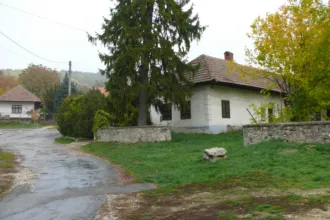
Not only in Zoboralján, but also elsewhere, it is rare to find a village whose inner parts have been owned by different landlords since the Middle Ages. Pográny is just like that. One of the reasons for this may have been that Pográny was more prosperous than the other villages a...
Read More
The civic culture of Pográny
Other - other
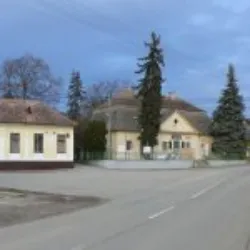
Some of the villages of Zoboralja are carriers of a common cultural layer, but the region cannot be considered homogeneous. The dialect, folk songs, folk costumes and customs seem to be common, but each village has its own distinctive features. These proved to be enough for the r...
Read More