

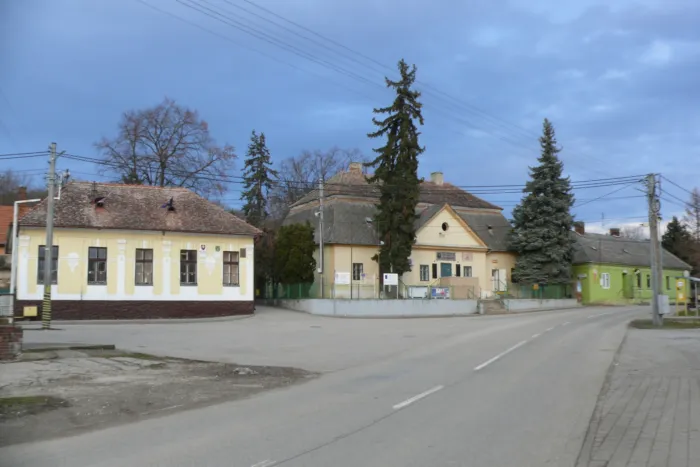
The civic culture of Pográny
Other - other
Some of the villages of Zoboralja are carriers of a common cultural layer, but the region cannot be considered homogeneous. The dialect, folk songs, folk costumes and customs seem to be common, but each village has its own distinctive features. These proved to be enough for the residents of the individual villages to easily distinguish each other from external features. Pográny, and to a lesser extent Gímes, were the villages where urbanization and urban culture took root the most. In Pográny, one of the main reasons for this was better provision (rich historical past and consciousness, notary district, presence of nobles and gentry, stronger church center with educated priests, relative proximity to Nitra, market town-like main square, old school, health center, etc.). The main manifestations of the bourgeoisization were the slightly more restrained national costume (in color, form), the more curial folk architecture, the more frequent absence of folk customs (the early cessation of the villézőzés, etc.), the relaxation of social relations, education (readiness) and, not least, the dialect (the colloquialization of the sounds a and á in the Palóc language, the decline of the archaic closed –re replacing the suffixes –ra and –re, foreign expressions in other villages, etc.). The more bourgeois culture of Pográny was already noticed by Ferenc Drnovszky, who in his work Pográny and its Region, published in 1837, mentions that the people here know our great writers and poets and quote from the works of the best by heart. The more bourgeois character of the inhabitants of Pográny can still be seen today.