
Repository
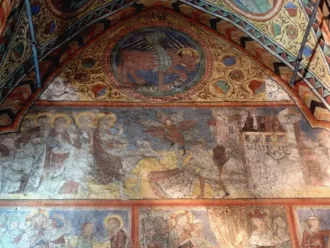
Assumption of Mary Parish Church in Podolini
Building, structure
The present-day city was founded by Saxon settlers after the Tatar invasion. By the end of the century, it already had city walls and city privileges. Podolin, which received the status of a free royal city in 1412 and had a significant craft industry, came under Polish rule as a...
Read More

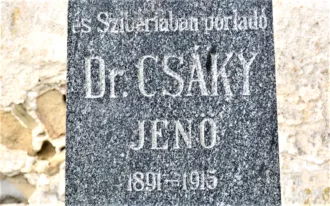
The actual grave of Dr. Károly Csáky and the symbolic grave of Dr. Jenő Csáky
Cemeteries, tombstones, grave sites
Dr. Károly Csáky, physician, local representative of the Hungarian Carpathian Association (MKE), Gnézda (1885), Podolin (1892-1914-). Member of the central committee of the MKE (1895, -1903-). He lost his son Jenő in the First World War.
Read More
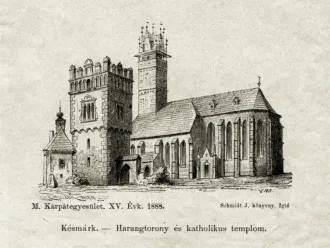
Renaissance bell tower of Késmárki
Building, structure
Opposite the Church of the Holy Cross is the Renaissance belfry built in 1591, which is declared the most beautiful monument of the Spiš region. Similar belfries can be found in the surrounding towns and villages, e.g. Poprad, Őrlak, etc. ; The Keszmárk tower has a quadratic base...
Read More
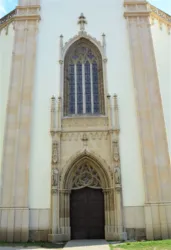
Church of St. James of Levoča
Building, structure
The St. James Parish Church is one of the most beautiful medieval churches in historical Hungary and the largest in the Spiš region. The three-nave church began to be built in the Romanesque style in 1245. It was built for nearly 100 years, and in the meantime it was gradually re...
Read More
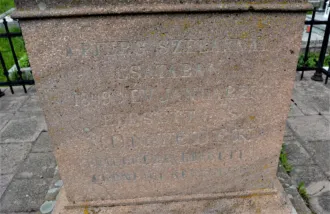
Tomb of the fallen soldiers in the Battle of Szélakna
Cemeteries, tombstones, grave sites
The Hungarian War of Independence that broke out in the autumn of 1848, after initial successes, found itself in a dangerous situation due to the developing Austrian attack. The so-called Upper Danube Corps, which was the main army of the Hungarian army and was stationed in the K...
Read More
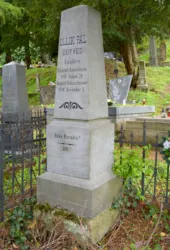
The grave of Pál Ollik, a Hungarian army captain from 1848
Cemeteries, tombstones, grave sites
It was Pál Ollik, a military captain who also visited Kufstein (he was imprisoned there with József Szlávy), who in 1859 raised the idea of donating to the military statue in Selmec.
Read More
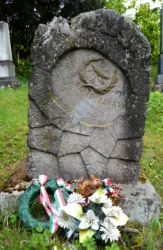
The grave of forestry students Dániel Barabás and Soltz
Cemeteries, tombstones, grave sites
The students were on a study hunt when one of them's gun went off and fatally wounded his companion. The young man committed suicide. ; One of the most significant events in the life of the academic youth took place at this grave in 1875. On November 1, All Saints' Day, the Hunga...
Read More
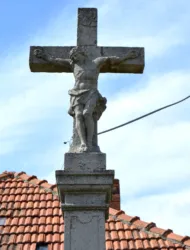
Brinza cross
Sacral small monument
The cross stands on the border of the former Németdiószeg and Magyardiószeg. ; Márton Brinza, whose wife was Erzsébet Csizmadia, was born around 1730. His name appears several times in contemporary civil registers, but there is no further information about his life (apart from th...
Read More

The symbolic grave of World War I hero Imre Szabó
Cemeteries, tombstones, grave sites
Imre Szabó sacrificed his life for his Hungarian homeland in World War I. His name is preserved on the family tomb in the Bolgodogfa cemetery.
Read More

Igloi Provincial House
Building, structure
The settlement, which originated in the Árpád period, is today one of the largest cities in the Spiš region. Along with several other Spiš towns, it was pledged to Poland by King Sigismund in the early 1400s. When Queen Maria Theresa annexed these areas to Hungary again, she desi...
Read More