
Repository

The grave of parish priest Kálmán Nádai
Cemeteries, tombstones, graves
Born on February 24, 1884 in Selmecbánya, died on October 15, 1956 in Izsa. ; Ordained priest on June 24, 1907 in Selmecbánya, from 1910 he was a chaplain in Pozsony-Virágvölgy, from 1915 he was a camp chaplain. He was the permanent priest of Izsa for thirty years. He came to Izs...
Read More


The tomb of Count Miklós Forgách and his wife
Cemeteries, tombstones, graves
The Forgách family of Counts of Gímes and Gács, originating from Nitra County and possessing estates in Upper Hungary, traced their lineage directly to the knight of Saint Stephen, the valiant Hont. They received their ancient nest, the castle of Ghymes, in 1226 (today Jelenec, S...
Read More
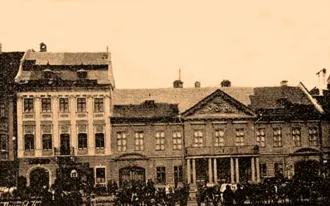
Csáky-Dessewffy Palace
Building, structure
The palace, located in the western wall of the Main Square, north of the St. Elizabeth Cathedral, which can be considered one of the masterpieces of Hungarian classicist architecture, was built between 1805-7 on an area formed by the unification of several medieval plots. The mai...
Read More

Rákóczi Museum of Upper Hungary
Building, structure
The last third of the 19th century was a period of the establishment of rural city and county museums in Hungary. The Upper Hungary Museum Association, founded in Košice in 1872, also fits into this category. Its initiators were the Klimovits brothers, who had a significant priva...
Read More
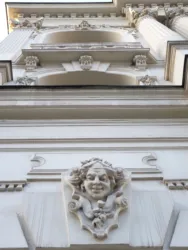
National Theatre
Building, structure
The first town hall of Košice stood on this site until 1756. The former theatre was built between 1786-89 based on the designs of Count Mihály Sztáray and Count Miklós Vécsey, János Tallher and Miklós Brocky. It could accommodate 500 people. At its first performance, Mozart's Esc...
Read More
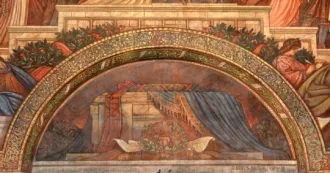
Rákóczi fresco (apotheosis of the life of Ferenc II Rákóczi)
Statue, monument, memorial plaque
The triptych depicting the life of Ferenc Rákóczi II was painted by Andor Dudics between 1914 and 1916, eight years after the prince and his companions in exile were laid to rest in the cathedral crypt. ; ; Article XX of Act 1906, which provided for the repatriation of the ashes ...
Read More
Statue of Sára Salkaházi in Košice
Statue, monument, memorial plaque
Sára Salkaházi was born in 1899 in Košice, where she became a teacher and later a journalist. Two years before the outbreak of World War II, she moved permanently to Budapest. After the Trianon decision, she was unable to continue teaching in her hometown due to her refusal to ta...
Read More
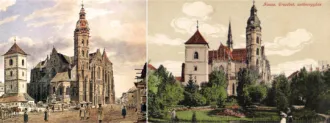
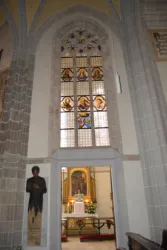
St. Elizabeth's Cathedral 1.
Building, structure
The Cathedral of Košice, dedicated to Saint Elizabeth of Árpád, is one of the most significant monuments of Gothic architecture. The first single-nave church was built in 1257, its level was below the level of the present church. It was demolished in the last decades of the 14th ...
Read More
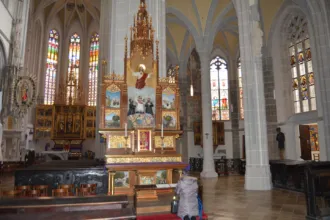
St. Elizabeth's Cathedral 2.
Building, structure
The Cathedral of Košice, dedicated to Saint Elizabeth of Árpád, is one of the most significant monuments of Gothic architecture. The first single-nave church was built in 1257, its level was below the level of the present church. It was demolished in the last decades of the 14th ...
Read More

Honvéd Monument in Iglo
Statue, monument, memorial plaque
Several battles of the Winter Campaign of 1849 took place in the historical Spiš region, in memory of which several monuments were erected by posterity. Of these, the Levoča and Igló national defense monuments were damaged and then destroyed (on March 16, 1919), and the Spišská S...
Read More