
National Theatre
Building, structure
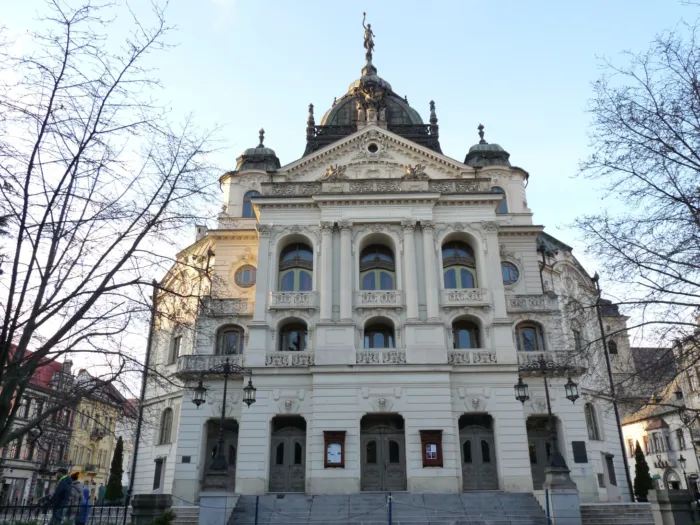
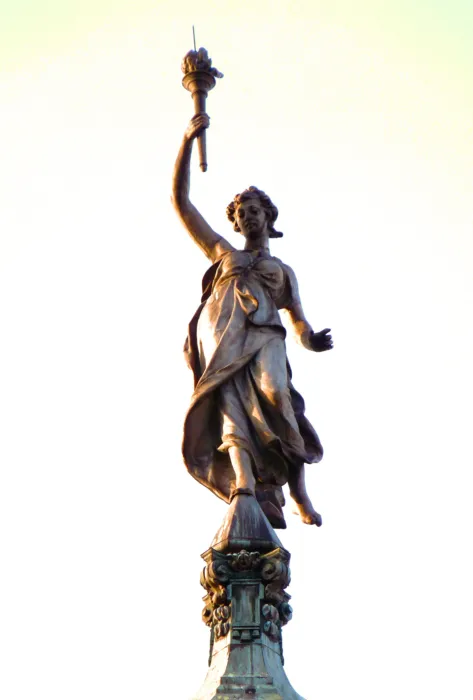
The first town hall of Košice stood on this site until 1756. The former theatre was built between 1786-89 based on the designs of Count Mihály Sztáray and Count Miklós Vécsey, János Tallher and Miklós Brocky. It could accommodate 500 people. At its first performance, Mozart's Escape from the Seraglio was performed. In its north wing, there was a café, billiards and a restaurant, and on the upper floor there was a bar, a smoking lounge and a tavern. In 1828, the Lord's Casino was founded here. The premiere of our Hungarian national drama, Ban József Katona, was held here on February 15, 1833. ; Petőfi also visited the city several times, after a fun-filled New Year's Eve, here he proposed to Kornélia Prielle (who was an actress in Košice) in a completely enlightened way, and with whom he wanted to marry that very night, but they could not find anyone who would have married them immediately. By the next day, however, they had both sobered up. ; It is a fact that at first only German plays were performed in the theater. The Miskolc troupe was the first to perform Hungarian plays on the Košice stage in 1816, with Déryne at the helm. In addition to them, Gábor Egressy and Béni, Szentpétery, Megyesy, Lujza Blaha, and the Latabár dynasty cultivated acting in Košice. In 1884, a fire broke out in the theater during a performance. In 1894, it was closed for safety reasons, and then demolished in 1897. ; From Ödön Faragó to Antal Páger, the former National Theatre of Košice was an important stopover in the lives of many Hungarian actors, from Ödön Faragó to Antal Páger. The imposing, eclectic-neo-baroque building that still stands today was designed by Adolf Láng and built by the renowned Košice architects Jakab brothers and Mihály Répászky between 1897 and 1899. The artistic decoration of the interior is the work of the Budapest sculptor Ede Mayer, and the ceiling is the work of the Viennese Peregrin von Gastgeb. ; On the roof of the theatre stands the statue of the goddess Aurora, the patron of the muses. ; Between 1914 and 1926, director Ödön Faragó tried to keep Hungarian theatre alive. From 1920, Slovak and Czech companies also performed in the city, and in 1924, permanent Slovak-language theatre in Košice began, displacing the Hungarian company from the main season. ; During the war years, the companies of Géza Földessy and Zoltán Kőrössy, among others, performed in Košice. Between 1945 and 1949, Hungarian theatre became impossible. From 1952, the Hungarian Regional Theatre of Komárom visited the city. ; After the Second World War, it took twenty years for the Hungarian theatre to be re-established in Košice, this ancient Hungarian city, but no longer within the walls of this building. ; The building, which operated without any renovation until the 1990s, deteriorated severely in its last decades and needed reconstruction. This was finally done between 1987 and 1994. At that time, in addition to the external and internal renovation, hidden warehouses were built under the surface of the square.