St. Elizabeth's Cathedral 1.
Building, structure
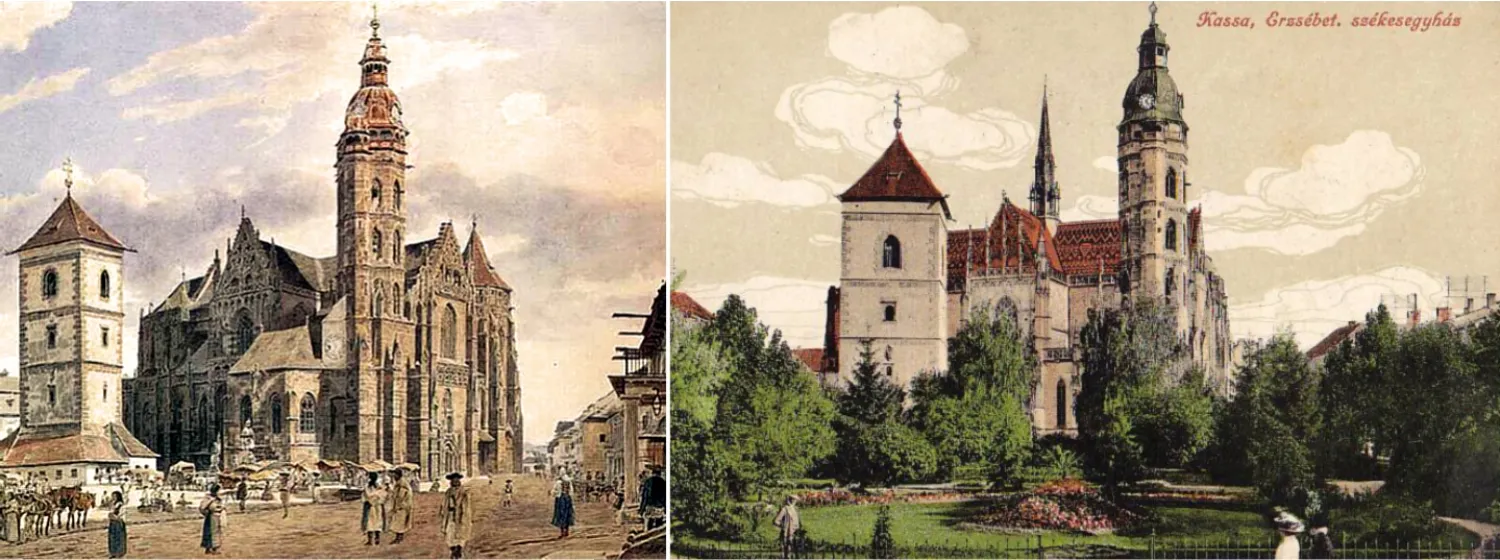
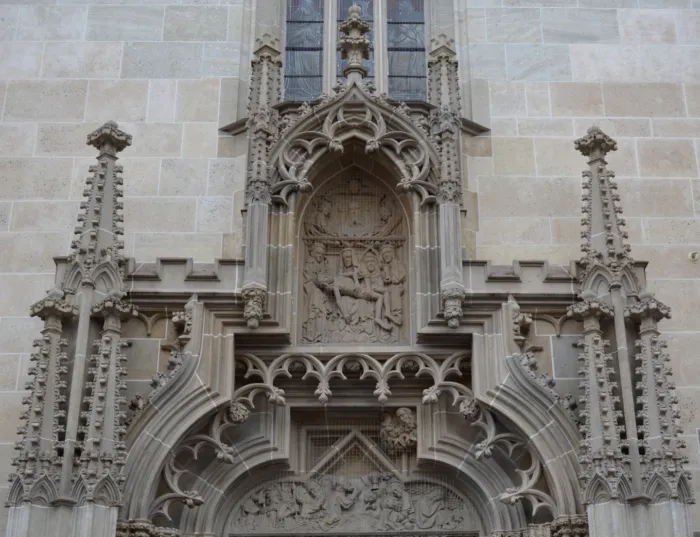
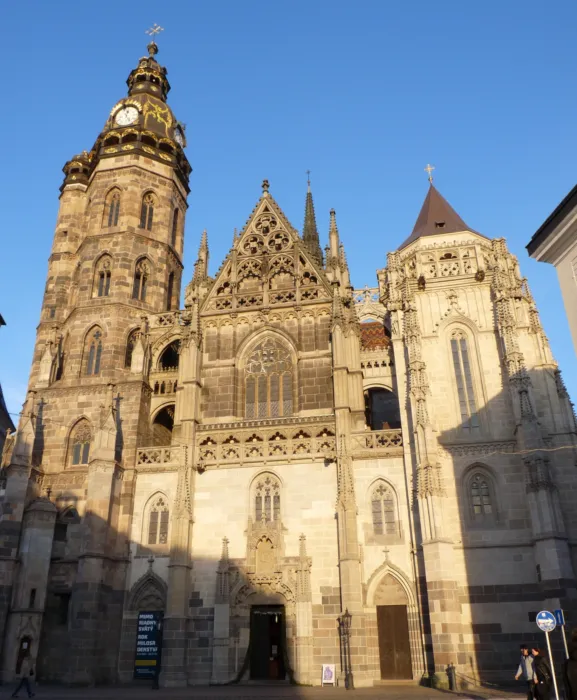
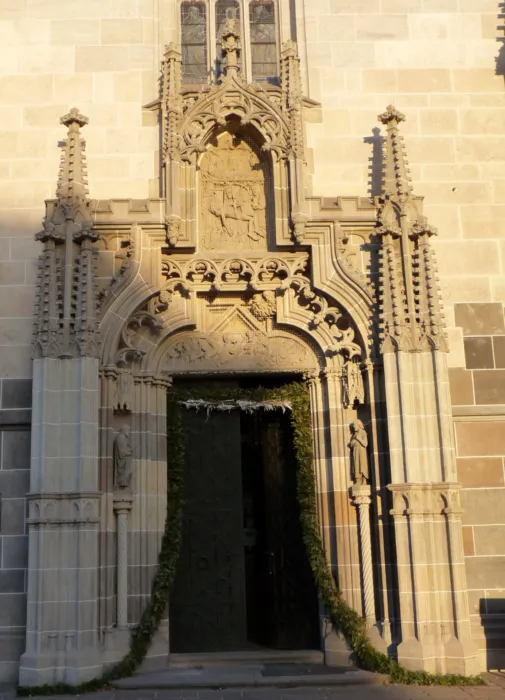
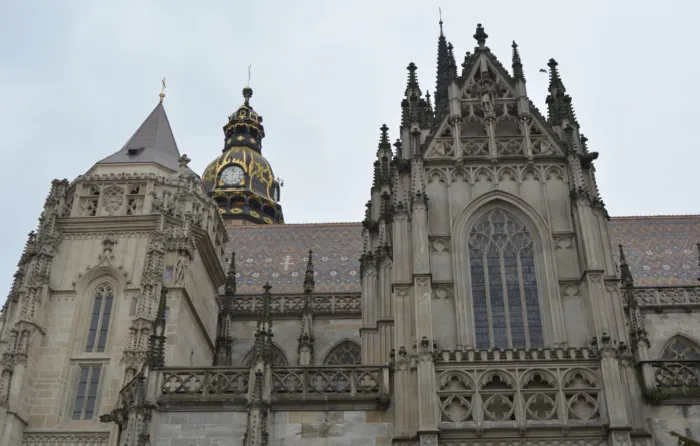
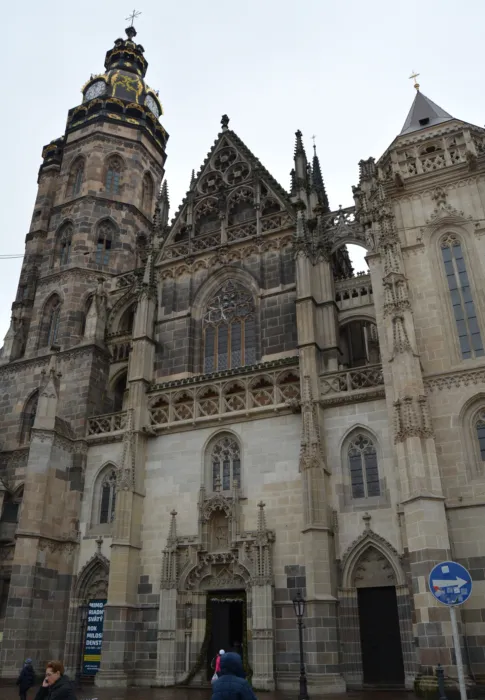
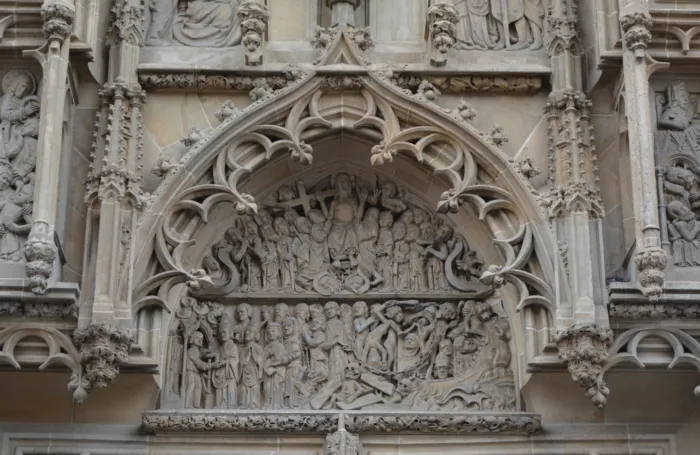
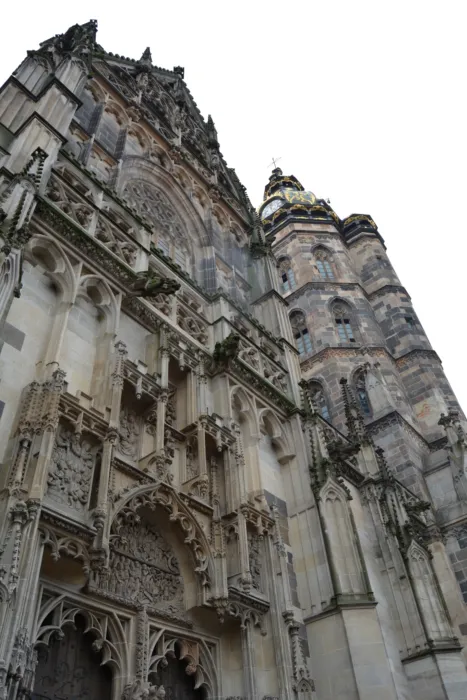
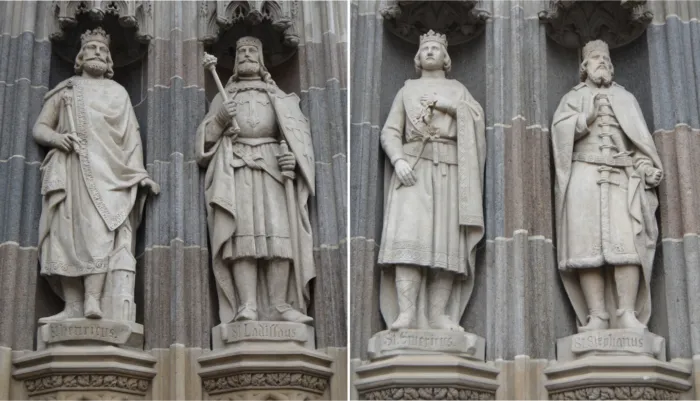
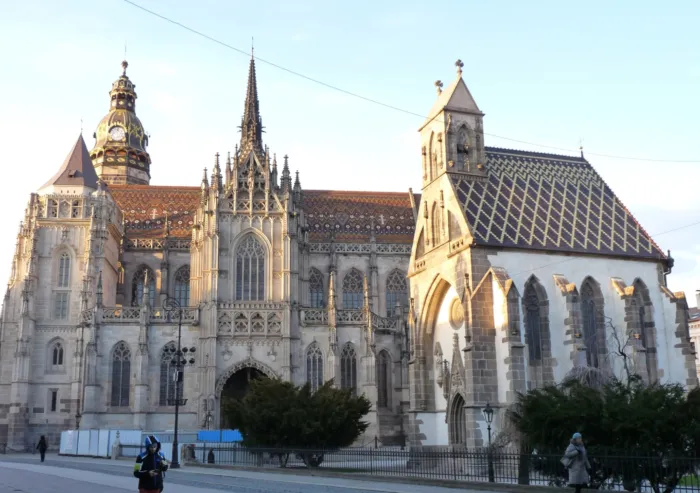
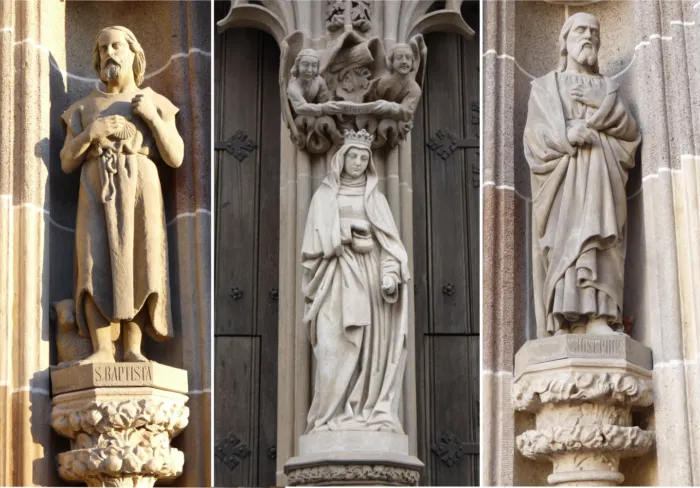
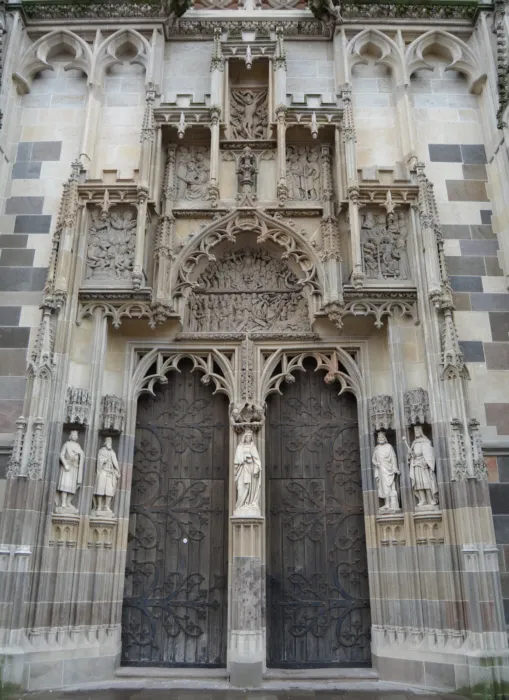
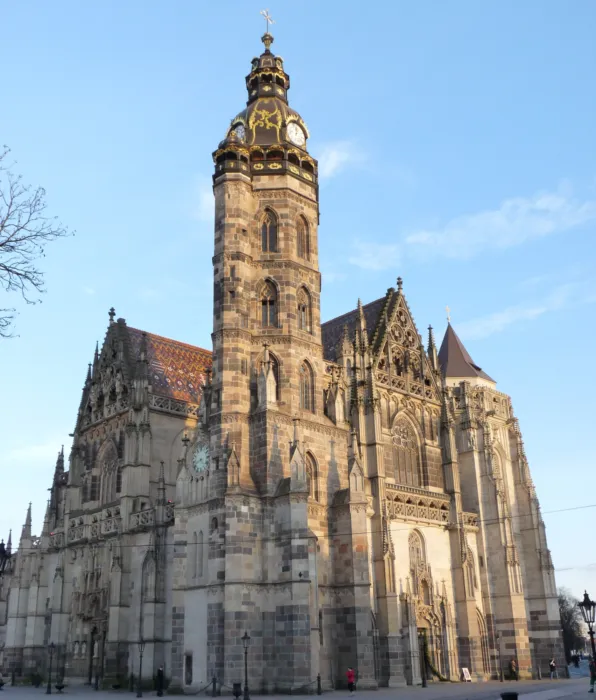
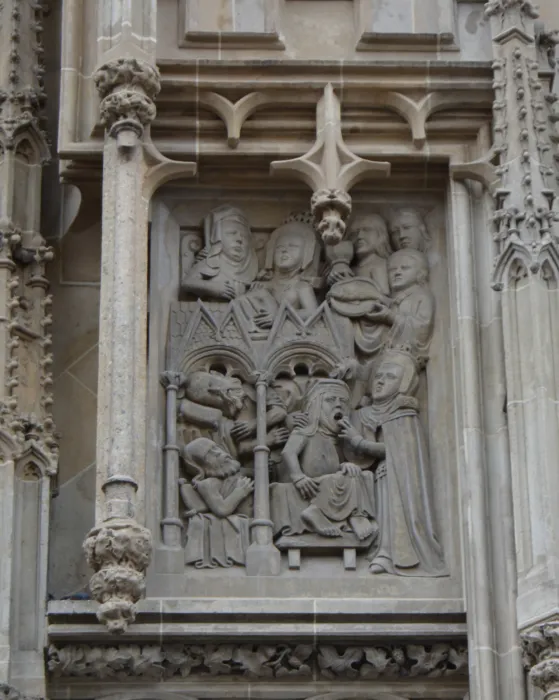
The Cathedral of Košice, dedicated to Saint Elizabeth of Árpád, is one of the most significant monuments of Gothic architecture. The first single-nave church was built in 1257, its level was below the level of the present church. It was demolished in the last decades of the 14th century after it was destroyed in a fire. According to the bull of indulgence issued in 1402 in favor of the construction, it was an important place of pilgrimage due to the Holy Blood relic kept inside. - The construction of the new church began at the end of the 14th century and was completed at the beginning of the 15th century. Due to fires and floods of the Hernád, it was repaired several times and its interior furnishings were replaced. It was renovated between 1857-63, and then between 1877-96, according to the plans of Imre Steindl, the "mistakes" of the old masters were "corrected" by demolishing the foundations in some places and changing the layout. Therefore, the research first had to reveal, based on old photographs and surveys, what remained of the medieval building at all. The first master builders may have arrived from the Parler circle in southern Germany. It is possible that stonemasons who also appeared in Spiš (Levčeské) reached Košice. In addition to the cross-shaped ground plan, the two-tower facade was an important task in the design and construction of the church. The masters included the two square-shaped towers in the mass of the building. The towers were supported by buttresses crowned with philae, and philae also create a transition at the base of the octagonal upper floors. The two side aisle portals are characterized by a stick-jointed lintel decorated with leafy chapters, a clause running into a donkey arch, and a tympanum decorated with a lobed blind stone lattice. The western, central entrance is also an essential element of the deep, niched, straight-arched, cantilevered gate, the tympanum of which fits between the cantilevered framing form and the straight eyebrow. On 2 sides of the gate are groups of philae, between them a platbanded closing wall with horizontal closure. More philae hang from this ledge, holding a vimperga with a donkey-back arch frame. On the tympanum of the western gate is Christ on the Mount of Olives and the half-figure of God the Father, the reliefs of the crowning part are the Pietà and the Veil of Veronica. On the 3 upper reliefs of the northern portal, the carving style of the Crucifixion, the facial types, and the folds of Mary's dress collapsing under the cross suggest a Czech stonemason (Tyn Church in Prague). The sequence of scenes of the western gate was probably designed with a Passion depiction referring to the Holy Blood relic. The northern gate created a connection between the depiction of the life of Saint Elizabeth and the Last Judgment by connecting the depiction of the second coming and the crucifixion with the series of scenes from Elizabeth's legend illustrating the acts of mercy. - A vestibule, originally open on three sides, was built in front of the southern transept facade, with a free ribbed star vault with hanging keystones on the ground floor and the Matthias oratory, also with a star vault, on the upper floor. A double-flight, openwork spiral staircase, the so-called royal staircase, leads to the oratory. The double gate of the southern transept facade is two cantilevered doorways lined with ribbed stone lattices, which are combined with a peaked, openwork gable architecture and floating ribbed gables above. The essential elements of the composition are the philodendrons floating on the hanging consoles, the consoles stylized as bunches of leaves, which also appear on the western and northern portals. When the interior of the church was designed, the arcades of the transepts and the aisles were given a wide-open, semicircular or segmental arch shape. The simple, capital-less rod articulation of the pillars bent into the arcades, rising to the start of the vault. The continuous plane of the walls of the main nave was thus broken only by a modest cornice. The Prague masters left the construction site in Košice immediately before the vaults were completed, probably in the 1420s. The window frames of the transept and the western nave section featured complex shapes made of rigid, curved triangles (a characteristic motif of the Viennese construction workshop), the wide, almost square sections defined by the internal support system were covered with high, dome-like star vaults emphasizing the central character. The interior of the church preserves the memory of several eras. The baptismal font dates back to the 13th century. The high altar is a double-winged altar built of 48 panels, and in its central cabinet are statues of the Blessed Virgin Mary, the biblical figure and Saint Elizabeth of Árpád. The 8 x 6 panel of the high altar, made between 1474-1485, depicts the life of the Blessed Virgin Mary, the legend of Saint Elizabeth of Árpád, and the Passion with the Resurrection. On the fully enclosed (the altarpiece is not visible) main altar, the bottom row depicts: Mary's entry into the church, her betrothal, the Annunciation, her visit to Elizabeth; the middle row depicts: the birth of Jesus, his circumcision, the Three Kings, the presentation in the church; the top row depicts: the murder of the children in Bethlehem, the flight into Egypt, the twelve-year-old Jesus, the death of Mary. If the two wings of the main altar are open (the altar chest is not visible), then in 3 rows of 24 images: entry into Jerusalem, cleansing of the temple, last supper, washing of feet, arrival in the Garden of Gethsemane, sweating blood, kiss of Judas, arrest of Jesus, dragged to Caiaphas, beaten on the way, before Caiaphas, before Pilate, condemned by Pilate, scourging, crowning with thorns, mocking, carrying the cross, crucifixion, death on the cross, taking down from the cross, descent into hell, burial, resurrection. When the 2nd pair of wings is also open (the altar cabinet is visible), 12 pictures in 3 rows depict events in the life of Saint Elizabeth of Árpád: her birth, engagement, prayer, putting the sick man (Christ) to bed, a feast at Wartburg, her farewell to her husband, being expelled from the castle, being pushed into the mud by the beggar woman, bathing and caring for a sick man, her death, elevation (lifting her body from the grave on the occasion of her canonization). The high altar cabinet is divided into 3 niches by 2 slender pillars, which are crowned by a baldachin. In the center are 3 main statues: in the center is the Blessed Virgin Mary with the baby Jesus, on both sides are the 2 Elizabeths: on the left, the wife of Zechariah, the mother of Saint John the Baptist, on the right, Saint Elizabeth of Árpád. Their difference in rank is indicated by their different heights: Mary rises half a head above the two Elizabeths. The statues were made around 1474-85, their master was well acquainted with the European plastic form treasure of the time, and applied its elements and motifs with cultivated inventiveness to the main figures of the altar. The facade decoration of the predella and the pedestal was carved by a different master from the main statues between 1474-77. The 2 outer fields of the predella are covered with richly carved, late Gothic foliage ornamentation. In front of this decoration, an angel in a long robe floats, in the central space surrounded by a wreath of grape leaves, there is Christ emerging from his tomb (imago pietatis), on either side are the three-quarter figures of Mary and John the Evangelist. - On the lower field (postamen) of the altarpiece are the half-figures of the wise and foolish virgins emerging from flower cups. - During the renovation in 1896, the main altar was given a neo-Gothic pediment: on both sides of the crucifix are the statues of the Sorrowful Mother and St. John the Evangelist. One of the pediment figures of the main altar fell in 1817, so its entire pediment was removed. The carvings were partly placed in the sacristy chamber (or in one of the side chapels), partly in private hands. 1846: They were cleaned during the Košice meeting of doctors and naturalists. 1896: The main altar was dismantled and put back in place after the renovation of the cathedral. New statues adorning the sides of the cabinet were made, and the order of the wing paintings was changed. The statues and paintings survived the Gothic restoration without damage. - The main altar was dismantled due to the bombings of World War II, and its statues and paintings were saved. The statues were barely damaged, but his paintings suffered serious, slow and difficult damage. His sculptures were restored in 2 parts after the war, and then re-erected in their original place after 1957. ; Side altars: The Death of Mary altar was made between 1470-80, the Visitation of Mary altar in 1516 (Visitation altar in Košice), at the end of the 19th century the St. Stephen and St. Joseph altar above the Rákóczi crypt, at the beginning of the 20th century the altar of the Martyrs of Košice (with their relics). ; Murals: The Resurrection painting in the southern side sanctuary was made between 1420-30, the most outstanding monument of Gothic wall painting: a painting with a purple and ochre base color, rather cold color treatment (according to Radocsay, a parallel to the Cape Mary of Gurk). Its creator is unknown. Opposite this picture is a depiction of the Apostles' Creed, made around 1430-40: the minuscule text of the creed on the apostles' ribbons, and Christ in a mandorla above them. Below the mandorla are Mary and Saint John the Baptist. On the arch above the northern entrance is a late 19th-century mural depicting the life of Ferenc Rákóczi. The sacristy stands on the edge of the sanctuary in the main nave, 15th century, carved in the middle, 16 m high. Next to it, in the middle, hangs from the ceiling a statue of the Lady Clothed with a rayed wreath, with the symbols of the Litany of Loreto in its mandorla. On the southern, stone railing of the Matthias Oratory, stands the Košice Calvary, a sculptural composition of Christ, Mary and John from the first half of the 15th century. - On the western side of the church, in the organ choir, there are 15th-century statues of Hungarian saints and kings: St. Stephen, Ladislaus, Imre and St. Martin. The statues of Charles Robert, Matthias, Sigismund and Louis the Great are from the 1890s. As part of a national ceremony, the ashes of Prince Ferenc Rákóczi II, his relatives (his mother, Ilona Zrínyi and son József) and his companions, who were brought home from Rodostó in 1906, were laid to rest in the crypt under the St. Stephen chapel.