
Nemesradnót, Radnót

Lajos Pósa's national education service and the children's magazine "My Newspaper"
Hungarian Heritage Award
Lajos Pósa was born on April 9, 1850 in Radnót, Gömör County. His father Antal Pósa was a farmer, his mother Mária Kovács. His younger brother Károly died when he was still a child. He started school in Nemesradnót. As an excellent student, he continued his studies at the United ...
Read More

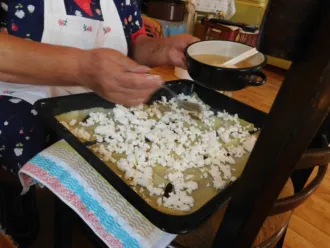
Calvinist cottage cheese heaven
Other - other
The settlements of Balogvölgy belong to the Gömör villages where people once lived from agriculture. In addition to crop production, animal husbandry, especially cattle breeding, was very important. For this reason, many Hungarian dishes were based on dairy products and cottage c...
Read More
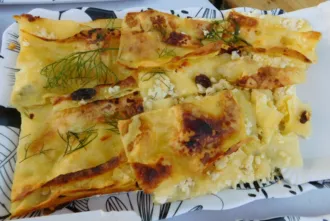
Calvinist heaven of Nemesradnót
Other - other
Calvinist heaven is a true gourmet dessert. In Nemesradnót, Aunt Éva Pósa makes it as follows: ; • First, she kneads soft dough from half a kg of flour, 2-3 eggs, salt, and a little water. She divides the dough into several parts. Let it rest for a while. ; • She rolls out the do...
Read More
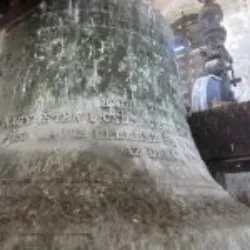
Bell from 1922 in Nemesradnót (Balogvölgy)
Other - other
On October 18, 1921, pastor Lajos Pósa issued a collection sheet for a new bell. The money was collected, and a 300 kg ore bell was ordered from the bell foundry of Egry Ferencz in Kisgejőc. The bell was consecrated on November 19, 1922, and the sermon was held by Lajos Pósa and ...
Read More
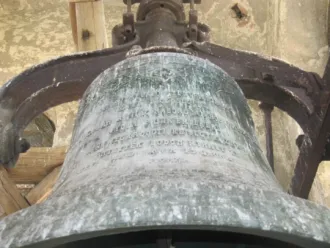
Bell from 1933 in Nemesradnót, Gyula bell (Balogvölgy)
Other - other
The Gyula Bell of Nemesradnót was consecrated on July 9, 1933. The 614 kg bell was made by the bell caster Béla Buchner from Košice. The consecration prayer was said by the deacon Pál Ablonczy from Hanva. Inscription: On the front side, "Gyula" and the name of the bell caster, on...
Read More
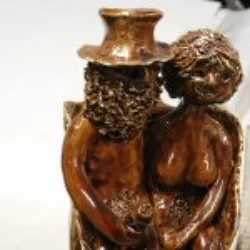
Colored-glazed human-headed urn vessel from Nemesradnót (Balogvölgy)
Other - other
According to the Hungarian Ethnographic Lexicon, the héréss is one of the final acts of the wedding: that is, the bride's wedding party's visit to the groom's house. This took place on the second day of the wedding, which lasted several days, as its purpose was to see the bride w...
Read More
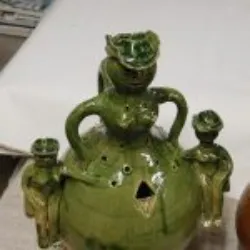
Green-glazed human-headed urn vessel from Nemesradnót (Balogvölgy)
Cultural heritage
According to the Hungarian Ethnographic Lexicon, the héréss is one of the final acts of the wedding: that is, the bride's wedding party's visit to the groom's house. This took place on the second day of the wedding, which lasted several days, as its purpose was to see the bride w...
Read More
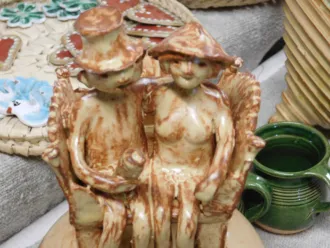
Yellowish-white human-headed urn vessel from Nemesradnót (Balogvölgy)
Other - other
According to the Hungarian Ethnographic Lexicon, the héréss is one of the final acts of the wedding: that is, the bride's wedding party's visit to the groom's house. This took place on the second day of the wedding, which lasted several days, as its purpose was to see the bride w...
Read More
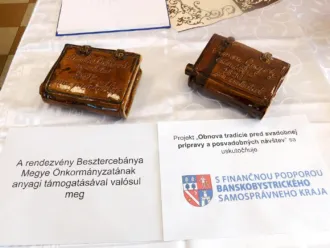
Book-shaped pottery from Nemesradnót (Balogvölgy)
Other - other
The earthenware book bottle served as a herres vessel. The herres vessel is a lead-glazed earthenware, book-shaped with two clasps, dark brown glaze. The clasps have two stamped buttons. Its dated inscription is scratched in. It was made by potter Gergely Simon in 1890. ; Accordi...
Read More
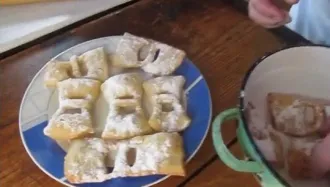
Rattle donuts from Nemesradnót (Balogvölgy)
Other - other
The delicacy known as herőce in the Balog Valley is not only associated with carnival. ; The late Dénesné Pósa Éva Fodor introduced us to the secrets of the csörgőfánk back in 2011. She also gave us a lot of useful advice while making and baking the dough. ; Ingredients: 0.5 lite...
Read More