
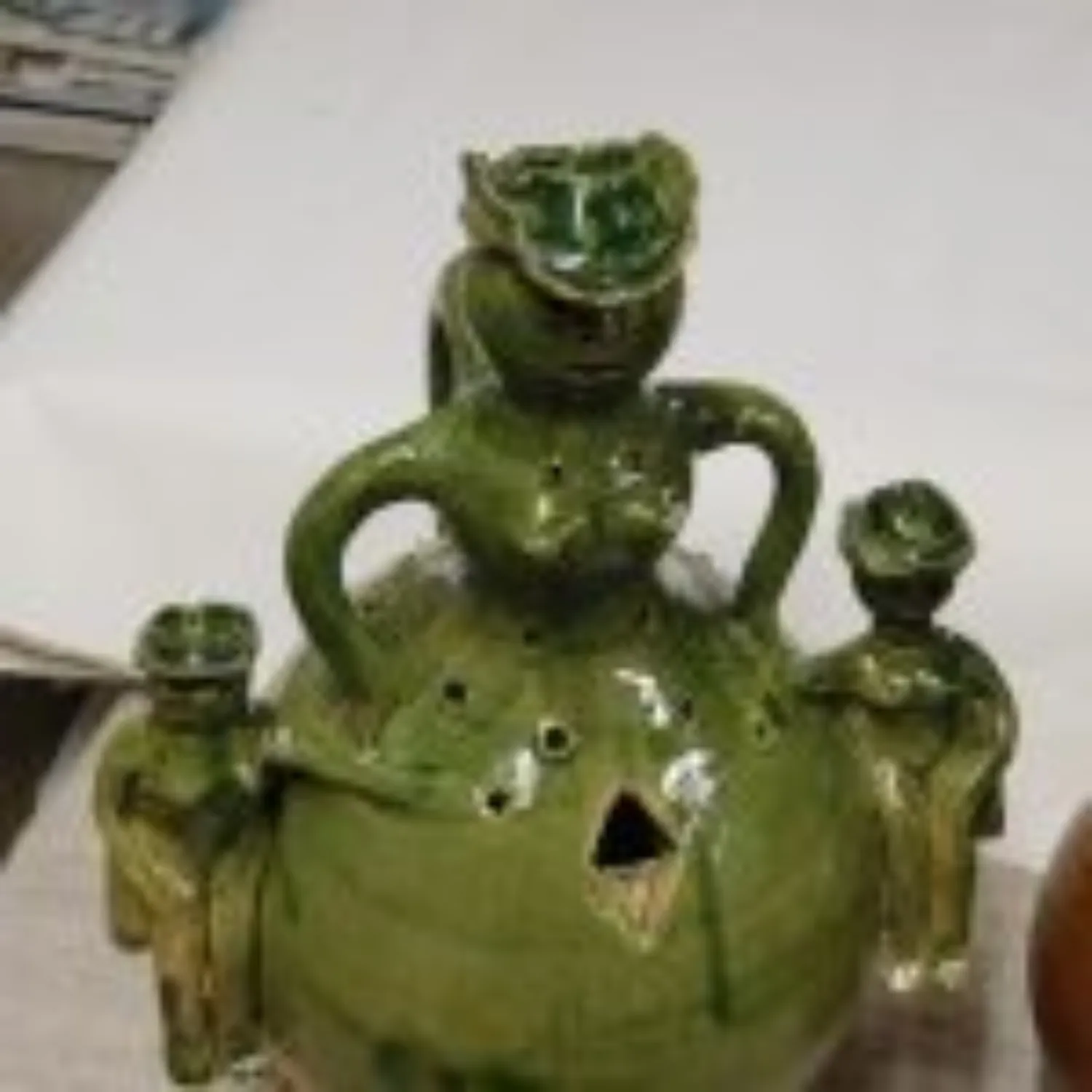
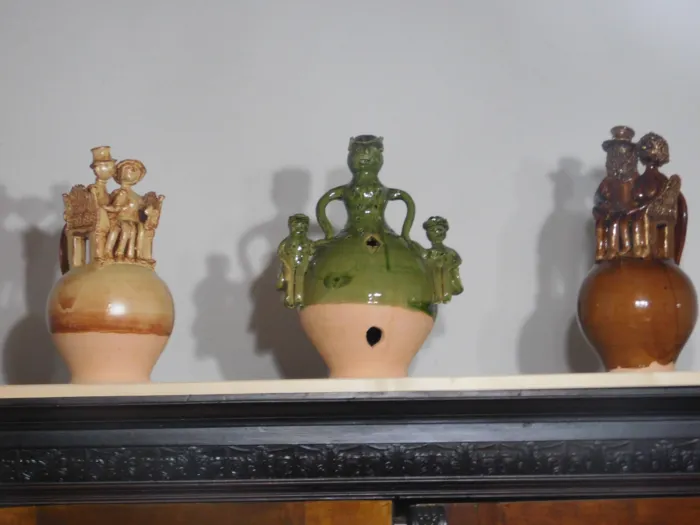
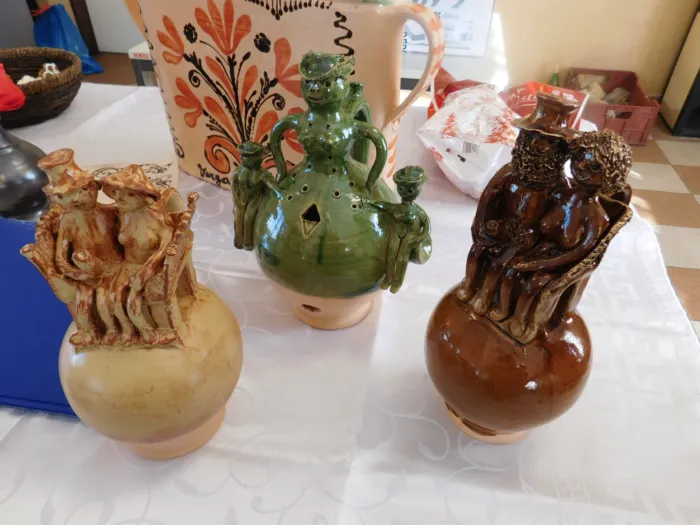
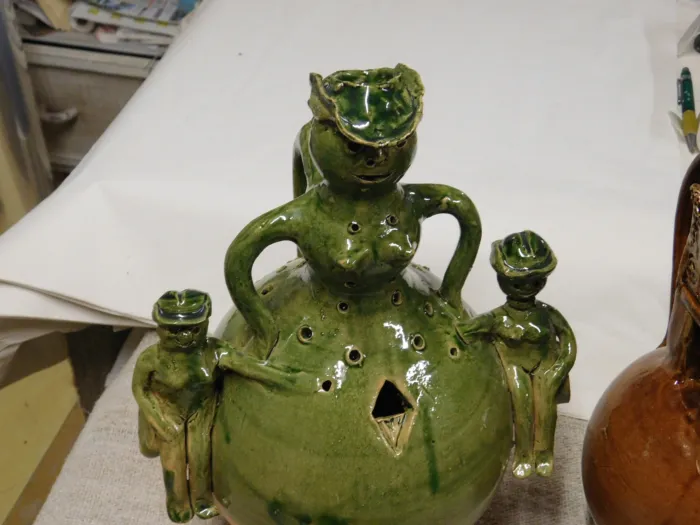
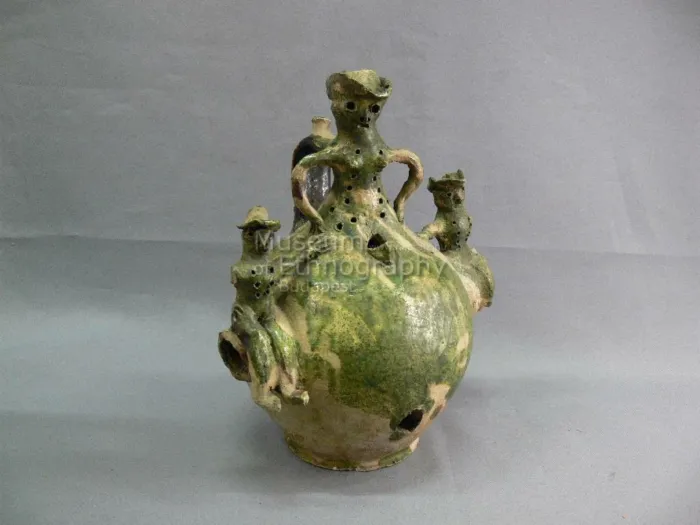
Green-glazed human-headed urn vessel from Nemesradnót (Balogvölgy)
Cultural heritage
According to the Hungarian Ethnographic Lexicon, the héréss is one of the final acts of the wedding: that is, the bride's wedding party's visit to the groom's house. This took place on the second day of the wedding, which lasted several days, as its purpose was to see the bride who had been taken away from the house and had become a bride. ; The joking customs often took place in a mischievous mood during and after the entire wedding. This is also copied by the héréss vessels, which depict the woman and the man naked. The Ethnographic Museum in Budapest keeps three such jars, which were brought there from Nemesradnót in 1931. ; They were presumably made in Rimaszombat or Fazekaszsaluzsány, collected from a certain Jenő Endler. ; The human-headed earthenware jug is made of white clay: a human-shaped jug with a narrow bottom, the neck is the upper body of a naked but hatted female figure, who places both hands on her hips. Her genitals are a rhombus-shaped opening on the shoulder of the jug. On either side are two naked female figures, also wearing hats, leaning on the shoulder of the jug with their hands. An ear on the back, a nipple on this one. The whole thing is dripping with spotty green glaze. ; The Lidike Pihenőház rethought the custom and, based on photographs, had the 2018 versions of the hermaphrodite vessels made by ceramic artist Danka Bakšová in Fazekassaluzsány