
Ipolyszécsényke, Szécsényke
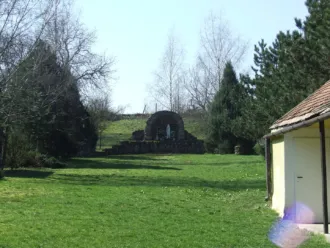
Lourdes Grotto
Sacral small monument
Read More

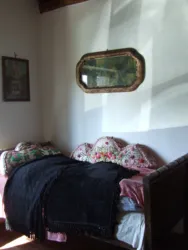
Village Museum
Country house, craft house
Read More
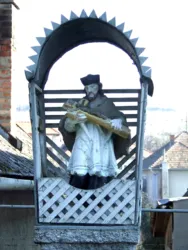
Statue of Saint John of Nepomuk
Sacral small monument
An old parish charter states that in her will dated 12 August 1797, Julianna Lipthay also left 50 forints for the maintenance of the statue of St. John of Nepomuk in Szécsénke. The statue was erected next to the main road, near the stream, opposite the castle, where there were no...
Read More
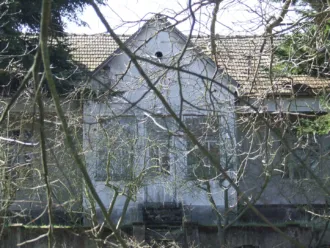
Parish
Building, structure
The parish of the former manorial center existed very early in the 14th century. The current parish building was built on older foundations in the first half of the 19th century, in the classicist style. In front of the two-winged, ground-floor building, there is an open columned...
Read More
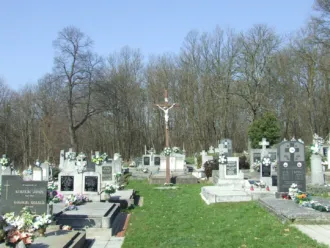
Cemetery wooden cross
Sacral small monument
The older central cross of the cemetery was founded in 1892, according to documents "from the proceeds from the sale of the cemetery tree". This is also a brown wooden cross with a straight stem. On its worn cast iron body, the head of Christ with the crown of thorns is turned sl...
Read More
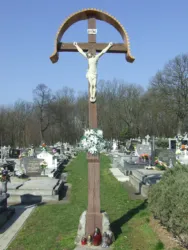
Central cemetery cross
Sacral small monument
The cross was erected for the glory of God by Imre Torma and his wife in 1906.
Read More
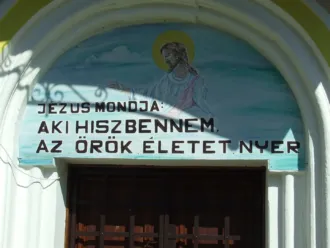
Roman Catholic Church dedicated to Saints Cosmas and Damian
Building, structure
The church of Szécsényke was destroyed during the Turkish period and rebuilt in 1754 by the Koháry family. It was renovated in 1773 and consecrated by Pál Esterházy in 1778. According to tradition, the church was intended to be built in another part of the settlement in the Middl...
Read More
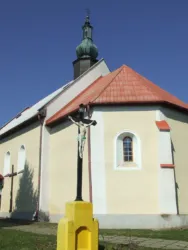
Churchyard cross
Sacral small monument
Read More
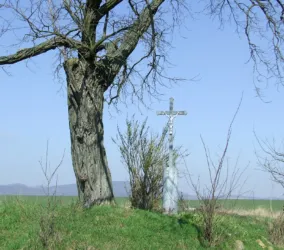
Gypsy Archaic Cross
Sacral small monument
A gray stone cross with a curved stem, on which a silver body of Christ can be seen. Its base is cylindrical and made of concrete.
Read More
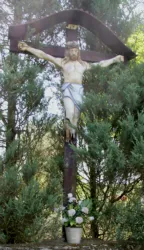
The cross next to the grotto in Lourdes
Sacral small monument
The upper part of the wooden cross has an arched cross, the body of Christ is yellowish, with a light blue loincloth. His head is bowed, he wears a crown of thorns, and above it is the inscription INRI. The legs of the statue are broken at the knees.
Read More