
Repository
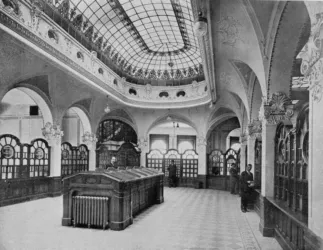
Postal Palace
Building, structure
Built in 1903 on the northern edge of Bratislava's historic city centre, it was designed by architect Gyula Pártos and built in Art Nouveau style as the headquarters of the Post and Telegraph Directorate on the site of the old post office building. The building, adapting to the s...
Read More

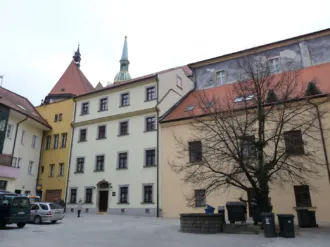
Academia Istropolitana
Building, structure
The bull of Pope Paul II, dated May 19, 1465, in which he authorized King Matthias Hunyadi (r. 1458-1490) to found a university in Hungary. ; Earlier, King Louis the Great (r. 1342-1382) established higher education institutions in Pécs in 1367 and Sigismund of Luxembourg (r. 138...
Read More
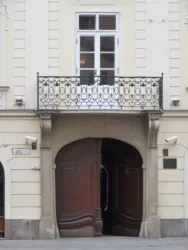
Erdődy Palace
Building, structure
Built on the western border of the Kingdom of Hungary, Bratislava, with a long history, was inhabited in the Middle Ages by mostly German and to a lesser extent Hungarian citizens. The previously not particularly prominent city gained national importance when the Turks occupied t...
Read More
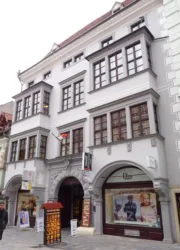
Segner Mansion
Building, structure
The Segner mansion was built in 1648 by the wealthy merchant Andreas Segner. It was built in the Northern Renaissance style and its facade is richly decorated. János András Segner (Bratislava, October 9, 1704 – Halle, October 5, 1777), who was born in the mansion, was a Hungarian...
Read More
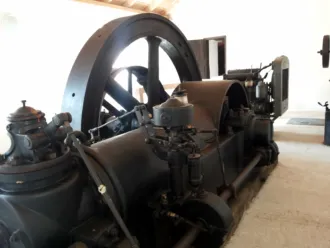
Buzita Mill
Building, structure
The mill is a notable building in Buzita. It was originally a granary built in 1811 by the Szentimrey family from Krasznikvajda. It was bought by Károly Máthé in 1920 and converted into a steam mill in 1922, the engine of which was first powered by wood and then by coal. The mill...
Read More
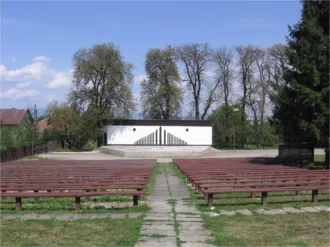
The noble mansion of Viceroy Pál Szent-Imrey
Building, structure
The most important monument of Buzita was the castle, the foundations of which probably date back to the Middle Ages, and it was certainly already standing in the 16th century. The first direct mention of the building dates back to 1599. In the mid-18th century, the manor house w...
Read More
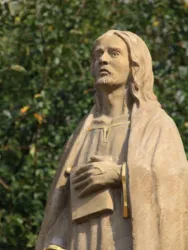
Calvary sculpture group
Sacral small monument
The group of statues was erected in 1739 by the Szent-Imrey family of Krasznikvajda out of gratitude that no one from the family fell victim to the plague of 1738. The inscription on the pedestal also refers to this. During the nearly 300 years, the statues have always remained i...
Read More

Hungarian millennium memorial plaque
Statue, monument, memorial plaque
The memorial plaque in the church was erected in 2000 by the Reformed parish of Geller-Bogyai to commemorate the Hungarian millennium.
Read More
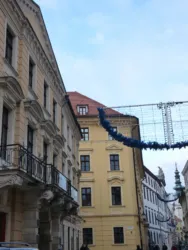
Zichy Palace
Building, structure
The Zichy Palace stands out with its elegant, strictly classicist facade on the corner of Ventúrska and Pázmány (Prepoštská) streets. ; The palace, built on the street front, in a closed row of buildings, with an irregular rectangular floor plan, three floors, and an inner courty...
Read More
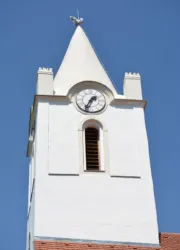
Somorja Reformed Church
Building, structure
Among the listed buildings in Somorja, the most valuable is the building of the Reformed Church, which is one of the oldest and most beautiful Gothic churches in Csallóköz. ; The church was originally built in the third quarter of the 13th century in the late Romanesque style. Th...
Read More