
Repository
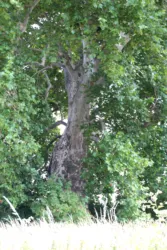
Cedar tree in Jokán
Other - other
In the Rákóczi War of Independence of 1703-1711, the village sided with the prince. The large number of Reformed congregations played a role in this. Miklós Bercsényi stayed in the village on October 24, 1705. The memory of the Kurucs is preserved by the “Kuruc drinker”. Accordin...
Read More

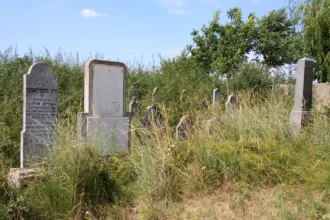
Jókai Jewish Cemetery
Cemeteries, tombstones, graves
The cemetery of the Jews of Jóka and its surroundings. Today it is only a herald of the former community...
Read More
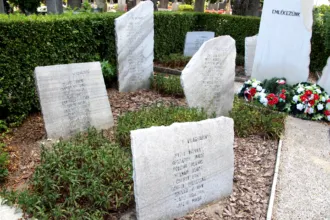
World War I and II and Holocaust Memorial
Statue, monument, memorial plaque
The war memorial dedicated in 1994 in the Nagyjóka cemetery commemorates the more than 200 soldiers who died in World War I and World War II and the approximately 250 Jewish residents who were deported and murdered.
Read More
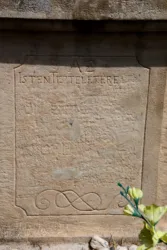
Cemetery cross
Sacral small monument
Read More
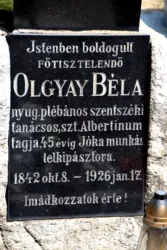
The grave of parish priest Béla Olgyay
Cemeteries, tombstones, graves
The grave of Reverend Béla Olgyay, retired parish priest, councilor of the Holy See, and pastor of the worker Jóka.
Read More
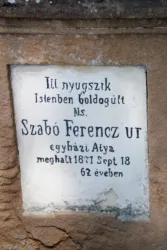
The grave of Father Ferenc Szabó
Cemeteries, tombstones, graves
Read More
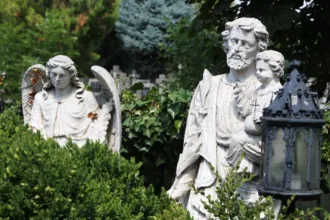
Lamos family cemetery
Cemeteries, tombstones, graves
The tomb of Gáspár Lamos, a jurist, and the Lamos family.
Read More
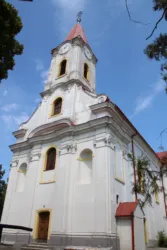
Roman Catholic church dedicated to Saint John the Baptist
Building, structure
The former church, today's sacristy, was built in 1250 from Lombard brick in Romanesque style in honor of Saint John the Baptist. It consisted of a semicircular sanctuary with a vaulted ceiling, extended linearly in the west, and a rectangular nave, which was originally covered b...
Read More
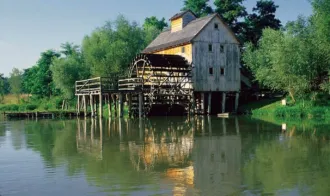
The Németh mill
Building, structure
The Németh mill was built as a ship mill in 1884, converted into a pile-powered water mill in 1906, and then in 1916, as part of its modernization, an additional superstructure was installed. The entire production technology has been preserved in the building, which was mainly re...
Read More
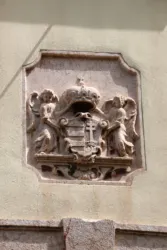
Holy Trinity Catholic Church
Building, structure
Southwest of the railway station, archaeological excavations on Klastromhegy confirmed the existence of an Árpád-era church and monastery from the 11th-12th centuries. A cemetery was also excavated. No written records have survived about the monastery and the church, and the proc...
Read More