
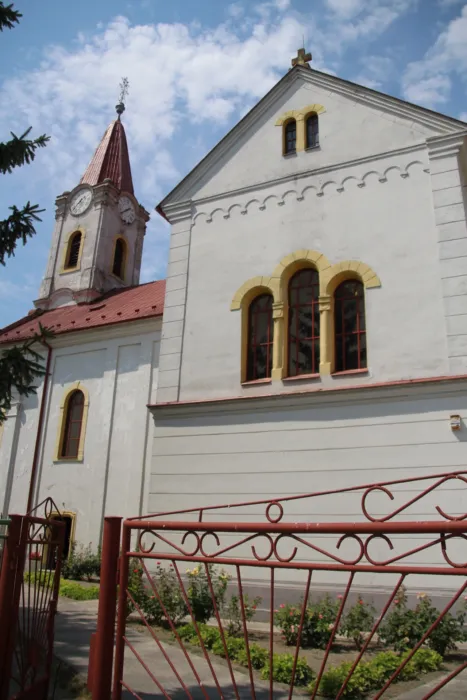
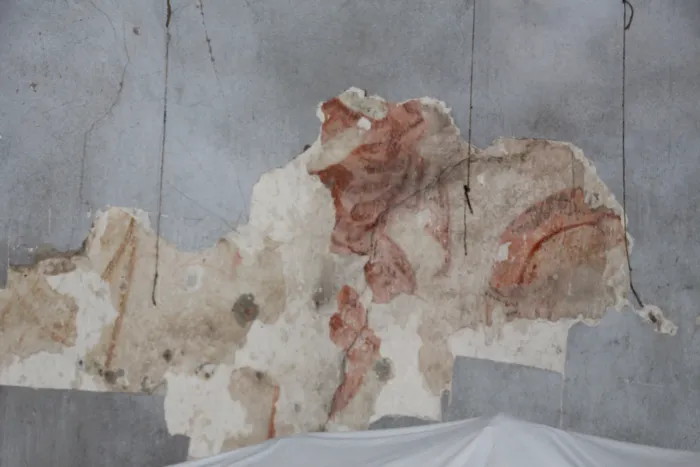
Roman Catholic church dedicated to Saint John the Baptist
Building, structure
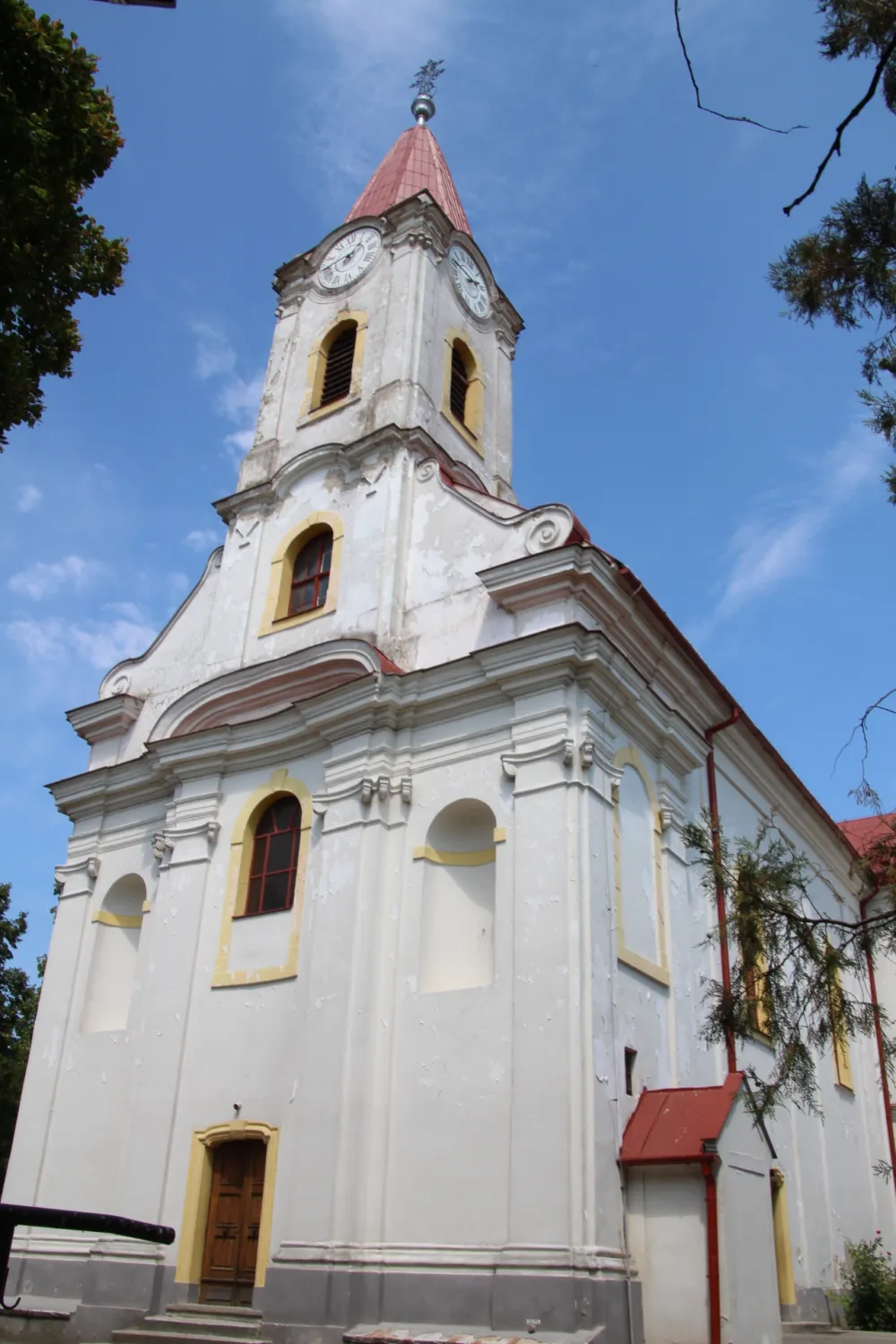
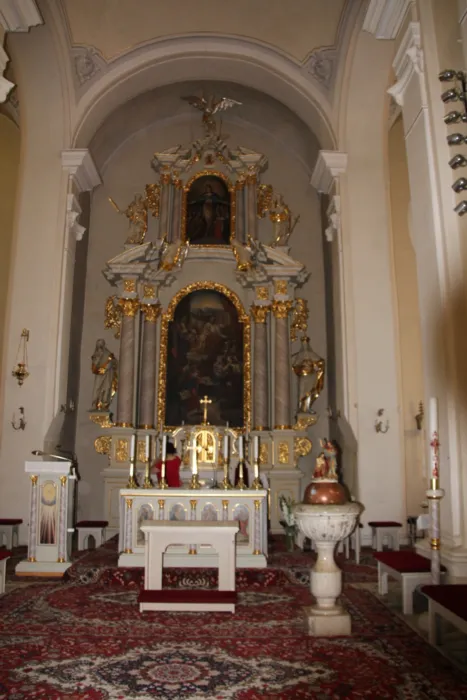
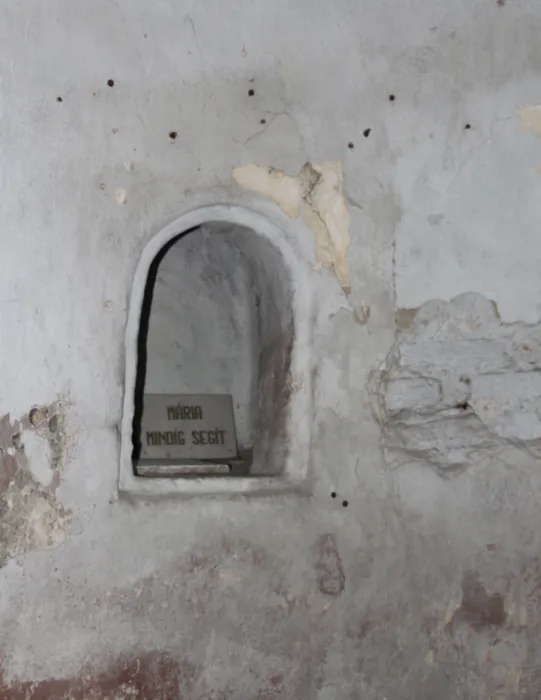
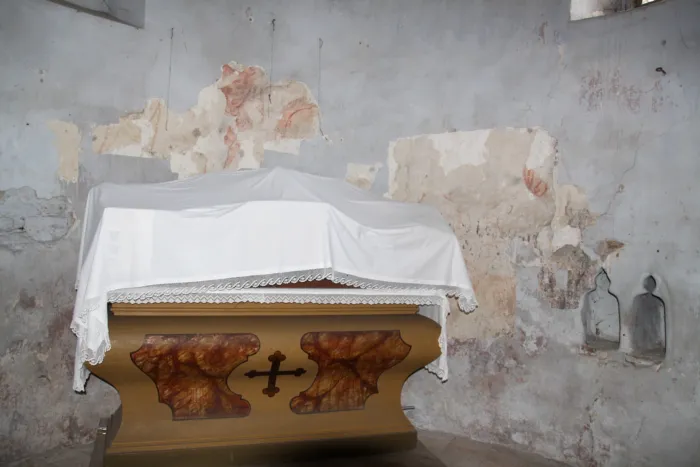
The former church, today's sacristy, was built in 1250 from Lombard brick in Romanesque style in honor of Saint John the Baptist. It consisted of a semicircular sanctuary with a vaulted ceiling, extended linearly in the west, and a rectangular nave, which was originally covered by a flat roof. Later, this 13 m long and 5.5 m wide church no longer met the needs. The sanctuary was built in 1456, and the main nave in 1549-1577. The reconstruction and addition were carried out in 1756, which transformed the building into a 30 m long and 8 m wide single-nave Baroque church using the original Romanesque part. The Reformed nobility of the village also took part in this reconstruction - as can be proven by documents. The two transepts were built to the church in 1921. The main altar was donated to the church in 1697 by Klára Wolf, the superior of the Poor Clare nuns, before the Baroque reconstruction. It is in Baroque style, with a picture of Saint John in the middle and the Virgin Mary above. On the sides are statues of Saint Agnes and Saint Catherine, and below are statues of Saints Imre and László. At the top is a statue of Saint Michael. The altar was repaired in 1759 and 1831. Since 1958, the walls of the church have been decorated with 3x4 m oil paintings, created by the painter Károly Csanaky. The church has one tower and 3 bells. All of the current bells were made in 1922 in the Budapest bell-casting workshop of László Szlezák. Two of the previous bells were melted down during the First World War, and the third, made in Bratislava in 1863, was transferred to the Chapel of the Guardian Angels in 1922. This is the so-called Mary Bell. Of the bells in the church today, the “southern bell” weighs 311 kg and was donated by the municipality of Újhelyjóka. The “old bell” weighs 536.5 kg, and the small bell is a soul bell weighing 149 kg. Both are donated by the municipality of Jóka. Another famous work of art is the organ made in 1855, which was made by the Bratislava organ builder Vince Mozsnyi. In the neighborhood of the church is the building of the former Roman Catholic church, then state school, a late classicist castle, the foundations of which were laid in 1847.