
Vága
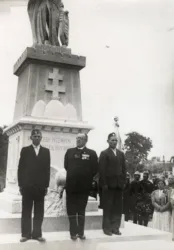
Inaugural speech by Dr. Pál Cselényi, Member of Parliament
Other - other
Vága, October 1, 1939; "This inaugurated national flag - he said - declares war not only on small-mindedness and cowardice, but also on that eternally alarming, terrifying and goose-bumpy new defeatism, which in today's historical times wants to weaken the nation's self-confidenc...
Read More

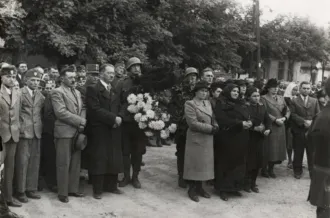
At the inauguration ceremony of the Heroes' Monument and the National Flag
Other - other
Vága, October 1, 1939; In the photo: Ferenc Boledovics (from left), Tibor Józsa (deported to Hungary in 1948), István Forró, Sándor Pankó (teacher), Mrs. Jánosné Bugyinszky (born Margit Józsa), Mrs. Gyuláné Bugyinszky (born Margit Kotrba, with black scarf), Magdolna Bugyinszky, I...
Read More
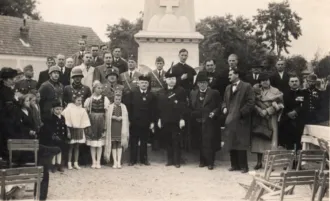
Participants of the inauguration of the Heroes' Monument
Other - other
Vága, October 1, 1939; Those captured by the photographer and who were identified: Dr. Pál Cselényi, member of parliament and chief government advisor (with glasses), Ferenc Apponyi, Teréz Apponyi, János Hunyad-Hulák (innkeeper in Kispest), József Lengyelfalussy (parish priest of...
Read More
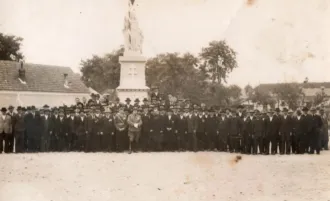
People of Vága in front of the Heroes' Monument and National Flag in 1939
Other - other
Vága, October 1, 1939; Between the two world wars, the movement that spread throughout Hungary began with the Ereklyés Országzzló erected on Szabadság Square in Budapest on August 20, 1928. Two years after the inauguration of the Szabadság Square memorial site, Ferenc Molnár, a t...
Read More
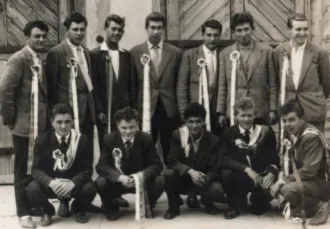
Recruits in 1961
Other - other
Vága, 1961. year recruits ; Standing from left to right: Gyula Forró, József Sztoklasz, Ernő Zsigó, Sándor Forró, Miklós Forró, Béla Lukács, Imre Pásztor. ; Crouching from left to right: Jenő Forró, Géza Kubányi, Sándor Spenát, László Karácsony, Ernő Knézel. ; Who is a recruit? A...
Read More
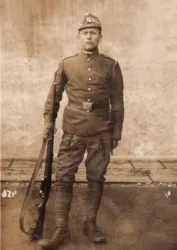
István Szabó, military officer
Other - other
The Kingdom of Hungary participated in World War I on the side of the Central Powers and as part of the Austro-Hungarian Monarchy, not as an independent power in its foreign affairs. Its war goal was to preserve the country's territorial integrity, which was threatened by the Rus...
Read More
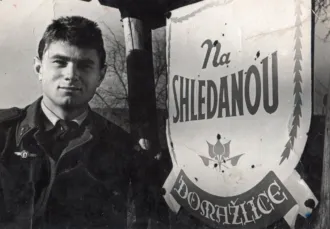
Soldier Gyula Farkas
Other - other
Gyula Farkas, as a border hunter on the Czechoslovak-German (official names: Czechoslovak Socialist Republic - Federal Republic of Germany) state border, in the first half of the 1960s.
Read More
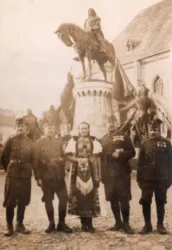
Ferenc Vitéz Czakó in the main square of Cluj-Napoca
Other - other
Kolozsvár, November 21, 1940. ; Vitéz Ferenc Czakó (second from the right) with his fellow soldiers and a local lady, who is seen in Kalotaszeg folk costume. ; During my collection and research, I have learned about five Vága knights so far, who are: Vitéz István Bakó, Vitéz Fere...
Read More
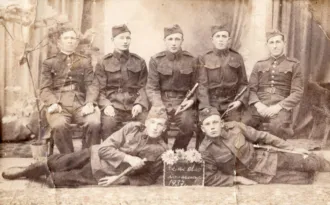
Soldiers in 1937
Other - other
Hungarians in the Czechoslovak army...; This is the first Sunday, 1937. - it reads, and next to the sign on the right side is István Farkas, born in Vága (1915).
Read More
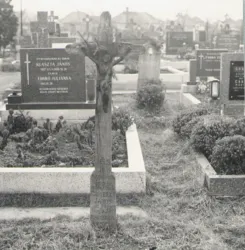
Wooden crucifix from the mid-20th century
Other - other
Vága, 1990; The inscription on the wooden crucifix in the cemetery: JHS MAY THEY REST IN GOD JÁNOS MAGYERKA LIVED 83 YEARS AND DIED 1949 VIKTÓRIA MAGYERKA…; The current cemetery is not the original Vága cemetery. According to tradition, there was a cemetery at the Heroes’ Statue ...
Read More