
Podolin
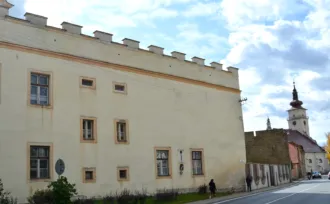
Gyula Krúdy's memorial plaque in Podolini
Statue, monument, memorial plaque
Between 1888 and 1891, Gyula Krúdy (Nyíregyháza, 21 October 1878 – Budapest, 12 May 1933), a writer and one of the greatest figures of 20th-century Hungarian fiction and literature, was a junior student at the Piarist grammar school in Podolin. He lived at 92 Fő tér in Podolin. F...
Read More

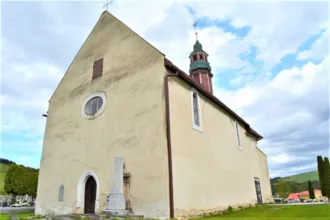
St. Anne's Cemetery Chapel in Podolini
Building, structure
The chapel was built in the 13th century in Romanesque style, making it the oldest surviving building in the city today. Later, in the 16th century, it was rebuilt in Renaissance style. Its furnishings and altars date from the Baroque era and the 18th century. On its main altar, ...
Read More
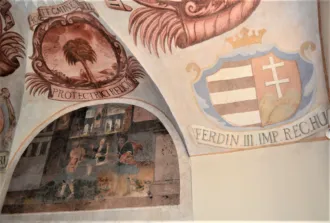
Piarist Church and Monastery, Podolin
Building, structure
The Hungarian Piarist province considered Podolin, located in the Poprad Valley, its cradle, although in 1642, when the first Piarist appeared there, the town, together with the towns of Spiš that had been mortgaged during the reign of Sigismund, belonged to Poland. The founder, ...
Read More
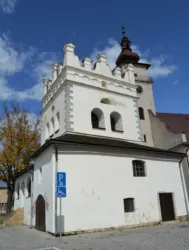
Podolini Bell Tower
Building, structure
The bell tower next to the parish church was built in 1659 and is a copy of the Poprad bell tower. It bears the characteristic features of the Partisan Renaissance style. It was originally decorated with sgraffito. The tower houses two Gothic bells.
Read More
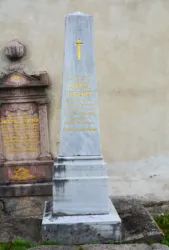
The grave of county judge József Lippóczy and mayor of Podolini Ferenc Lippóczy
Cemeteries, tombstones, grave sites
Next to the entrance to the St. Anna cemetery chapel is the tomb of József Lippóczy, county judge, and his son, Ferenc Lippóczy, mayor of Podolin. ; The Lippóczy family owned estates in the Tokaj Hills. József Lippóczy had been shipping wine to the Polish-Lithuanian Commonwealth ...
Read More
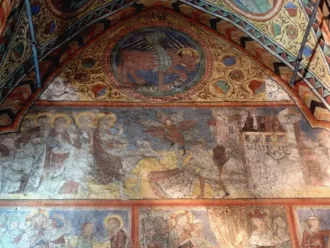
Assumption of Mary Parish Church in Podolini
Building, structure
The present-day city was founded by Saxon settlers after the Tatar invasion. By the end of the century, it already had city walls and city privileges. Podolin, which received the status of a free royal city in 1412 and had a significant craft industry, came under Polish rule as a...
Read More
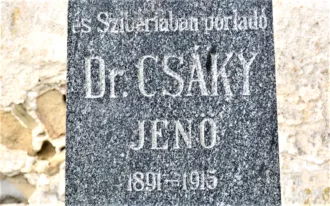
The actual grave of Dr. Károly Csáky and the symbolic grave of Dr. Jenő Csáky
Cemeteries, tombstones, grave sites
Dr. Károly Csáky, physician, local representative of the Hungarian Carpathian Association (MKE), Gnézda (1885), Podolin (1892-1914-). Member of the central committee of the MKE (1895, -1903-). He lost his son Jenő in the First World War.
Read More
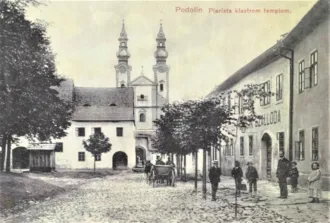
Piarist monastery church
Postcard
Read More
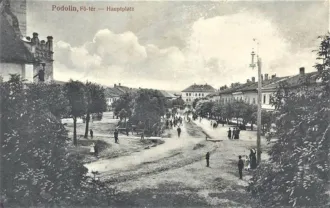
Podolini main square
Postcard
Read More
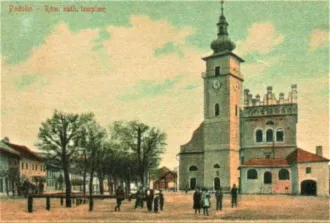
Roman Catholic Church in Podolon
Postcard
Read More