
Repository
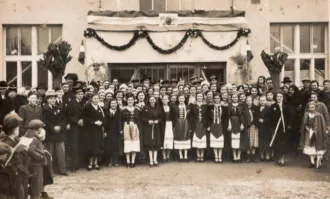
Vága in 1939
Other - other
Vága, probably March 14, 1939; Those captured by the photographer: Gyula Forró, János Jalsovszky, János Forró, Júlia Forró, Mariska Sandula, Sarolta Kulcsár, Edit Józsa, Júlia Puskás, Juliska Sandula, Margit Sandula, Jolán Józsa, Irén Forró, Gyuláné Bugyinszky Kotrba Margit, Gabr...
Read More

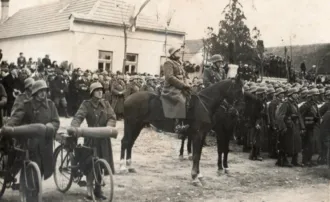
The Royal Hungarian Army in front of the school
Other - other
Vága, perhaps March 14, 1939; The village stands in flag decorations, after two decades, the carefully guarded Hungarian flag flies on every house. In the souls of the inhabitants, love for the motherland and the return to the thousand-year-old Hungary burned. ; ; I AM HUNGARIAN;...
Read More
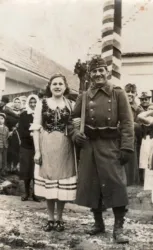
On the day of the Hungarian invasion
Other - other
Vága, perhaps March 14, 1939; Júlia Puskás and one of the liberating Hungarian patriots.; According to the report of the Alsószerdahely (Dolná Streda) police station on March 16, 1939, 16 gendarmes were stationed from the Vága gendarmerie station after the Hungarian invasion, whi...
Read More
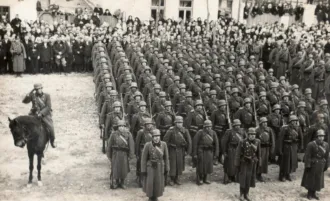
The Royal Hungarian Army in the square in front of the school
Other - other
Vága, March 14, 1939; The Royal Hungarian Army in the square in front of our school. This is the day when Vága became part of Hungary again since Trianon (June 4, 1920). The retreating Czechoslovak delegation handed over the village of Vága to the commander of the advancing Hunga...
Read More
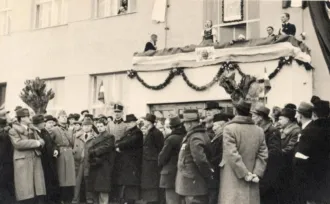
Editke Józsa recites the Hungarian Creed
Other - other
Vága, probably March 14, 1939; Editke Józsa recites the three-line “national prayer” of the Horthy era, the Hungarian Unity of Faith, on the school balcony. ; Next to her are the village dignitaries: from the right, Lajos Sandula, village judge, from the left, Tibor Kneif, school...
Read More
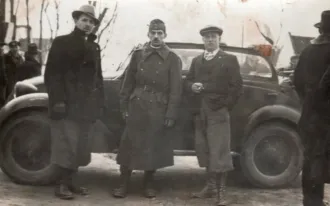
János Jalsovszky smoking a cigarette
Other - other
Vága probably March 14, 1939. ; The population of the village of Mátyusföld: ; According to the 1870 census data, 1644 people. (814 men and 830 women). By religion: 1614 Roman Catholics, 30 Jews. There were 259 houses in the village at that time. ; In 1890, the population was 211...
Read More
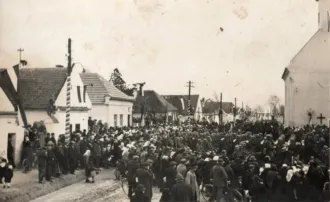
The unforgettable day
Other - other
Vága, March 14, 1939; On November 2, 1938, the valiant Béla Imrédy himself (the 31st Prime Minister of the Kingdom of Hungary) announced on Kossuth Radio the names of the towns that had returned to the motherland. At that time, the village of Vága still remained in Czechoslovakia...
Read More
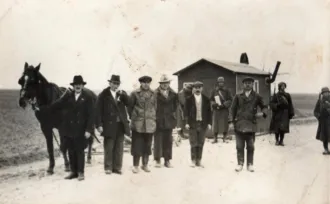
Vagaianly: the Hungarian-Slovak border is "in the circle"
Other - other
Vága, perhaps March 14, 1939; According to the Budapest agreement of Colonel Rudolf Andorka (Colonel of the General Staff of the Royal Hungarian Army) and General Rudolf Viest (the only general of Slovak origin in Czechoslovakia between the two world wars) of March 2, 1939, the m...
Read More
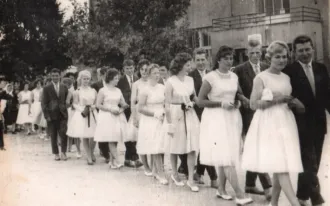
Wedding procession on Main Street in the 1960s
Other - other
Vága, 1960s; In the photo: Ferenc Recht, Erzsébet Szlízs, György Kulcsár, Vera Farkas, Miklós Recht, József Sztoklasz, Teréz Polakovics, Gabriella Adamkó, Gyula Farkas, Erzsébet Pulai, Melinda Szűcs, László Farkas...
Read More
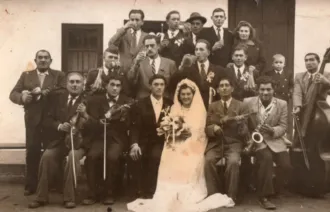
Wedding group photo from 1950
Other - other
Vága, 1950. ; Back row from left to right: Fördős, Ferenc Jalsovszky, József Sztoklasz, István Karácsony, Rozália Karácsony. ; Standing from left to right: ?, István Forró, Smíkal (Olomouc), Kamenár (best man), Árpád Jakubecz, ?, Gyula Patkoló. ; Sitting from left to right: ?, Er...
Read More