
Nagymegyer
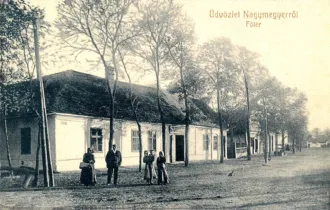
The main square of Nagymegyer in 1914
Postcard
Between 1900 and 1914, many new buildings were opened in the city. In addition to all this, the city also struggled with many problems during this period. ; “In Nagymegye, the carriage roads were completely impassable, neglected, perpetually dusty in the summer, and the pedestria...
Read More


Money used in the Nagymegyer prisoner of war camp
Other - other
The population of Nagymegyer could experience the consequences of the outbreak of World War I in a spectacular way as early as October 1914, when the first prisoners of war arrived in the city. The camp was gradually built up. With the opening of the Italian front, a large number...
Read More
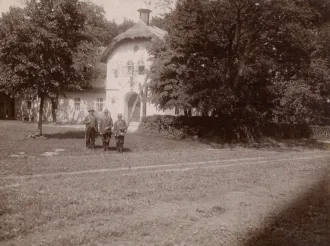
Foresters of Nagymegyer
Other - other
There is a significant forest on the outskirts of Nagymegyer. According to a legend known in the city, King Matthias also hunted in this forest in the 15th century, who tied his horse to a large oak tree on the edge of the forest and had his tent pitched. This is where he first m...
Read More
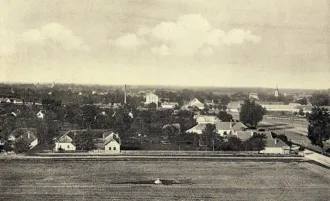
Nagymegyer Prisoner of War Camp Area
Other - other
The population of Nagymegyer experienced the consequences of the outbreak of World War I in a spectacular way as early as October 1914, when the first prisoners of war arrived in the city. The first six thousand Serbian, Slovenian and Croatian prisoners of war from the Balkan fro...
Read More
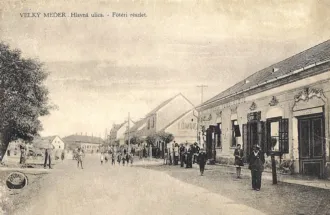
Main square of Nagymegyer, 1930s
Postcard
In 1930, there was a census in Czechoslovakia. In that year, there were 4,482 inhabitants in Nagymegyer. Nearly 10% of the population was made up of the Jewish population, who played a decisive role in the city's trade. Most of their shops were located on the main square of the c...
Read More
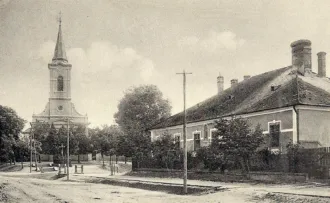
Nagymegyer Catholic church and rectory, 1930
Other - other
Between 1919 and 1938, three major church communities operated in Nagymegyer: the Roman Catholic, the Calvinist and the Jewish communities. According to the 1919 and 1938 census data, 57% of the population was Roman Catholic. The dean-parish priest of the Roman Catholic Church in...
Read More
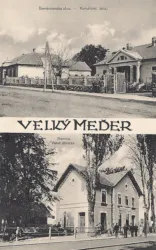
Street scene in Nagymegyer, railway station, 1930
Postcard
In 1930, another census was held in Czechoslovakia. This year, the town had 4,482 inhabitants. The postcard made at that time shows one of the streets of the town, today's Komáromi Street. The picture shows the building of the current mayor's office, which at that time was the re...
Read More
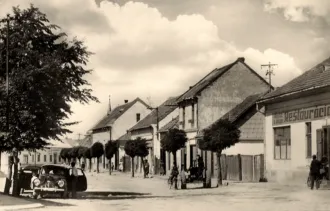
Street scene in Nagymegyer, 1950
Other - other
Between the two world wars, two censuses were held in Czechoslovakia. The city's population continued to grow during the period described. The first census after the coup was in 1921. At that time, Nagymegyer had 4,012 inhabitants. Compared to the last census (1910), the city's p...
Read More
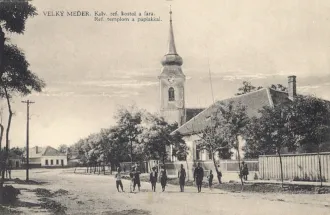
Nagymegyer Reformed Church and Rectory, 1930
Postcard
Between 1919 and 1938, three major church communities operated in Nagymegyer: the Roman Catholic, the Reformed and the Jewish communities. According to the 1919 and 1938 census data, the Reformed in Nagymegyer made up 30% of the population. The Reformed Church in Nagymegyer was l...
Read More
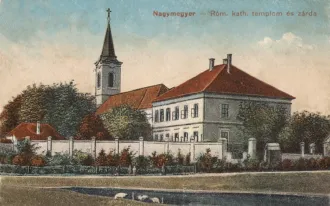
Nagymegyer Catholic Church, Convent, 1930
Postcard
The Catholic Church of Nagymegyer was built in 1900, and the Zárda School next to it was built in 1902. Both buildings were built by the Kálnoky family. The school was named “Saint Elzeár School”. The nuns taught. The girls studied in combined classes in the three classrooms of t...
Read More