
Késmárk
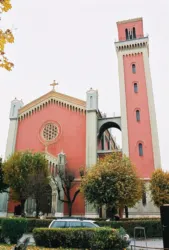
Tomb of Prince Imre Thököly
Cemeteries, tombstones, graves
The ashes of Imre Thököly in Budapest ; ; The “King Kuruc” in 1699, and Prince Ferenc Rákóczi II twelve years later, in 1711, bid farewell to his homeland. The great dead of Nicomedia (1705) and Rodostó (1735) in Asia Minor rested in foreign, Turkish soil during the long centurie...
Read More

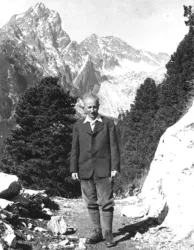
Bust of Alfred Grósz in Késmárk
Statue, monument, memorial plaque
Alfréd Grósz (August 25, 1885, Késmárk – March 1, 1973, Késmárk) was a mountaineer. One of the best Spiš mountaineers of all time, his activities, in addition to mountaineering, extended to tourism, skiing, mountain rescue, nature conservation, and research into the history of mo...
Read More
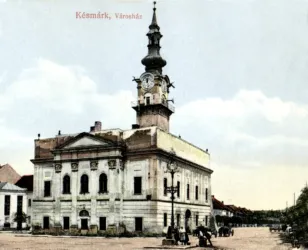
Kesmark Town Hall
Building, structure
The Town Hall was built in 1415 in Gothic style, after the fire of 1515 it was rebuilt in Renaissance style between 1541 and 1553, and in the 18th century it was renovated in the Copf style. Its second floor was built in 1922, and its tower is Baroque.
Read More
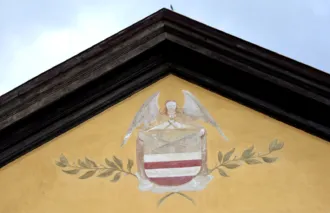
Vigadó (Redout) - Késmárk
Building, structure
In the Middle Ages, a watchtower stood on the site of today's Redout. The Thököly family, who owned estates in the city, had it converted into a manor house in the 17th century. Between 1705 and 1707, the printing house of Dean Matthias Glaser operated in this house, which publis...
Read More
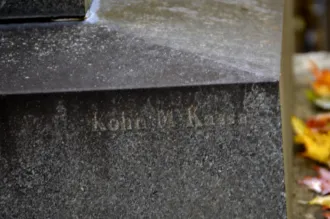
The grave of Tivadar Jóny
Cemeteries, tombstones, graves
Lawyer Tivadar Jóny was born in Igló on March 17, 1817 and died in Miskolc on April 3, 1883, “but it was in Késmárk where he spent the days of his youth and a large part of his manhood. Here he completed his studies at the Lyceum, and according to the testimony of Pál Hunfalvy, h...
Read More
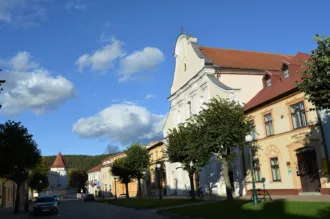
Paul's Church in Késmárki
Building, structure
The church, first mentioned in written sources in 1654, burned down in a fire in 1741. After that, under the direction of the Pauline Order, the church was rebuilt in six years. It was then that it received its still defining Baroque appearance. ; The single-nave church, with a g...
Read More
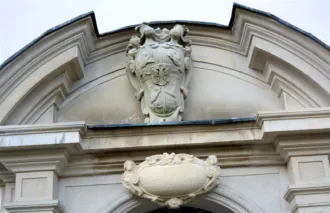
Kesmark Castle
Building, structure
During the reign of King Géza II of the Árpád dynasty (1142–1162), German-speaking settlers (“Hospes”) arrived in the northern regions of historical Hungary, which had been sparsely populated by Slavic people until then, and soon established a series of settlements. The new popul...
Read More
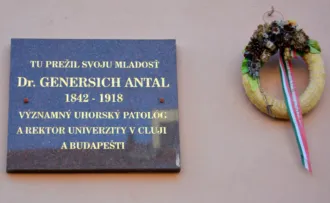
Dr. Antal Genersich's memorial plaque in Keszthely
Statue, monument, memorial plaque
Dr. Antal Genersich's strictly monolingual memorial plaque (ignoring the language needs of a significant proportion of those interested) can be found at house 51 on Fő tér. According to the text, Dr. Antal Genersich, the famous Hungarian pathologist and rector of the University o...
Read More
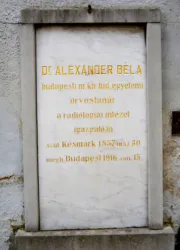
The grave of Dr. Béla Alexander
Cemeteries, tombstones, graves
He completed his medical studies in Budapest, where he was ordained a doctor of medicine in 1881. Although he mostly passed his final exams only satisfactorily, he won several competition prizes, and at the age of 5 he became József Lenhossék's assistant at the Institute of Anato...
Read More
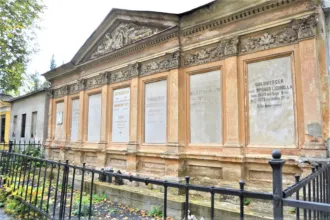
Bethlenfalvy Ernő's resting place
Cemeteries, tombstones, grave sites
Ernő Bethlenfalvy (* Késmárk, February 12, 1880 – † Hunfalva, June 18, 1955); Economist, nature diver, specialist writer Although he was born in Késmárk, he spent a significant part of his life in Hunfalva, where he had estates (they were “nationalized” in 1945 due to his Hungari...
Read More