
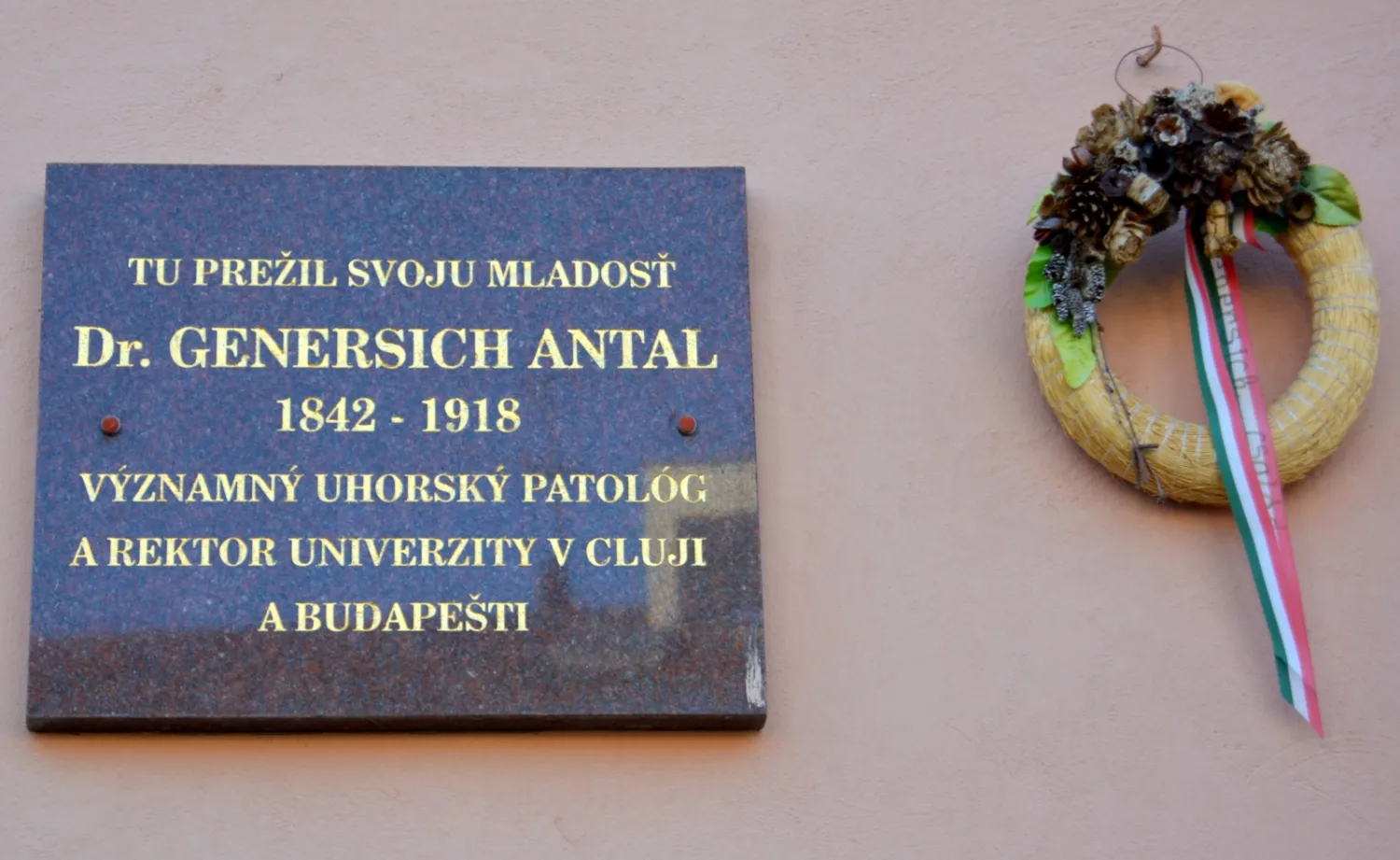
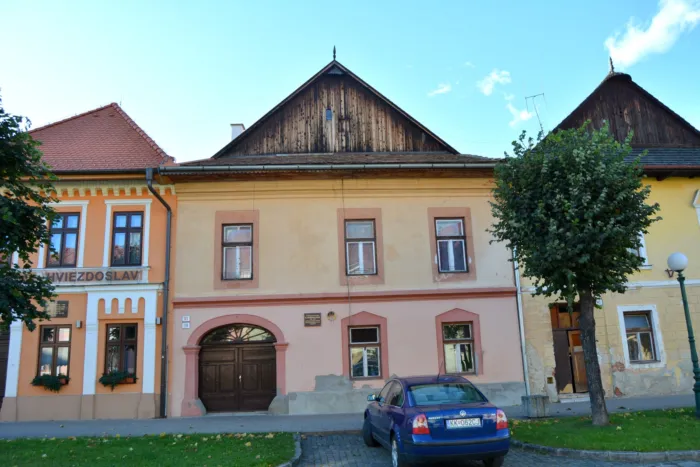
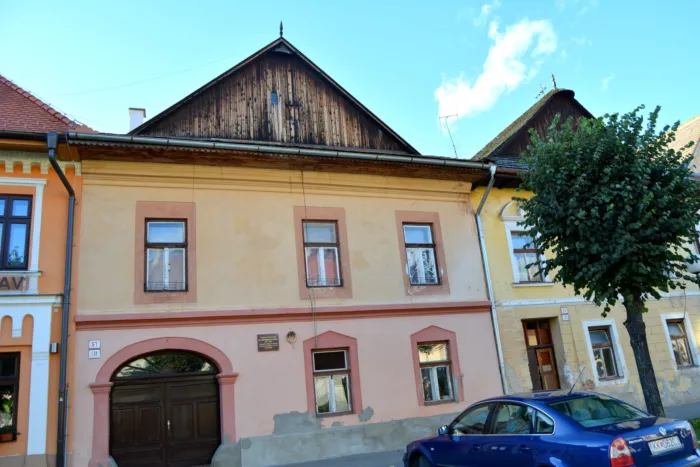
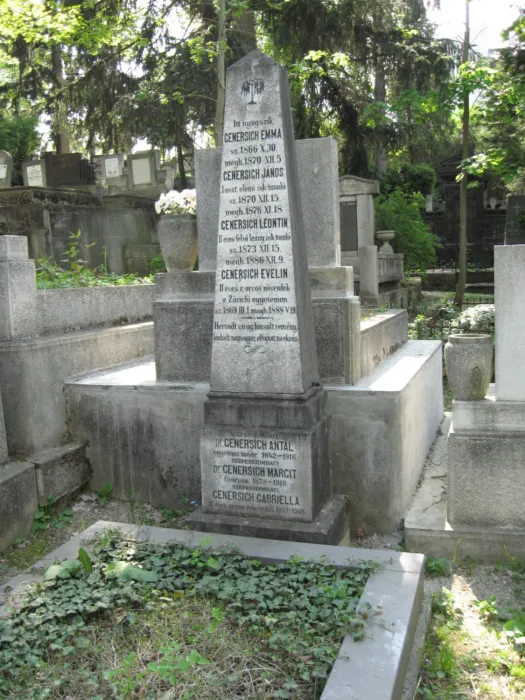
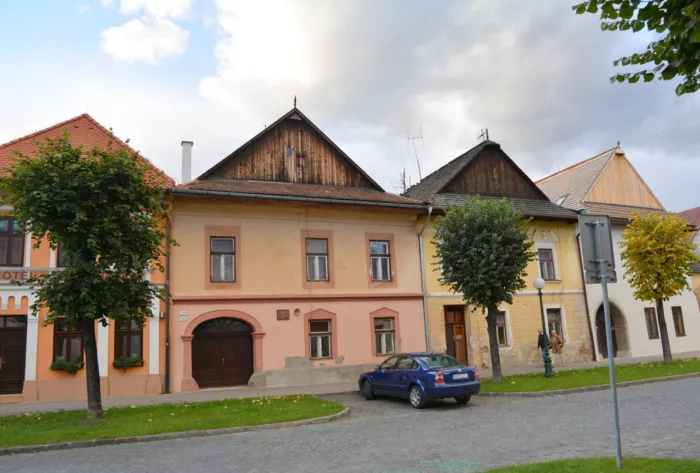
Dr. Antal Genersich's memorial plaque in Keszthely
Statue, monument, memorial plaque
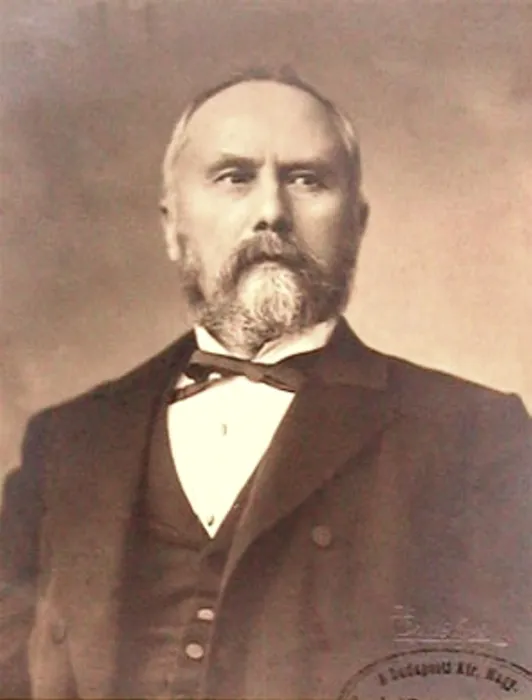
Dr. Antal Genersich's strictly monolingual memorial plaque (ignoring the language needs of a significant proportion of those interested) can be found at house 51 on Fő tér. According to the text, Dr. Antal Genersich, the famous Hungarian pathologist and rector of the University of Cluj and Budapest, lived here in his youth. The plaque was erected on September 30, 2010 by the City of Késmárk and the Genersich Antal Foundation. The Hungarian side requested that the Hungarian text be included on the plaque. The regional Monuments Authority approved this version. ; ; Dr. Antal Genersich was born on February 4, 1842 in Nagyszombat, the founding seat of one of our ancient universities and the first medical faculty, as a scion of a renowned Zipser family from the Upper Highlands. The Genersich family from Spiš has given the country many outstanding intellectuals. His father was János Genersich, a good friend of Ferenc Deák, a sought-after lawyer, and his mother was Katalin Kilcher. According to the bilingual (Slovak-Hungarian) birth certificate and baptismal certificate No. 85 dated March 4, 1941, Genersich was baptized with the names Antal, Károly, Maximilian and Constantin. The five siblings were orphaned at an early age, so they were taken from their hometown to the family's ancestral nest in Késmárk and entrusted to the care of their grandmother, János Genersich, the widow of a professor of church history and church law at the Vienna Theological Institute. Their grandmother raised the children according to the strict principles of the time and accustomed them to work. Since the family lived in poor conditions, Genersich had to contribute to her maintenance costs by teaching even when she was a small student. At the age of sixteen, his grandmother also left him an orphan, and from then on, having experienced deprivation, he continued his school studies with tenacious and persistent work. He finished high school in Késmárk, where he graduated on July 26–28, 1860, with excellent results in all subjects. ; In 1860, he enrolled in the Medical Faculty of the Royal Hungarian University of Pest. He spent the holidays after the graduation exam studying anatomy, and thus stood out among his peers with his knowledge. József Lenhossék (1818–1888), the anatomy teacher, especially liked the serious, aspiring young man, and took him to the department with him when he was in his second year, where he worked as a demonstrator for two years. For his diligence and good results, he received the Csausz Márton Scholarship. In 1864 he won the Pasquich Prize for Anatomy, while in 1865 he received a commendation for an ophthalmology thesis. From July 1865, even before its inauguration, he was appointed as an assistant professor to Lajos Arányi (1812–1887) at the Department of Pathology. He received his Doctor of Medicine degree on October 19, 1865. On June 27, 1866, he obtained his Doctor of Surgery degree and the same year, his Master of Obstetrics and Master of Ophthalmology degree. In 1867, he was the chief dissector of the Pest Poor Children's Hospital. In 1868, he was appointed the chief dissector of the city of Pest. The teachers of the Pest Faculty of Medicine recognized Genersich's excellent abilities, and so in October 1868, he was sent on a two-year study trip abroad with a state scholarship. During this time, he visited the best institutes in the German-speaking area. In Vienna, he spent shorter or longer periods of time at the institutes of Karl von Rokitansky, Salamon Stricker, Ferdinand von Hebra, Heinrich Bamberg, Friedrich Jaeger and Anton Friedrich von Tröltsch, in Würzburg Friedrich Daniel von Recklinghausen and Rudolf Albert von Kölliker, in Leipzig Karl Friedrich Wilhelm Ludwig, Ernst Leberecht Wagner, C. Huppert, and in Berlin Rudolf Virchow and Ludwig von Traube. He tried to make the most of his time wherever he went for study and, occasionally, for research. So, when Genersich returned home from his study trip abroad, he accepted an appointment as a professor of pathology and forensic medicine at the Medical and Surgical Institute in Kolozsvár. On 3 August 1870, the Minister of Religion and Public Education József Eötvös established an independent pathology department at the institute with decree no. 17226, adding forensic medicine and euthanasia to it. He appointed Antal Genersich to this new department. In September 1872, at the age of twenty-eight, he took over the management of the department in the capacity of a public regular teacher, and took the oath of office on the 23rd of the same month. Antal Genersich first lived in Cluj-Napoca at number 81, Monostor Street (today Calea Moților), from 1876 at number 24, then from 1879 he moved to number 1, Kandia Street (today Paul Chinezu), and from 1888 to number 3. The opening general assembly of the university took place on November 10, 1872, and lectures began on the 12th. The first rector of the university, which started with four faculties, was Áron Berde. He was appointed to this position by Ágoston Trefort, Minister of Religion and Public Education, on October 5, 1872, by decree no. 25821. Antal Genersich was appointed to the Department of Pathology as a regular public teacher by decree dated 1876. In recognition of his teaching and educational work, Antal Genersich was elected Dean of the Faculty of Medicine in the academic year 1876/77, then Rector of the university in 1877/78, and Vice-Rector in 1878/79. He also held the position of Vice-Dean several times, such as in the academic years 1872/73, 1879/80, 1883/84 and 1889/90. On April 1, 1883, at the general meeting of the Medical and Natural Sciences Society, Endre Hőgyes resigned from the presidency of the Society due to his invitation to the University of Budapest and Antal Genersich was elected instead. Genersich held the position of president of the Society until 1884, when the Medical and Natural Sciences Department of the EME (Transylvanian Museum Association) was founded. At the founding general meeting of the new Medical and Natural Sciences Department of the EME on May 11, 1884, Antal Genersich was elected president of the medical sub-section. Antal Genersich played a decisive role, as he was president of the Society and the medical sub-section of the EME from the beginning until his departure. In this capacity, he directed this work with great experience and wisdom. Finally, summing up the role of Antal Genersich in the Society and then in the Association, we can state that he was the president of the medical sub-section from the Society's establishment on January 8, 1876, to April 1, 1883. ; By decree No. 4/1875 dated May 22, 1875, the chief magistrate, Kálmán Esterházy, appointed him the honorary chief physician of the city. As such, he was actively involved in the city council, but he also performed the duties of councilor and guardian of the Evangelical parish of Cluj-Napoca. It is therefore understandable that the Minister of Justice appointed him to perform the forensic medical duties occurring in the territory of Cluj-Napoca by decree No. 415/1893. He notified the president of the Cluj-Napoca court of this by document No. 2677 dated January 18, 1893. For his rich and successful public activity, he was notified under No. 2595 dated December 10, 1891, that he was granted the rank of nobility with the first name Szepesszombati. From then on, the first name Szepesszombati was used, which is a noble title earned during his work. ; He worked in Budapest between 1895 and 1918. Antal Genersich returned to Budapest after twenty-five years of activity in Kolozsvár. The pretext for this was that in 1895, after the death of Gusztáv Scheuthauer, the histopathological institute was abolished (December 29, 1894), and two equal pathological institutes were established instead. Antal Genersich was invited to the first department. From 1895 he became an extraordinary member, then a member of the board of the National Public Health Council, and from 1897 he also became a member of the board of the National Public Health Association. In the year of his appointment to the University of Budapest, in 1895, Genersich also accepted the position of chief pathologist at the Szent István Hospital, to which the mayor appointed him on June 30, with decree no. 677. On March 23, 1906, he was elected a full member of the Hungarian Academy of Sciences. In recognition of his teaching activities, he was elected dean in the 1904/05 and 1905/06 academic years, and then rector of the university in 1910/11. During his rectorship, on December 31, 1910, he became a member of the board of the Higher Education Association. ; Dr. Genersich Antal was a member of the Freemasons. He became a member of the lodge called Virradat, established in 1911. The Symmolikus Great Lodge welcomed Virradat into the Hungarian Free Masons' Association on January 10, 1913. The Grand Master Dr. Genersich Antal was the hospital director and chief physician. (The Lodge's address was: Kossuth Tér 3.) ; After that, he taught for three more years, then retired in 1913, but continued to participate in the work of medical bodies and associations, and continued his public activities until his death. In this regard, we also mention that he was a member of the Medical Society of the public hospital from 1895, an honorary member from 1914, and later its president. His scientific achievements also attracted recognition abroad. Several scientific societies elected him a member. For example, he was a corresponding member of the Jena Anatomical Society, the Imperial and Royal Zoological and Botanical Society of Vienna, the German Pathological Society, and the Public Health Society, the Belgrade Medical Society, of which he was a corresponding member. ; On November 26, 1913, he was awarded the Middle Cross of the Order of Franz Joseph. In recognition of his outstanding merits, he was awarded the dignity of Hungarian Royal Court Councilor on July 13, 1904. ; He died on June 4, 1918 in Budapest. On June 6, at 5 p.m., he was blessed in the university auditorium according to the Lutheran church ceremony, and then Kálmán Buday, a member of the Hungarian Academy of Sciences, gave a speech at his funeral, where his fellow teachers, students and admirers bid him farewell. In accordance with his last will, he was transported to Cluj-Napoca, where a farewell ceremony took place on June 9 at 12 noon in the lobby of the university's central building, from where he was laid to rest in the family grave in the Házsongárd cemetery.