
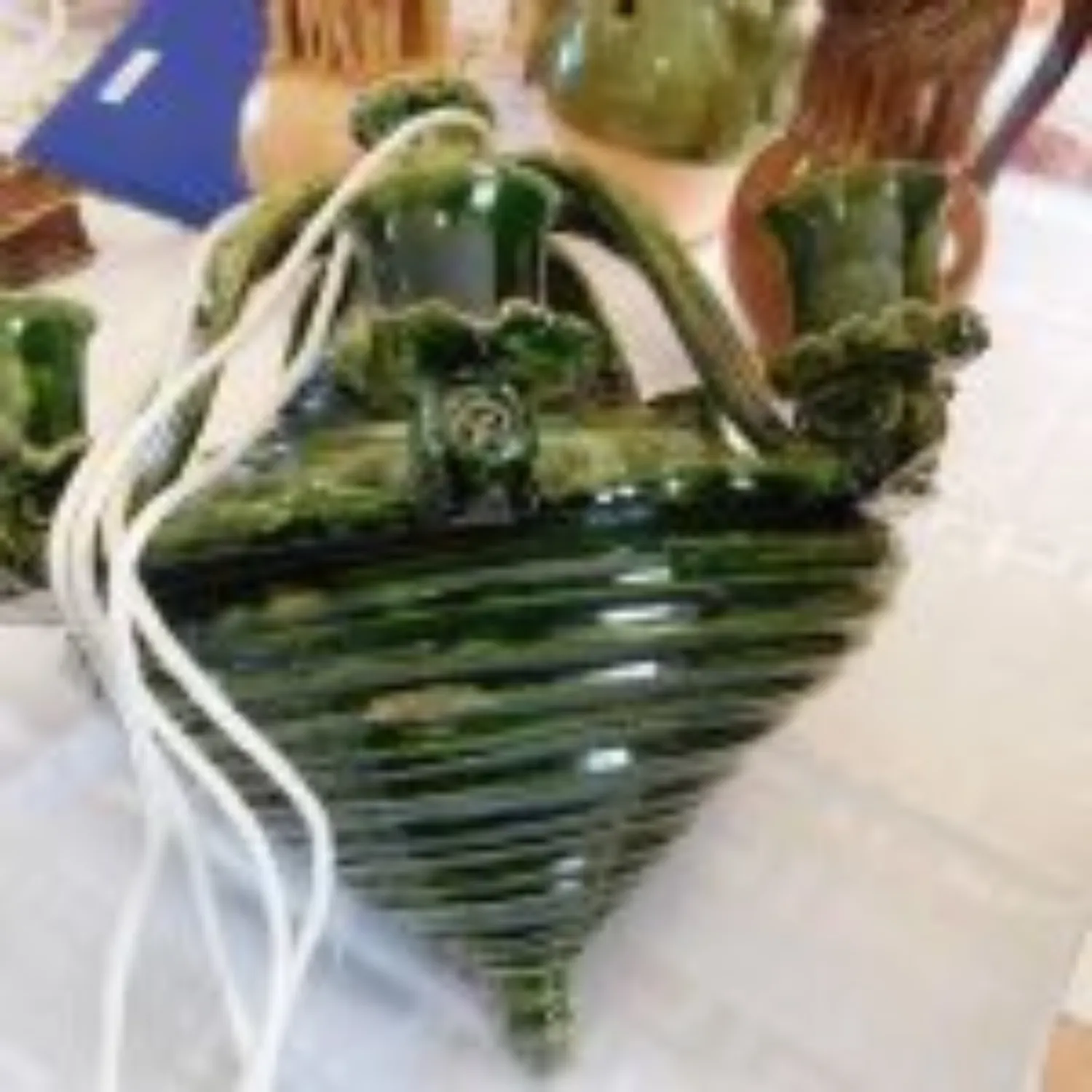
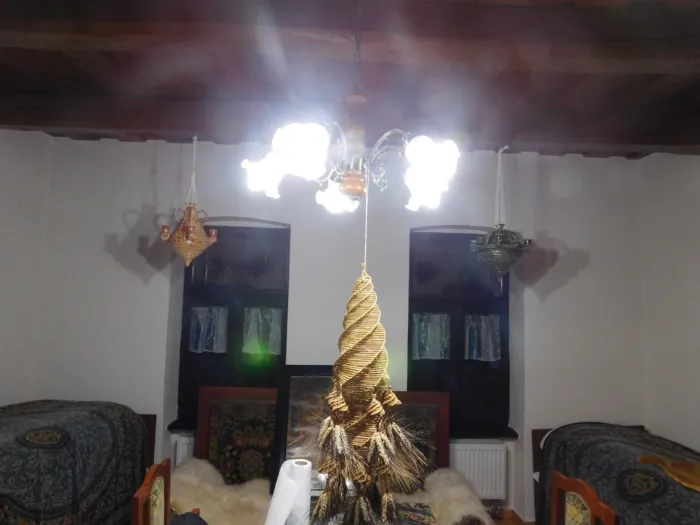
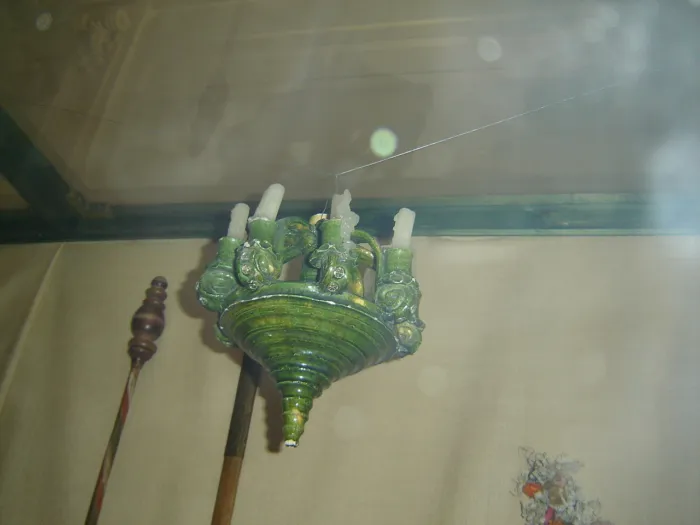
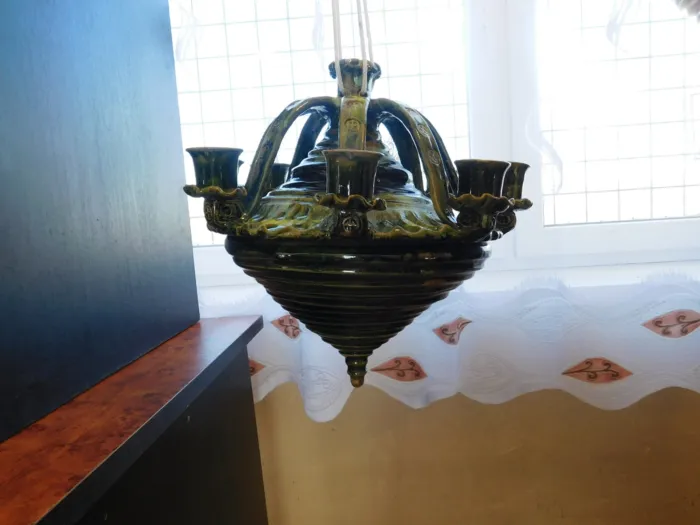
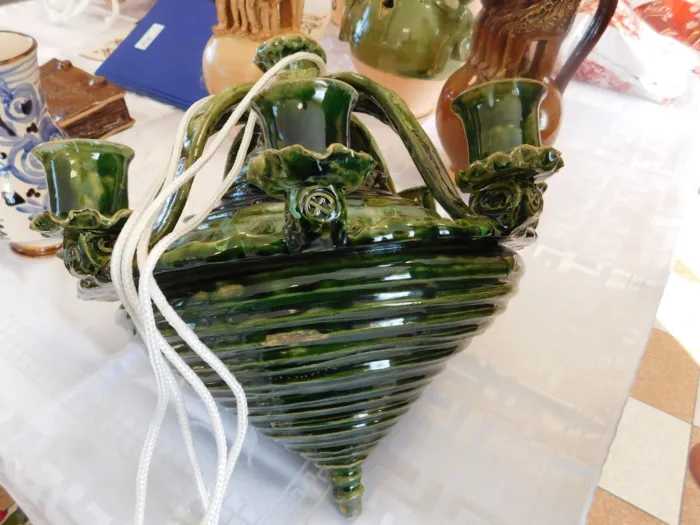
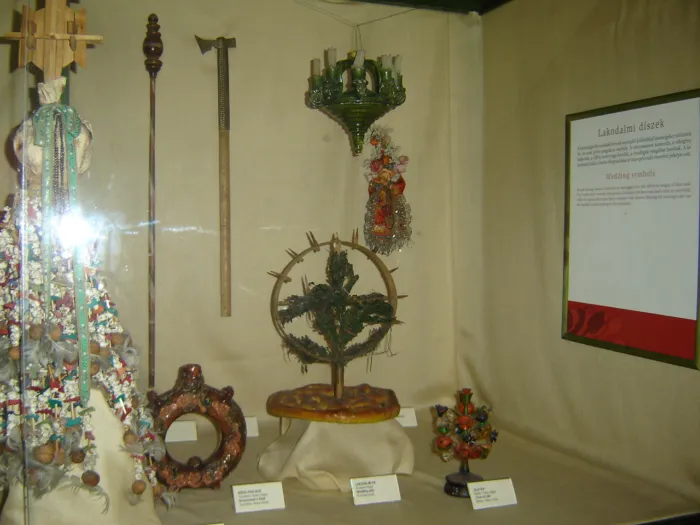
Green clay candlestick with herringbone pattern from Nemesradnót (Balogvölgy)
Other - other
According to the Hungarian Ethnographic Lexicon, the héréss is one of the final acts of the wedding: that is, the bride's wedding party's visit to the groom's house. This took place on the second day of the wedding, lasting several days, as the purpose was to see the bride who had been taken away from the house and had become a bride. ; In Budapest, the Ethnographic Museum keeps two héréss candlesticks, which were brought on the occasion of the hérés. These were brought to Budapest from Nemesradnót in 1931. They were collected from a certain Jenőné Endler. ; Tile, lead-glazed. Green glazed tile, horizontally ribbed at the bottom, conical shape that tapers strongly downwards, a baluster-shaped candlestick with a stamped ornament ending in eight spirals at the top, each connected to the body of the candlestick with an arch. ; They were presumably made in Rimaszombat or Fazekaszsaluzsány. ; ; The Lidike Holiday Home has rethought the custom and, based on photographs, had ceramic artist Danka Bakšová create the 2018 versions of the herress vessels in Fazekassaluzsány, including the green earthenware herress candlestick.