
Harvest traditions in Felsőszeli
Other - other
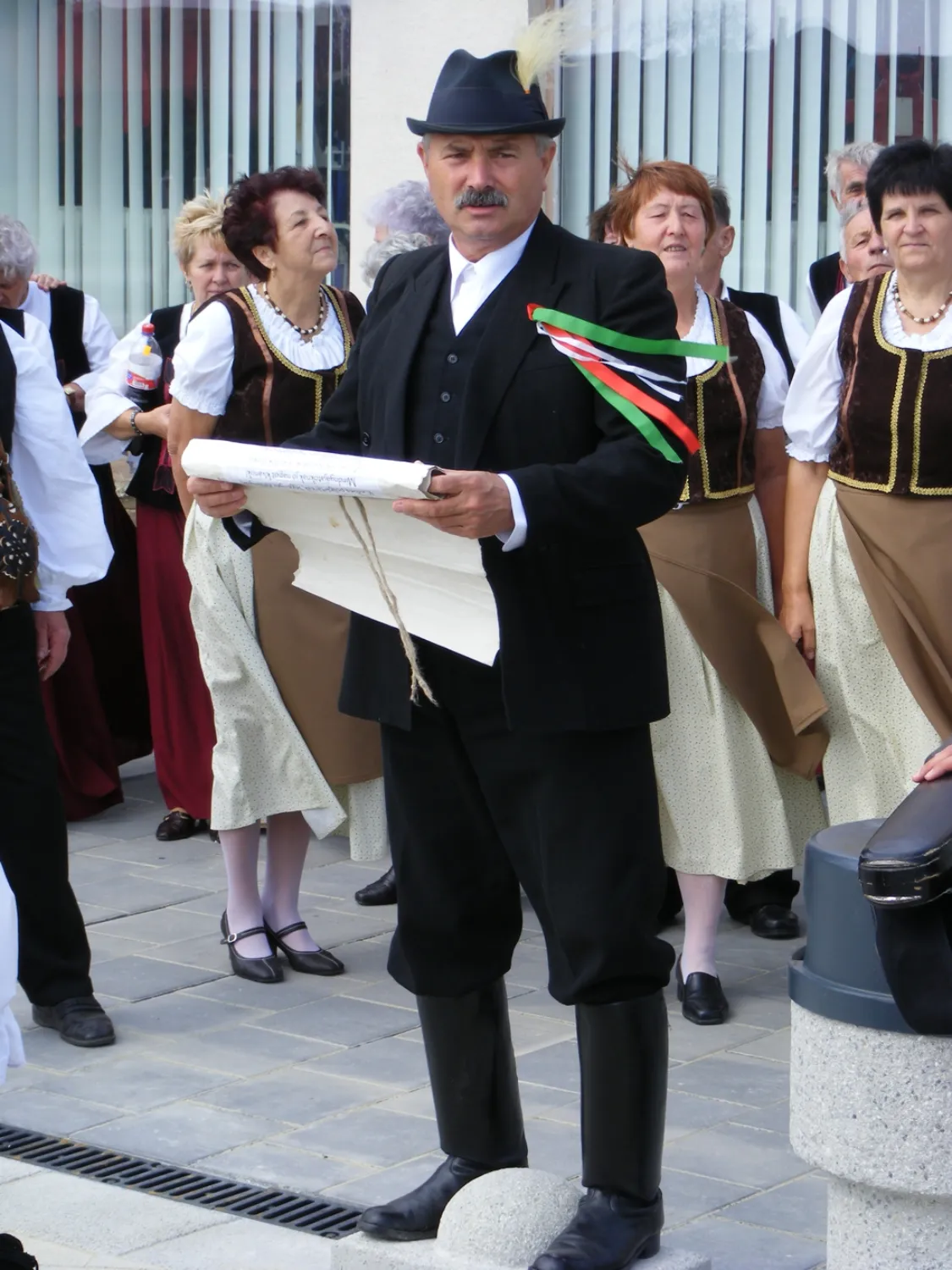
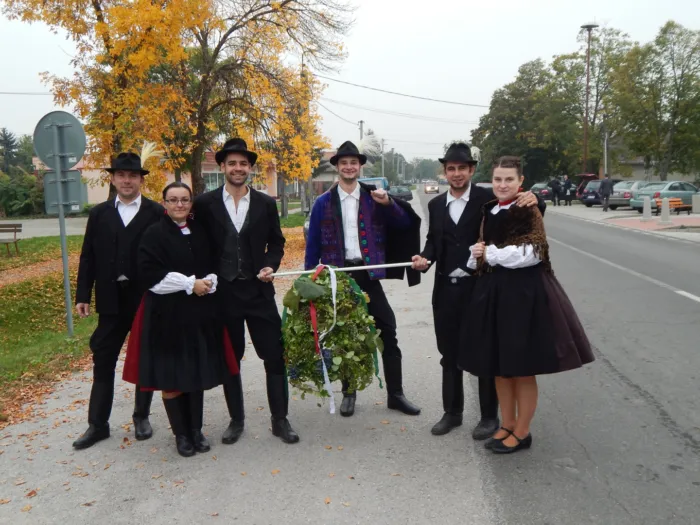
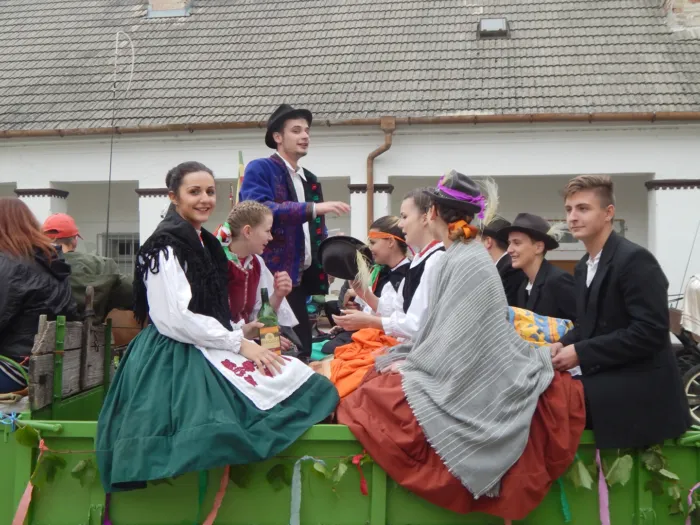
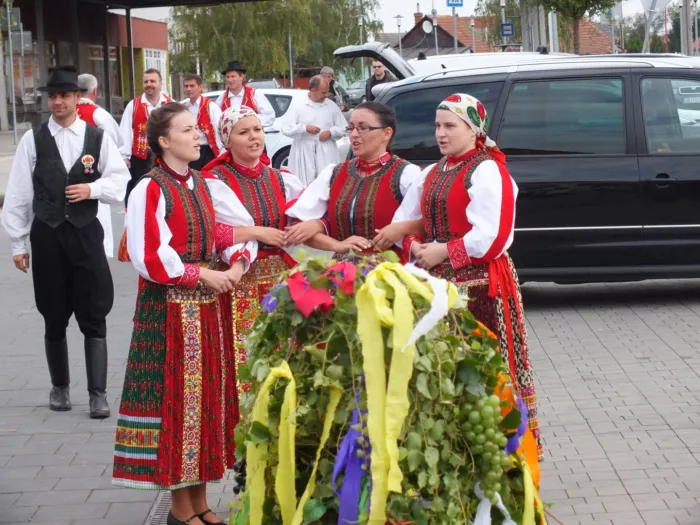
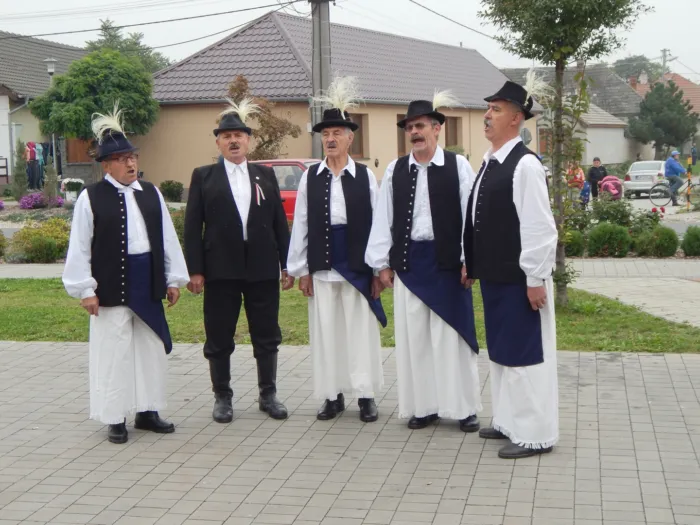
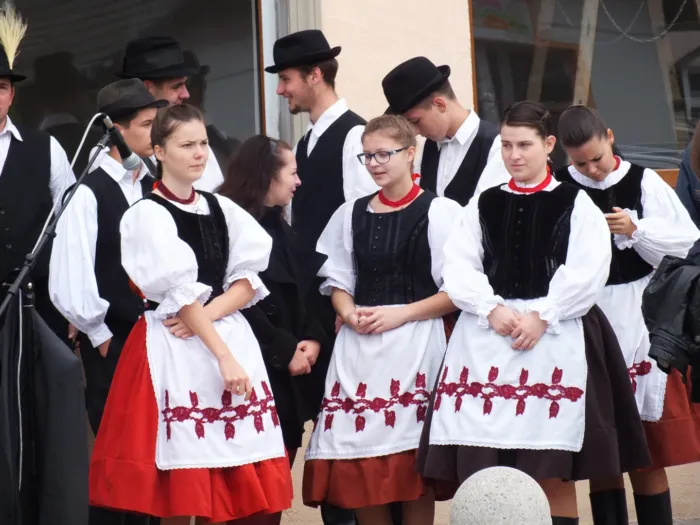
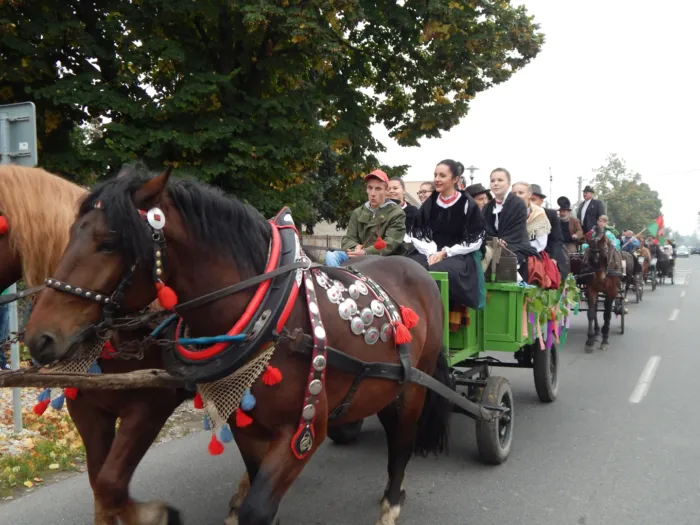
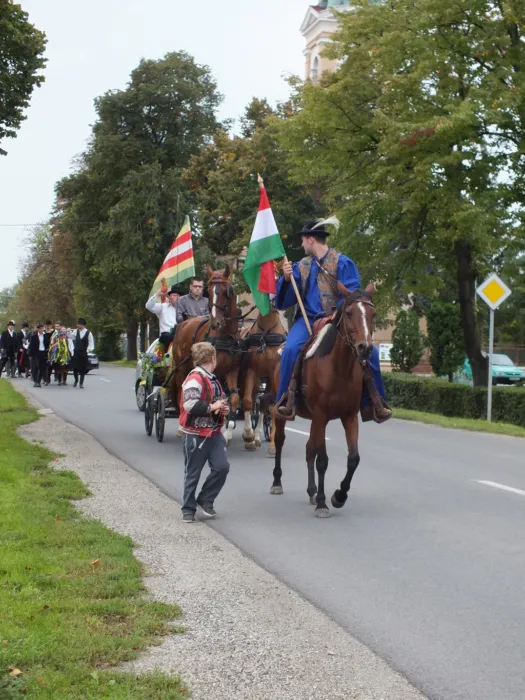
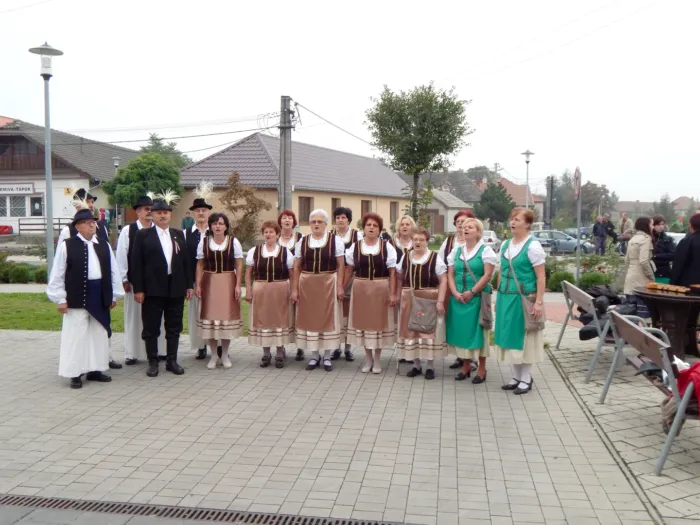
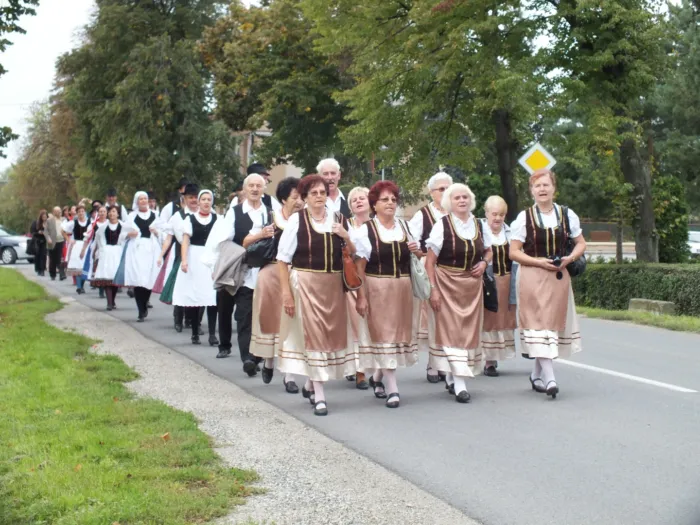
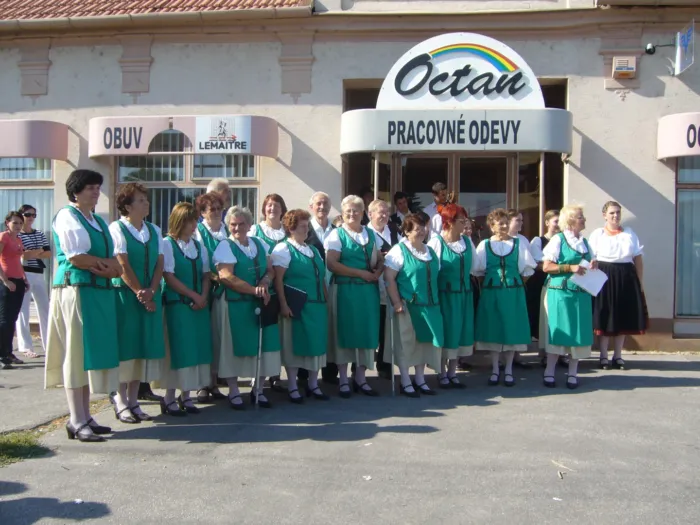
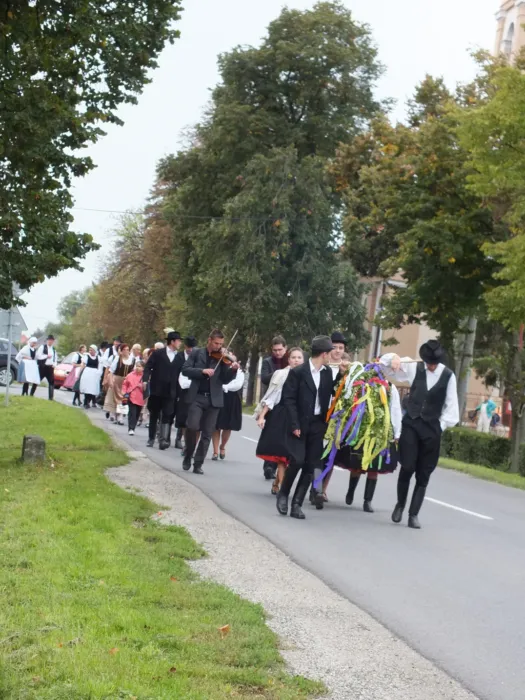
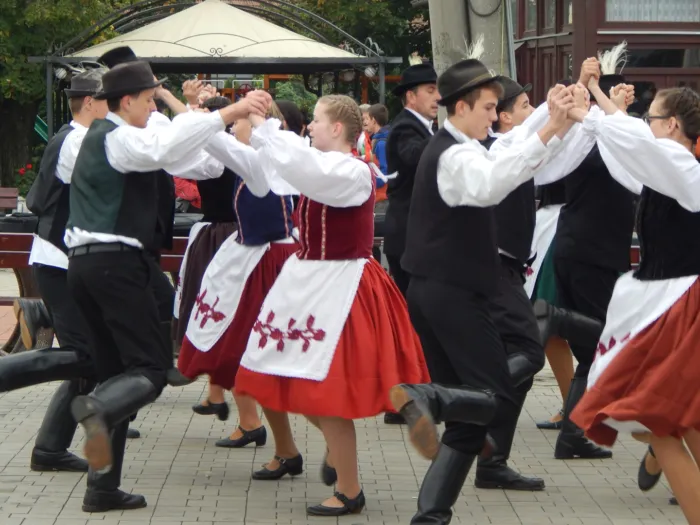
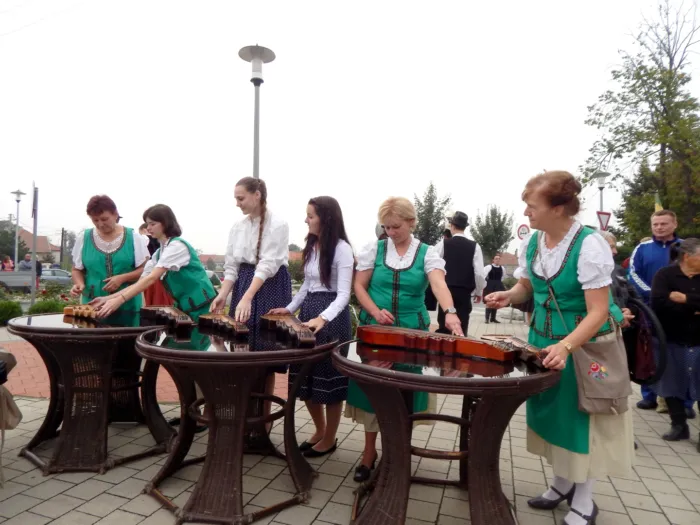
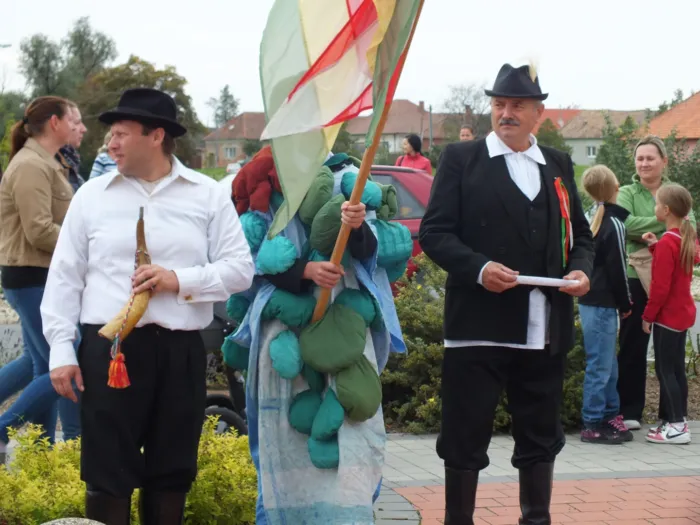
What is the harvest? ; Autumn is the time of harvest. The careful farmer picks the fruits of his work throughout the year, stores them so that there will be delicious fruit or fine wine on the table even in the winter months. ; Once upon a time, the harvest took place in a barn, and when the work was finished, the farmer would treat his helpers to a feast as a thank you. He invited them to a blessing. Harvesting is one of the most beautiful but most difficult jobs. After the grape harvest, great festivities were organized in the area, including in Felsőszeli. In order for everyone to know about the event, they would go around the village in a carriage so that the wine judge would invite the residents to the ball. This fact, always expanded with a new element, was passed down to the younger generations, and has now become an important part of the regular activities of the Csemads, who are over 65 years old. The harvest parade is a large-scale event, with its preparations and two-day celebration, it always moves the young and old of the village. ; Harvesting grapes and processing them has always been one of the more pleasant jobs. It is also because in today's world, cultural organizations are increasingly renewing the harvest traditions, even where grapes are only grown in small gardens. The harvest parade and fun have long been a characteristic event of the area. It is true that Felsőszeli is not exactly a grape-growing region, but the name Szőlős is still used among the vineyard names, which proves that this region also had a tradition of viticulture, which is why we all go there with pleasure to celebrate the rich harvest. ; The Csemadok Chronicle already mentions in the mid-1950s that the winemaker, accompanied by recruits, rode through the village in a decorated carriage with a crier, and invited the residents to the evening ball on the occasion of the successful completion of the harvest. This tradition was revived by the cultural organization in the 1970s, and they tried again a few times from the mid-1980s. Finally, at the suggestion of board member Béla Deák, it was organized again, and it is a pleasure to note that since 2000, the Csemadok has been regularly continuing the traditional harvest celebration without interruption, always highlighting a new element. So, it can be said that this year the cultural groups and their guests have marched through the village for the 15th time. ; For the sake of completeness, let us now talk more about the preparations and the method of invitation. ; ; Preparations ; The Csemadok management will start planning the event in the spring, as the date must be agreed with the participants, i.e. the singing groups, the dance ensemble, the cultural center and the Nyerges Polgári Társulas. The equestrian bandérium is one of the most important accessories of the harvest parade. If it were not for the support of the Csemadok Felsőszeli Basic Organization, they would not be able to realize this original idea every year. ; The day before the parade, the Plum-Poppy Seed Festival is held every two years, at which members of the exploration team also help bake. The poppy seed scone, the plum-poppy seed cake, and the keszőcés cake are all local delicacies. They are prepared together with the members of the choir in the afternoon. Then these cakes are offered to the spectators in the middle of the village on the day of the parade. ; ; The Harvest Parade ; The community center and its surroundings came alive at eight in the morning. Young people dressed in folk costumes gathered in front of the building. The guests arrived shortly after. ; Members of the local Mátyus dance group are busy decorating the allegorical floats. The Rozmaring singing group is placing the cakes, keszőcés pies, and scones on the tables in the main hall. The girls and other helpful members of the management are arranging the delicious grapes and apples on the plates. On the stage, the men have set up a grape arbor, where the winning figure of last year's drawing competition, the winegrower treading the grapes, will be placed. ; A huge bunch of grapes, a symbol of the harvest, has been installed above the entrance to the community center, illuminated by small lamps. ; The characters take their places on the floats decorated with grape leaves and ribbons. First of all, the Mátyus and Deák dancers, then the Darnózsel dance group, then the Kaposszekcső wind musicians, and finally the Rozmaring singing group's carriage closed the line. The 15-person cavalry band soon lined up, then the herald and the winemaker's carriage with the village flag, then the figure of the living bunch of grapes accompanied by the dancing girls, then the girl who held the title of "Harvest Beauty" last year among this year's candidates. ; It would be too long to even describe this colorful procession! A truly ornate crowd marches through the streets of the village. About 120 people take part in the procession. The first rider had the streets marked on a map, where the procession would go and where they would dance. ; So, in the beautiful sunny weather, at the door of the community center, the winemaker reads the poetic invitation in the presence of the mayor and the other dear guests. The horn player announces to everyone with a loud blast that the procession is starting. The wind players also play along, and the singers sing harvest songs. The dancers lure the people to the evening ball with dance at about 8 stations. The spectators offer the characters grapes, scones, and soft drinks. The lure takes place in a cheerful atmosphere. The whole village awaits the marchers. Many children follow the procession on bicycles. The audience applauds the announcer's humorous invitation with smiles. ; This afternoon, good humor, song, and dance are the main characters. It should be known that the realization of all this is strengthened by the knowledge that our grandfathers did it this way. ; “A nice episode is also worth mentioning. At the start, Uncle Kálmán Pónya, a former founding member, wished us good luck, who came to watch the procession at the age of seventy, leaning on a stick, because 50 years ago he was the first rider! Now he has also brought his great-grandson, who began to rejoice when he saw the horses. Uncle Kálmán asked with tearful eyes for a joint photo with the singers, so that he could put the current one in his album alongside the pictures of the old colt,” said Magdolna Mészáros, who photographed the scene at the time. ; The marchers usually return to the cultural center in the afternoon, where delicious goulash awaits them. After dinner, they prepare for the evening ball. ; As it gets dark, the guests arrive, and the entry tickets for “Szüret Szépe” are slowly running out. The band takes up position on the stage. After the opening dance, the ball begins, which lasts until dawn. ; ; The original harvest parade is accompanied by events that make this autumn holiday even more unforgettable. The carriages are decorated on the road. Grape bunches and grape leaves adorn the vehicles. The riders lead the procession in a carriage from the community center to the center of the village. The singing groups also stop in front of the Zely restaurant to perform, as do the dance groups. In the center of the village, the local Rozmaring singing group usually sings in the one-hour program. There are always guest groups, such as the Őszirózsa choir from the friendly Darnózseli, or the Csalogány elementary school choir, which also accepts the invitation. ; Among the dance groups, the Szigetköz dance group from Darnózseli, the Mátyus dance group, the school's Höcögők dance group, and the Kaposszekcső brass band were also included. The Gazdász dance group from Mosonmagyaróvár had a great success last year. The Rozmaring folk dance group from Abaújszina also added color to the program, the Rozmaring mixed choir from Hárskút, and the Bacska women's choir. This year, the local Kikelet zither orchestra also performed in the middle of the village. ; There is also a grape wreath, which is always carried by some of the dancers. They go at the beginning of the procession. After them, the Nyerges riders follow. The dance and singing groups sit on the carts. The pedestrian participants, who could not fit on the carts and carriages, walk behind. The characters wear traditional folk costumes. The Hungarian flag ribbon also appears on the dress of the little judge. The carriage is occupied by the mascot of the harvest, a human-sized bunch of grapes, who has been a participant in the procession since 2000. This was selected based on a drawing competition. The winning work was the work of Anikó Flaska. Usually a young boy or girl wears the mascot's dress. He also carries the village flag. The participants make the entire journey singing. The dancers are accompanied by the Bicskás band. The horn player blows the horn and everyone falls silent. The little judge invites everyone to the evening ball in a loud voice with the following verse: ; ; Inviting to the harvest ball: ; ; Good day to all of you! ; I speak to you, the judge of the grapes, ; I have good news, pay attention to it! ; The harvest is over, the barrels are already full, ; The harvest was rich, let's have some fun! ; According to old custom, we are having a blessing today, ; Our throats are very dry during the harvest. ; We have dug enough, we need to drink some, ; We are inviting everyone to the harvest ball. ; There will be a raffle, a tombola and a song, ; They haven't seen anything like this for about a hundred and fifty years. ; The young and old of the village will be there, ; Girls with dancing feet, all who feel like it. ; Everyone gather for the harvest ball, ; It's okay if all three feet touch the ground. ; The fun starts at eight o'clock in the evening, ; The fun, the merry dancing, doesn't stop until morning. ; Let's put a worthy end to the harvest, ; We expect everyone to come to the ball in the evening! ; ; Then there is dancing and cheerful singing. In the meantime, the organizers offer the spectators traditional Szeli cakes, pastries and, of course, fine wine. After the one-hour show, the carriage drivers go around the entire village so that the residents of the side street also know about this significant event. After the village tour, lunch was eaten in the large hall of the community center. ; ; The ball ; The ball is usually held in the evening at the local community center. The table also features delicious pastries from the Plum-Poppy Festival. Of course, sweet grapes and apples are also served. On stage, the performing groups sing and dance, adding colour to the show. The cage of shame, the pile, was previously set up on the stage or in the front of the hall. This iron cage was decorated with wild grapes or grape leaves by the members of the management with the help of the singers, and here and there bunches of grapes are hung or inflated balloons. These are guarded by the pipe girls at the evening ball, as it often happened that these bunches of grapes were stolen. If they were caught, they were put in a pile, from which they could only be released for a ransom. This could be wine or money. Sometimes they were also locked up because they were drunk, and they were kept there until they sobered up. The balls usually lasted until the next morning. In the past, the local gypsy band played it, but in the last twenty years all kinds of music have been played: two-person rock, four-person jazz. The ball also includes the Szüret Szépe election, which is always won by a pretty lady. There was also a pie-eating contest, a poppy seed food festival or a fruit exhibition. ; The accompanying events are also always held in the spirit of tradition. The organizers are careful to ensure that young people can be part of the celebration, so that the village tour is memorable. The goal is to preserve old traditions and pass them on to new generations. ; ; Harvest celebration, 2010: ; ; ; ;