



The cult and memory of Saint George in Dunaszerdahely and its surroundings
Other - other
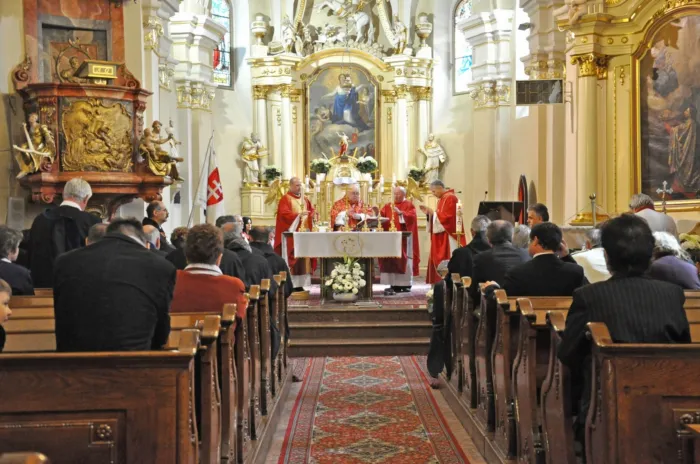
One of the most well-known military saints, George has been the patron saint of the settlement for about 1000 years, that is, since the first decades of the Hungarian statehood. ; ; Namely, since the law of Saint Stephen, according to which every ten villages had to build a church. According to this, at the intersection of the roads leading through the area, at the highest point of the later city core, the first (wooden) church was built for Szerdahely and the villages that were established around it or that became Christian in its “attraction area”. And the church had to choose a patron saint, that is, a patron saint. Thus, the ancestors chose Saint George the Martyr as the patron saint of the ancient temple, and with it the settlement(s), whose person – the patron saint of gunsmiths and mounted warriors, knights – could have been an attractive role model for the Hungarians who settled here. ; ; Over the centuries, the patron saint of dozens of former settlements that existed in the former Dunaszerdahely and have now merged into the city or disappeared, as well as of additional villages belonging to the church (e.g. Udvarnokok, Éték, Abonyok, etc.), remained the famous martyr. ; ; The surviving documents and written mentions authentically preserve all this. It is even known that he was certainly the patron even before the stone church was built in 1329 according to tradition, since a few years earlier a document names the church person mentioned in the first writing, Pál, as the parish priest of the St. George Church. ; ; The veneration of St. George was not in question for the pious family that probably built the stone church (i.e. the foundations of today's church), the Szomor or Zomor of Pókatelek (i.e. the later Kondé family of Pókatelek). Although in 1518 a side nave was built on the northern side of the single-nave church in the Gothic style, significantly changing its appearance, and in 1599 a new patron of the church was “in the person of” the Count Erdődi Pálffy family, George did not “disappear” even then. ; ; And when the church came into the hands of the Calvinists from 1631 to 1647/50, only one “significant old picture” was visible on the old, only remaining high altar of the barren building – certainly a depiction of Saint George. It has now also been clearly proven that when the sacred place was rebuilt and Baroqueized in 1742–43. ; ; During the internal renovations carried out in the early 1800s, when the four altars were replaced with three new ones and Mary (the image of the Blessed Virgin assumed into Heaven) was placed on the main altar, the former saint was not degraded, but her equestrian statue was raised above the altar – as we can still see today. However, this altar change during the work of the parish priests Péter Iván or Ferenc Magos (1789–1820 and 1820–30, respectively) is clearly significant: the Virgin Mary, who had previously been highly revered in Szerdahely and had been celebrated with a small feast for centuries, was “elevated” alongside the veneration of George. However, the title and patron saint of the church remained Saint George. ; ; The question arises: Is Dunaszerdahely proud of Saint George today? The answer lies clearly in the resolution of the council of representatives, which elevated St. George's Day and farewell to a holiday commemorating the founding, patron saint, unification and illustrious personalities of the city. Because a millennium of respect can be forgotten, but not erased.