
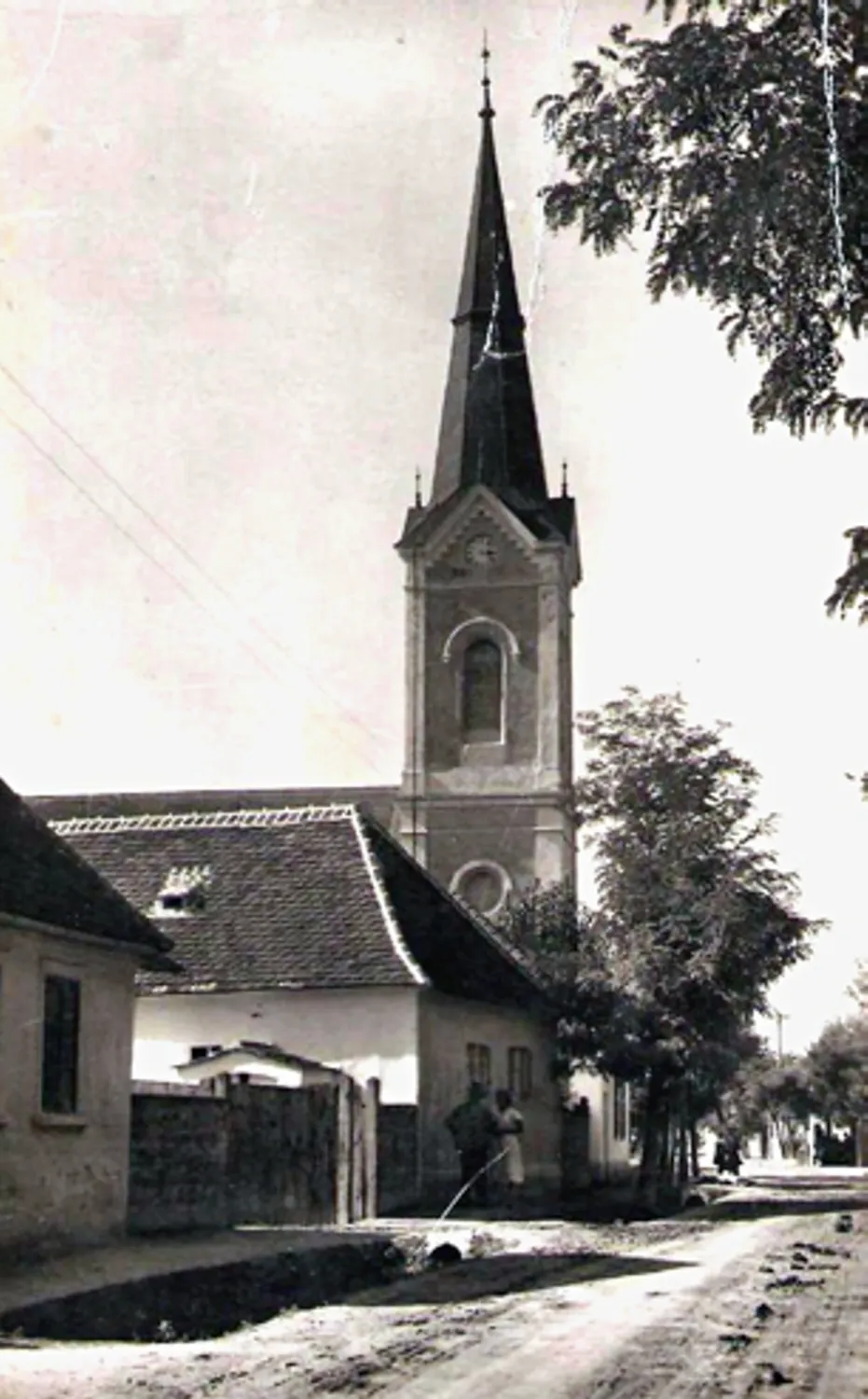
Reformed Church in Réten
Other - other
The congregation in Réte was already a flourishing congregation in the last quarter of the 16th century. Its church from that time - according to oral tradition - was a Hussite prayer house with a red chalice above the entrance. ; During the Counter-Reformation, it was the only articular place in the far vicinity, which meant that the faithful in Réte could freely practice their religion and maintain our church. Therefore, it was considered a central place, which even the faithful from the distant congregations in the Vágmenti region visited on holidays to practice their faith when they were prevented from doing so at home. ; The connections with the brothers in Bohemia and Moravia are also of old origin. According to the parish records, during the time of the pastor Sámuel Szeli, elected in 1701, the contacts, which were certainly old, were still maintained. These relations only deepened under the pastorate of János Valesiuus, who received the commission from Bishop Péter Magyari - as he himself writes - "to have the Czech Brethren, with the permission of the Holy Ecclesiastical Council, twice every year, released to the Hungarian Country and Moravian Borders, who have remained faithful to Christus, for the relief of the hungry and thirsty souls". ; The present church was built in 1769, with a facade facing the street, but without a tower and street entrance. The Hussite prayer house, which had been used as a church until then, was converted into a parsonage, the tower was built in 1861-62, and the new parish in 1878. The old Hussite building served the purposes of a school and a teachers' residence. The school used until then became a church residence. The church cast new ones to replace the bells taken away in the First World War. In 1928, a modern school with a teacher's apartment was built with donations from the faithful and public works. (Kálvinista Szemle, Vol. XXIX, September 1958, No. 9)