
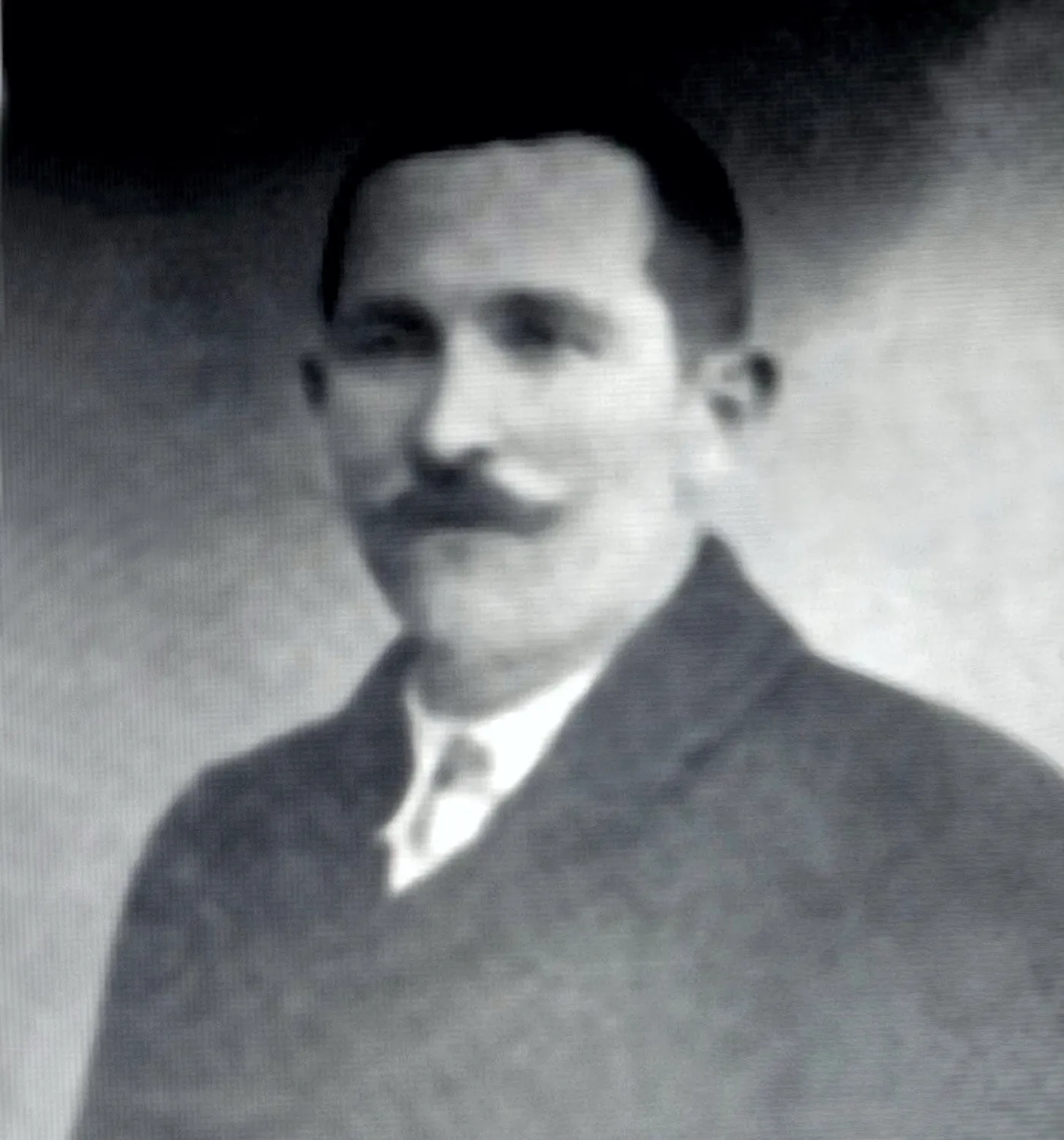
László Pém, the folk poet and farmer
Other - other
* June 9, 1877, Marcelháza - † May 23, 1946, Marcelháza / folk poet and farmer ; ; In our series following the forgotten personalities of our region, we present László Pém Pálmai from Marcelháza, folk poet and farmer, who was born on June 9, 1877 in Marcelháza. He comes from a religious, Roman Catholic family of 7 children, he was the first child of his parents. His mother was Anna Senkár, and his father was a miller, József Pém. His siblings: Ilona József, Otília Kálman and Etelka. His brother József's son served as a Catholic priest for a while, then resigned from his priesthood. His great-grandfather's father, András Pém, was probably an advisor to Maria Theresa until 1749. László Pém married Mária Zsidek in 1898. They had three children, László, István and Béla. ; His poems revealed that he loved his family and nature very much. His poems were published in the Catholic newspaper of the time from 1914. He won several gold medals, gold certificates and gilded laurel wreaths with his poems. In May 1939, he won a gold certificate with his work “From the Time of the World War”. In December of that year, he won the Tinódi Gold Certificate with his poem “Somewhere on the Tisza River”. In 1942, Áron Gábor received a gold certificate with his poem “Past, present, future”. ; More than 300 of his songs, narrative poems and plays were waiting to be published. He performed his poem “To the Hungarian National Couple” on the occasion of the establishment of the local organization of the Hungarian National Party. His poetry collections: “Pacsirtadal” and “Barázdákbol”. ; From the poetry collection "From the Furrows", the wonderfully powerful moods of the ancient love of freedom of the Hungarian people's soul were brought to the surface by the world-shaking events of those times, just as the amber nuggets petrified from the resin of the giant prehistoric pines were brought to the surface by the waves of the angry sea. ; The descendants of the Scythian and Yagiz peoples who lived a nomadic life on the sunny pastures of the ancient Turanian fields, who came here, today crush the flat Slavic skull bones with the Mannlicher brain with just as much energy as they once did the heads of Svatopluk's rebellious people with the mace and the falchion, and this little skirmish, these outbursts of the fiery ancient virtue, are still captured in rhymed stanzas by the poets of the people with just as natural, unsophisticated poses as the lute-playing Igris of the old Hungarians. ; The Marcelháza ploughman-farmer, who stands six elementary classes above his Turanian ancestors, learned some poetry from the birds of the sky, the lark, the wagtail, and the wagtail, by the ploughshare, while ploughing and sowing, he learned the uniformity of the lines of poetry on the lines of the furrow, he observed the ringing of rhyme in the sound of the dawn bells and although there is no symmetry in nature, due to the natural tendency inherited from some of his Igric ancestors, he tried to arrange his thoughts in regular glades, in other words, to write poetry. ; The moods of his simple soul, cast into poetic forms, should not be read through the lens of rigid criticism, because these poetic narratives were reproduced for good village acquaintances and relatives, but neither should these beautiful, pure, natural expressions of the Hungarian folk soul be lightly belittled. The ancestor of today's advanced Hungarian culture was also the runic script engraved on hazelnut canes. Let this simple runic script, in its unadulterated originality, reach the hands of the general public interested in the noble properties and ancient intelligence of the Hungarian race, just as one or two of his poems have already been presented at the Petőfi Society's reading session. ; The name of László Pém is not unknown in the editorial offices of literary magazines either. Several of the capital's most distinguished daily and weekly newspapers have praised his poetic talent. These poems truly set off from furrows and are the fruits of the ancient energy, the pure virgin productive power of the Hungarian motherland. ; The author used the pure income from his published poetry collections for the benefit of soldiers blinded in the war. He died on May 23, 1946. His grave is located in the Kurtakeszi cemetery, where his own poem was placed. ;
Ferenc Miriák / Photo archive: László Pém / Photographed by Valéria Bogár
;