
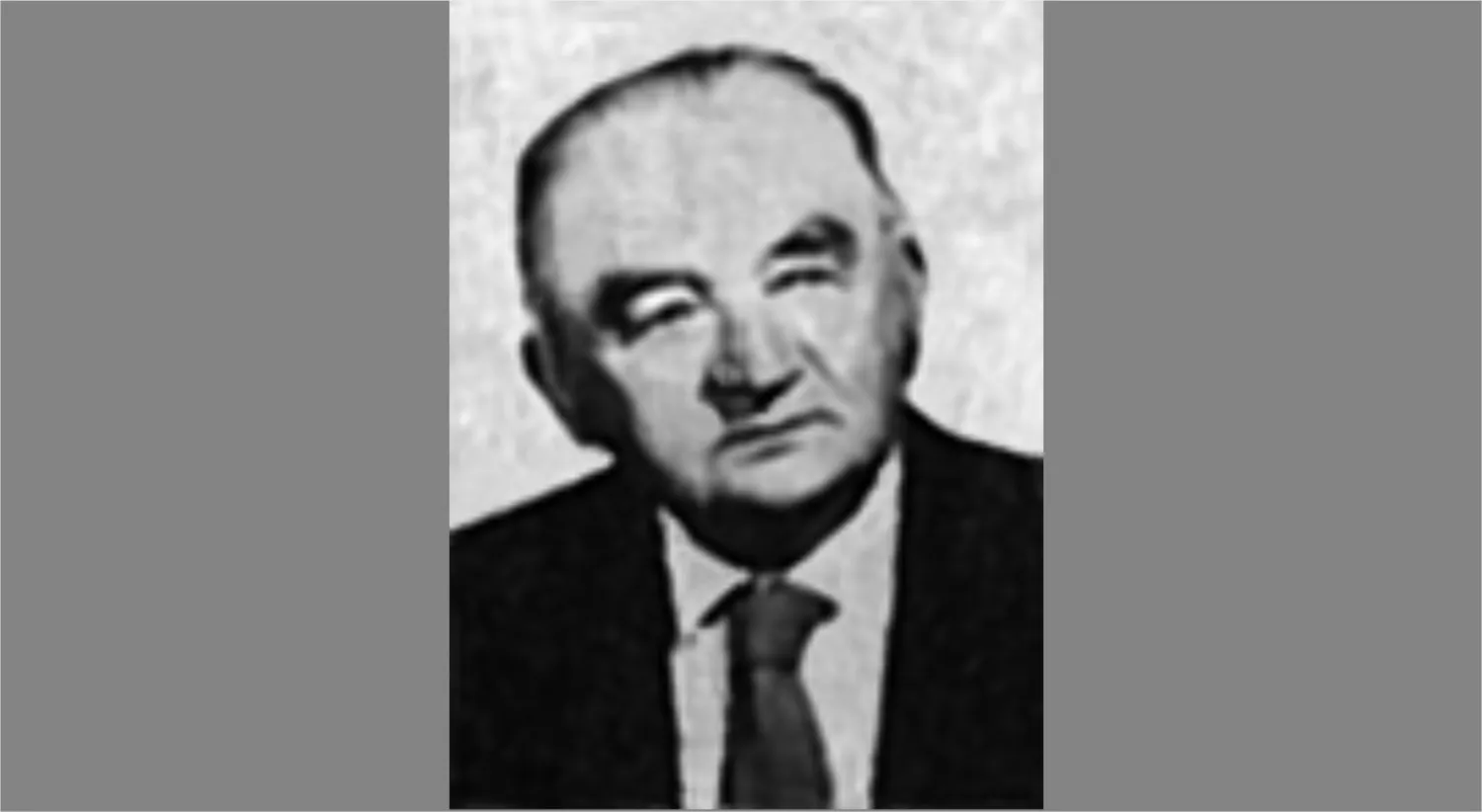
Oscar Paulinyi
Other - other
* Garamszeg, December 28, 1899 – † Budapest, May 1, 1982 / historian, archivist ; ; As a member of the Eötvös College, he graduated from the Budapest University of Science and Technology with a degree in history and Latin, and received his doctorate in Hungarian cultural history in 1922. After that, he spent one semester each in Vienna and Berlin. In Germany, he conducted research in the Fugger Archives in Augsburg. Between 1923 and 1930, he worked as a sub-archivist at the Hungarian National Archives. Between 1930 and 1946, he was a Hungarian delegate assigned to the archives in Vienna, and in 1947 and 1949, he conducted research there under the auspices of the Soviet Academy of Sciences. Between 1949 and 1955, he was a lecturer at the Hungarian National Archives, later head of department, and then referent of its chamber archives. In 1955, he organized the Czechoslovak social science research group within the framework of the Hungarian Academy of Sciences, which he headed until 1959. Between 1957 and 1970, he was a senior fellow at the Institute of History of the Hungarian Academy of Sciences. He primarily dealt with late medieval economic history, mining history and the history of coinage in the period. He was considered one of the most respected scholars of early modern mining history in Hungary and abroad. He wrote the chapter entitled Industry and Trade in the 2nd volume of the five-volume Hungarian Cultural History, edited by Sándor Domanovszky (1939). ; ; His main works: ; The formation of the saltpeter industry in Hungary, 1924, ; Papers on the history of the attempted re-catholicization of the free royal city of Košice in 1603–1604, 1930, ; Hungary's gold production at the end of the 15th century and the middle of the 16th century, 1936; The initial forms of entrepreneurship in feudal precious metal mining, 1966, The general development of our precious metal production and national economy in the era of emerging and developed feudalism, 1977