
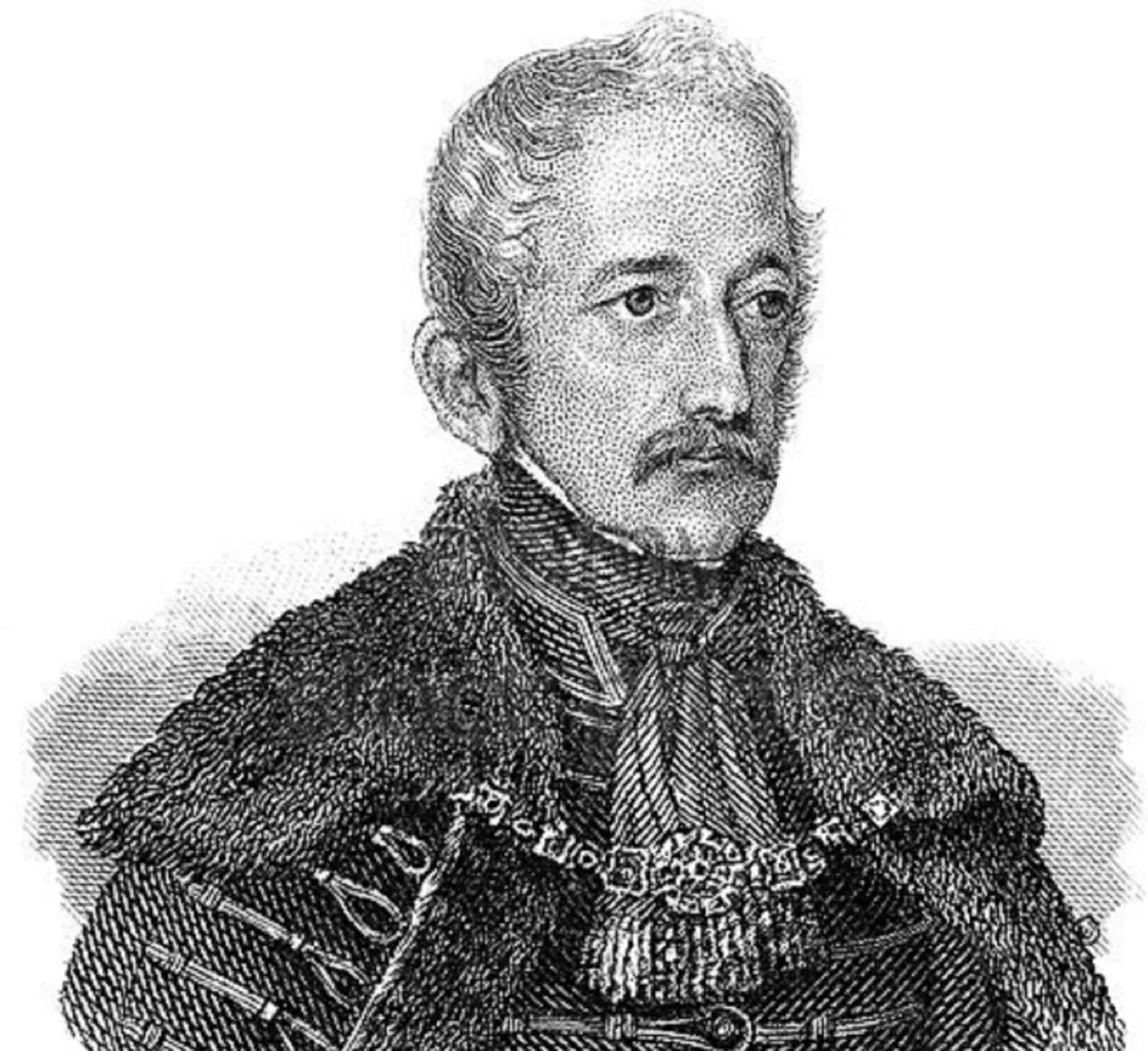
Alajos Mednyanszky
Other - other
* Prékopa, April 20, 1784 – † Galgóc, June 17, 1844 / Hungarian royal inner privy councilor, one of the reformers of the education system, geographical travelogue, ethnographic collector, honorary member of the Hungarian Academy of Sciences; ; From 1797 he studied at the Theresianum in Vienna. From 1801 to 1804 he studied philosophy and law at the Bratislava Academy, then entered the service of the Hungarian Chancellery. He was entrusted with transporting the Chancellery archives from Vienna to Buda in order to avoid the approaching Napoleonic army. In 1810 he retired to his estate in Nitra County, Veszelé, and conducted historical, archaeological, and literary studies, collecting fairy tales, legends, certificates, archaeological relics, and books. In 1828 he became a member of the committee that worked on the reform plan for schools and education. In 1830 he was appointed royal governor's councilor, in 1833 royal court councilor and chancellor's lecturer, in 1837 he was appointed a real inner privy councilor, vice-president of the chamber and lord governor of Nitra County. In 1839 he was chairman of the committee formed for the purpose of organizing schools. In 1842 he was chief treasurer (president of the chamber). As an educational politician, he fought for public education to be in Hungarian, prepared a plan for industrial schools, urged higher-level teacher training, and wanted to provide more space for realistic knowledge in educational materials. He published novelistic travelogues and historical articles, mainly in German, but also in Hungarian. His notable stories and a collection of folk tales. He was a director of the Hungarian Academy of Sciences from 1830, and an honorary member from February 1831. His son, Dénes Mednyánszky (Veszele), was a geologist. ; ; His main works: ; Malerische Reise auf dem Waagflusse in Ungarn (published in Hungarian in 1981 under the title Festői utazat a Vág floyon Magyarország), 1826, ; Erzählungen, Sagen und Legenden aus Ungarns Vorzeit (published in Hungarian first in 1829, then in 1983 under the title Regék és mondák), 1829.