

Bird feather plucking
Other - other
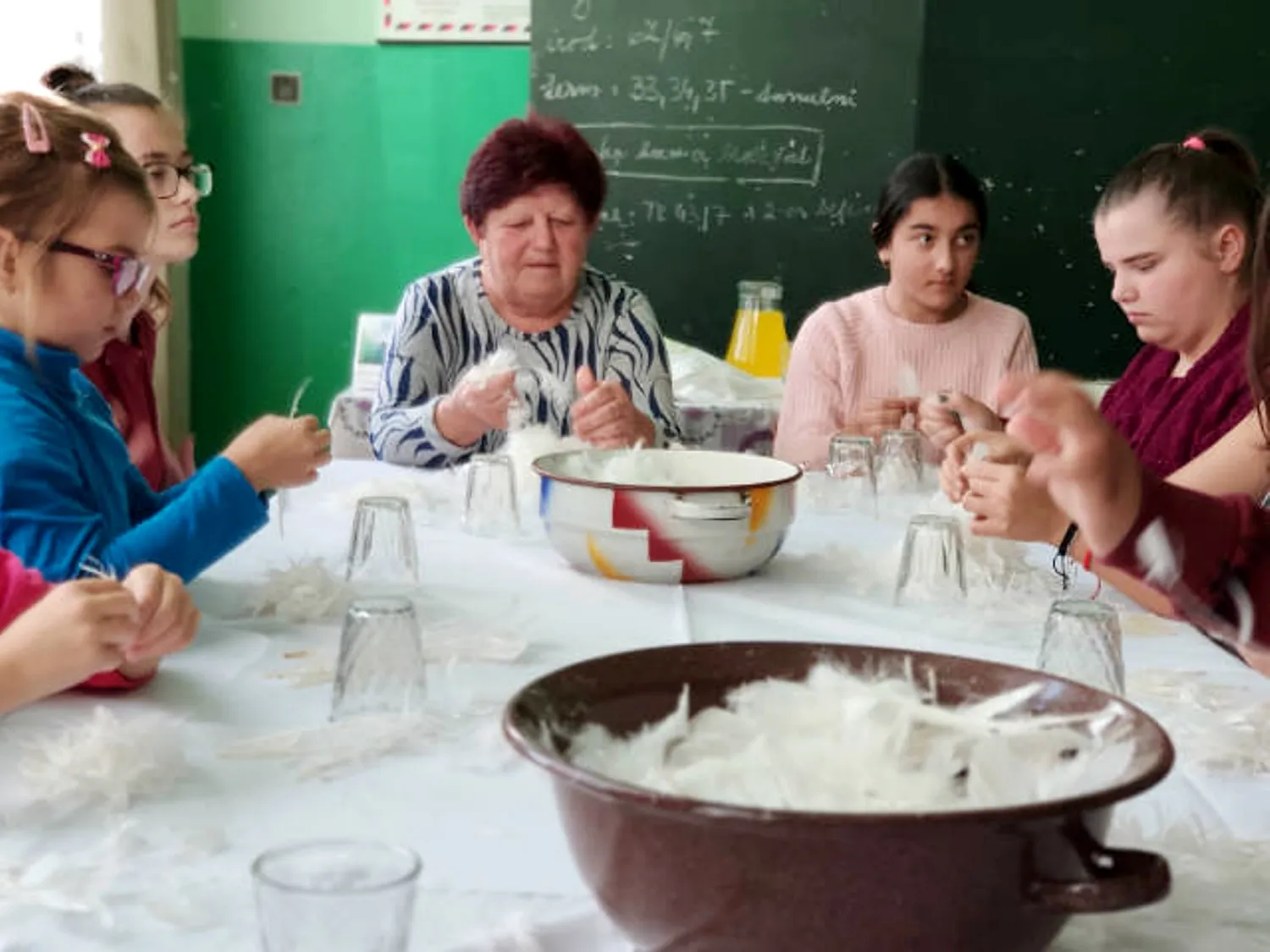
In the old days, village gates were noisy with the noise of small animals. Madar was no exception. The ordinary housewife kept hens, ducks, and geese so that a variety of dishes could be placed on the festive table. Because the villagers only ate roast duck and roast goose on holidays and on Sundays. On other days, they were satisfied with simpler dishes. ; However, geese were not only kept for their tasty meat, but their delicate soft feathers were also used to fill pillows and cushions. When the goose had reached adult size, the housewife would catch one or two of the clucking birds and pluck a few from the delicate down under its wings to check whether it was “ripe” yet. If the goose’s feathers were bloody, she had to wait a few days before weaning; if no drops of blood appeared on the plucked goose feather, then she could start weaning the geese. ; This happened when the landlady took the goose she had caught and was clucking loudly into her lap and quickly tore out the soft down at the base of its wings. The animal would have shed these feathers anyway, but in this way they were placed in a paper bag as a valuable treasure to dry out sufficiently until winter set in. The moulting could be done twice, first when the gosling reached adulthood, meaning its feathers were fully mature, and secondly before autumn set in, at the end of August or the beginning of September. ; From mid-December onwards, the evenings became long, it soon got dark, and the villagers were confined to their four walls. The time had come for those jobs that could be done sitting around the long table, while good conversation, giving gifts, and loud laughter spiced up the gatherings. Such were the cracking of nuts, the crushing of corn, the plucking of feathers, and the plucking of feathers. ; The fire crackled loudly in the sparhelt, the stove, filling the village homes with warmth, the large table was covered with a white damask tablecloth, in the middle of which the housewife prepared the feathers to be plucked in a huge steaming jar. The neighbor, the housewife, and her friend all came over to get the job done sooner. They sat around the table, and each took a handful of feathers from the steaming jar and quickly tore the fluff off the central shaft. The feathers “stripped” in this way were stuffed into angin, a bag sewn from a densely woven material, in which they were then hung to dry until it was their turn to stuff them into pillows or duvets. ; While plucking the feathers, the housewife offered her helpers boiled wine tea, which not only kept the women warm, but also contributed to making the evening more cheerful. The feather plucking was held for three or four evenings, and at the end of each evening they tasted the feather cake, which of course did not contain feathers, it was just called that in honor of the work. ; The men also contributed to the work, with a cheerful card game, and after drinking a few cups of pálinka, they entertained the women with loud singing. ; ÉGAI Madar also incorporates the practical knowledge and introduction of this tradition into its educational work. At the school feather plucking event in 2019, Pavelka Jánosné née. Rebeka Czibor and Matusek Jánosné née. Ida Kun were the feather plucking experts.