
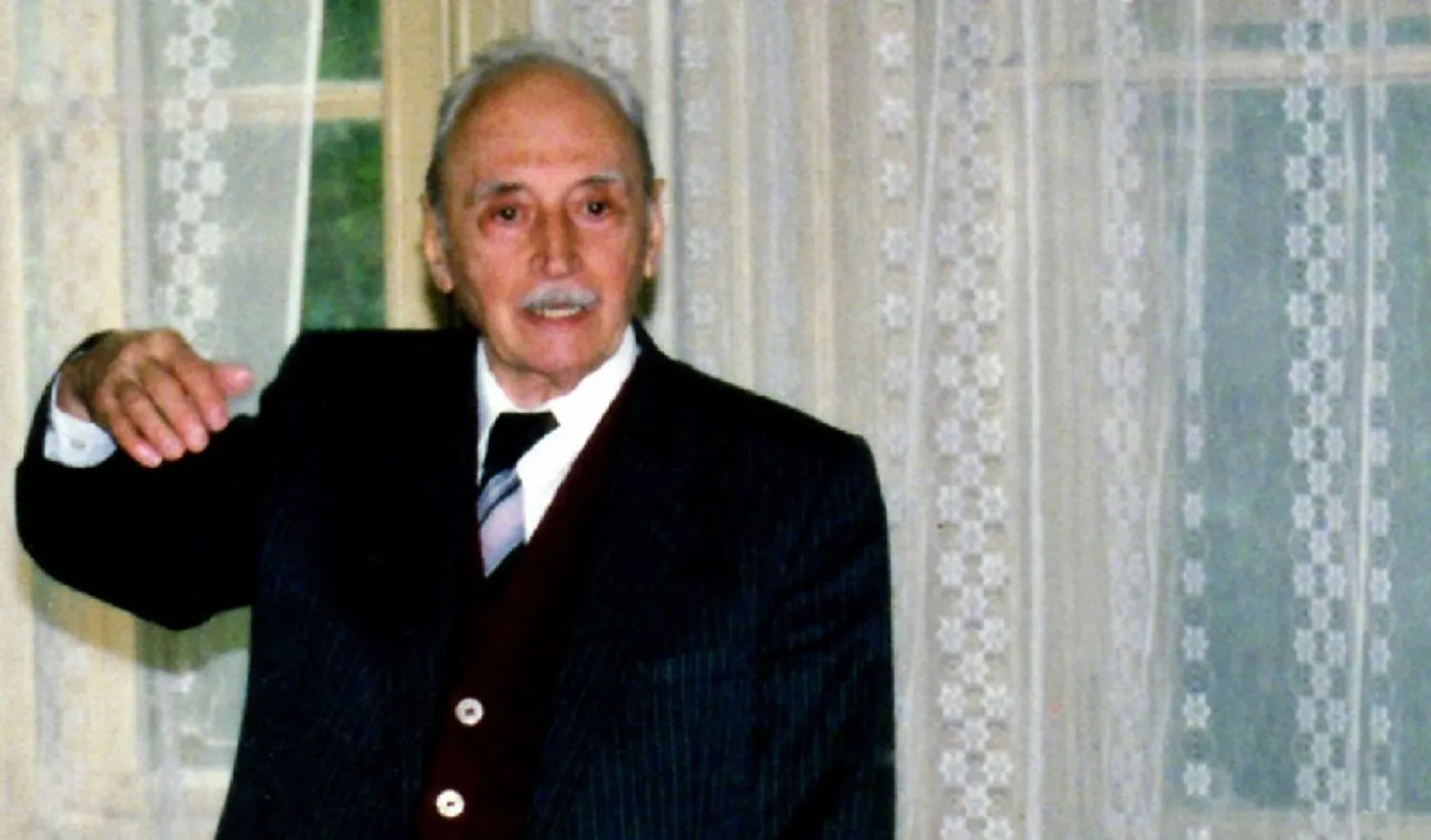
Gabor Lukő
Other - other
* Komárom, 4 November 1909 – † Budapest, 21 April 2001 / ethnographer, Kossuth- ; prize winner (2001) ; ; He began his studies in his hometown, continued at the universities of Budapest and Bucharest, and obtained his doctoral degree in 1936. He was a student of Sándor Karácsony, and then his interest – perhaps precisely due to László Németh’s ideas promoting the historical brotherhood of the peoples of East-Central Europe – turned towards Romanian folk culture. In 1931–1932, he studied Romanian at the Nicolae Iorga Free University, became acquainted with the methods of village researcher Dimitrie Gusti, and then spent months among the Csángó-Hungarians of Moldavia. He worked primarily in the Jugán region north of Szabófalva, which was still predominantly Hungarian-speaking at the time, as well as in Lujzi-Kalagar and Bogdánfalva near Bácó, not only as a passing, traveling ethnographer, but also living with them, getting to know the phenomena and laws of folk life from the inside. As a result of his research, he wrote his fundamental work, The Moldavian Csángók, which remains to this day. However, despite the help of his Romanian friends who were engaged in sociology and ethnography, the official authorities soon expelled him from Romania. From 1937 to 1945, he worked at the Déri Museum in Debrecen. During this time, his book The Forms of the Hungarian Soul was born as a synthesis of folk art, folk poetry and folk music. In it, he posed one of the great questions of the fate of the Hungarian people not as who is a Hungarian, but as what is a Hungarian? He proved that the Hungarian people have their own formal language, an independent way of expression in different branches of art. What Kodály and Bartók found in Hungarian folk music, Gábor Lükő formulated in the material and spiritual world of Hungarian folk art and folk poetry. In 1946, he became a private university teacher. Between 1950 and 1970, he was the director and collaborator of the museums in Gyula, Baja and Kiskunfélegyháza. His narrower field of research is the formal analysis of folk music, folk poetry and folk art and their Central European comparison. He was ahead of his time with his research, many people watched his work with suspicion and threw obstacles in his way or ignored his results. His critical comments about the fact that many people were adapting to Western schools and introducing schemes and panels into Hungarian ethnography instead of independent thinking were received with disdain and led to his forced retirement. His most important work is The Forms of the Hungarian Soul, which he revised several times. It is divided into four chapters: the first part is a description of the symbols of folk poetry and folk art that prove to be identical, the second part analyzes certain problems of artistic spatial perception and representation, the third part deals with folk music, and the fourth deals with technical issues of folk art. ; ; His main works: ; The Moldavian Csángós I. The Csángós' connections to the Transylvanian Hungarians, 1936, ; The pastoral art of Hortobágy, 1940, ; The forms of the Hungarian soul, 1942, ; The art of the old sculptor and engraver of Kiskunság, 1983. ; After his death, the following was published: "The Hungarians lived there...", 2001, ; Our musical mother tongue (2003), ; His work entitled Himfi and the deer (2004).