
The work of József Kossányi
Other - other
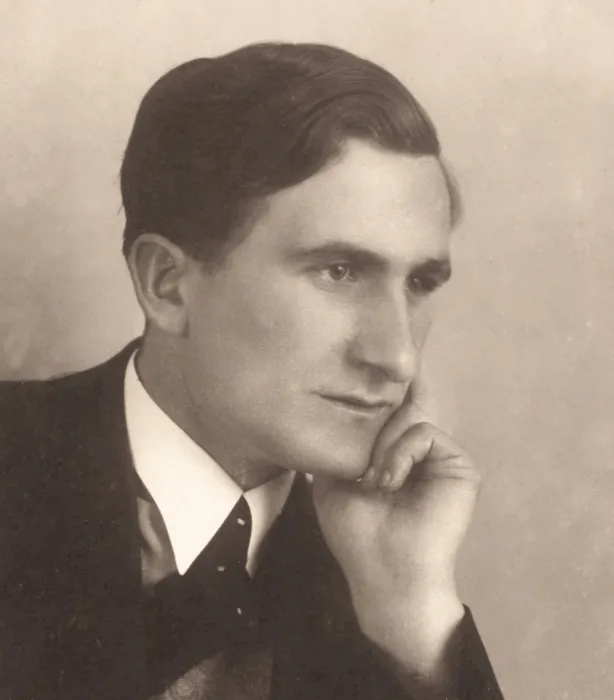
József Kossányi was born in Komáromszentpéter, Mátyusföld, on March 8, 1908. His parents, Alajos Kossányi (1876-1957) and Erzsébet Bohon (1886-1969), were teachers, and they intended him for this career. They raised six of their seven children (Alajos died early, he is buried in Szentpéter), and of them only Géza (b. 1906) did not choose a teaching career, he became an ironworks worker instead. The other children: Erzsébet (b. 1905), József, István (b. 1909), Margit (b. 1913) and Mária (b. 1915) all remained in the teaching profession. After graduating from the Benedictine Gymnasium in Komárom, József Kossányi obtained a teaching certificate in Bratislava, and in the period between the two world wars he taught the little Hungarians who were in the minority in Ógyalla-Bagota and Komárom-Szentpéter. Later he became a teacher, teaching history, geography and Hungarian language in the Komárom civil school. Even after all this time, many of his students remember his knowledge that he passed on with love and the teacher who educated people to stand up for themselves. In 1935 he married Sára Ferenczy (b. 1914). They had five children: Éva (1936), Márta (1937), Miklós (1938), Katalin (1942) and József (1943). ; The heroic age of the struggles of the Hungarians in the Uplands was the early thirties. At this time, the struggle for the cultural, social and political empowerment of the Hungarians in the Uplands was taking place. József Kossányi became one of the leaders of this struggle. In addition to teaching, he organized a drama club at school, led the scout troop, and was even a levente commander in his village. He participated in the management of the SZMKE (Szlovenszkói Magyar Kultúregyesület), organized the Uplands Gyöngyösbokréta, and was the literary secretary and board member of the Jókai Association in Komárom. In the meantime, he continued to write poems that pointed to serious national and social problems, which were published in Magyar Írás, Új Élet, Magyar Minerva, Magyar Család, Prágai Magyar Hírlap, Komárom Lapok and other Uplands organs. Kossányi was one of the most influential Uplands poets at that time, along with László Mécs. László Mécs discovered the poet in him, and he served as an example for József Kossányi, whose poems reflect the spiritual influence of the priest poet. He also learned a lot from the editor Viktor Szombathy, who himself was involved in fiction and was happy to teach the art of writing to the enthusiastic young man. Kossányi's volumes, Máglyák (poems, 1929, Komárom – Minek jöttem, Dal Édesanyámnak, Anyám sele, Nem lásztás magyarnak lenni) and Éjféli kiáltás (poems, 1933, Komárom – Szentpéter, Éjféli kiáltás) caused a stir not only in the Highlands, but also in the motherland. ; After Hungarian schools were closed in Czechoslovakia after World War II, he continued teaching for a short time in Hungary, in Csepreg. He emigrated from there for political reasons. Kossányi first organized a Hungarian elementary school in Salzburg, Austria, and taught at the Hungarian high school in Innsbruck. In 1951, he emigrated to the United States of America. His good friend, Ferenc Nehéz from Mocs, who excelled in prose literature, also went with him. One of Kossányi's dear teachers, Kristóf Hites from the Benedictine high school in Komárom, who published a newspaper there about the Upper Hungary, and Kossányi often published his writings in it, also emigrated to America. In America, he met his highly respected role model, László Mécs. Kossányi kept in touch with him and helped him a lot with the publication of his last volume in 1976. ; Kossányi first worked in factories in Chicago, later in Cleveland, but continued his valuable public, poetic and writing activities in emigration. His writings were published in the newspapers Californiai Magyarság, Katolikus Magyaroks Vasárnapja, Krónika, Magyar Élet, Magyar Nők, Magyar Újság, Szabad Magyarság, Szabad Magyarág, Szívárvány and the Új Idő he founded. Two collections of his poems were published in America: Saint George and the Dragon (Cleveland 1960 – Tollfosztás, Czompónéni, Örök Magyarország), the title of which already shows an allegorical picture of contemporary Hungary. For the poet, Saint George is identical with the Hungarian people, and the dragon standing opposite him is the ruling communist power. The duel between the two can be seen in many poems in the volume. His other volume is Végtelen út (Cleveland 1970 – Szentpéter, Mátyusföldi lakodalom, Szülőföldem, Végtelen út, Magyar történet). The cover of this last volume features a portrait of the poet, drawn by Masa Feszty, the daughter of the famous painter Árpád Feszty. ; The last stop of József Kossányi's life was Budapest. After long decades of emigration, in 1983 he was allowed to return to his beloved homeland, "Eternal Hungary". He was able to spend a few more years with his children, from whom cruel fate had torn him apart. ; Katika, his youngest daughter, remembers that before his emigration, her father always sang to her the song "Bird, bird". Perhaps he already knew how far she would fly... The little girl could not see her father for many years from the age of six, she herself was raised by relatives in Budapest, and it was only in 1969 that she was given the opportunity to meet her beloved father in Yugoslavia, at a campsite. Katika still lives in Budapest and is a frequent guest at our school. It is a twist of fate that two of Kossányi's children also found their happiness in America. Éva still lives in California with her family, Miklós, who founded radio and television overseas and dedicated his life to it, is unfortunately no longer alive. ; József Kossányi died in Budapest on September 15, 1988, and is buried in the Rákoskeresztúr cemetery. The local elementary school took the name of József Kossányi on October 25, 2003, and since then they have regularly commemorated the famous native of their village. ; ; His published poetry collections: ; • Máglyák (Komárom, 1929), ; • Éjféli kiáltás (Komárom, 1933), ; • Szent György meg a sárkány (Cleveland, 1960), ; • Végtelen út (Cleveland, 1970).