
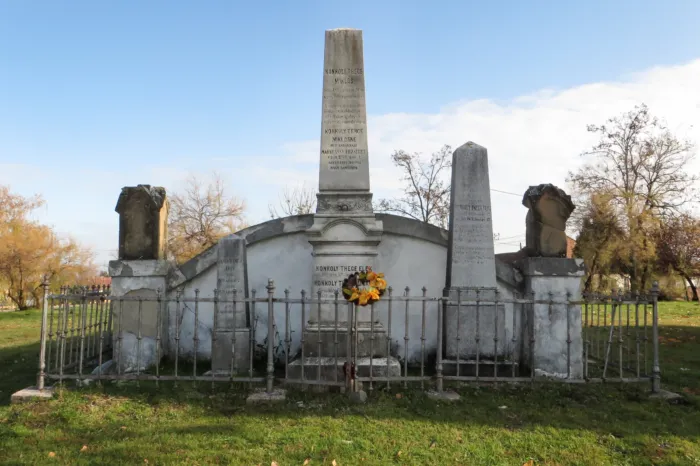
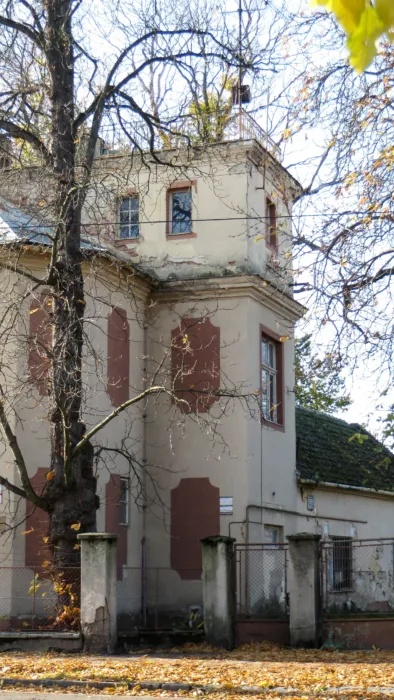
The cultural heritage of Miklós Konkoly-Thege
Other - other
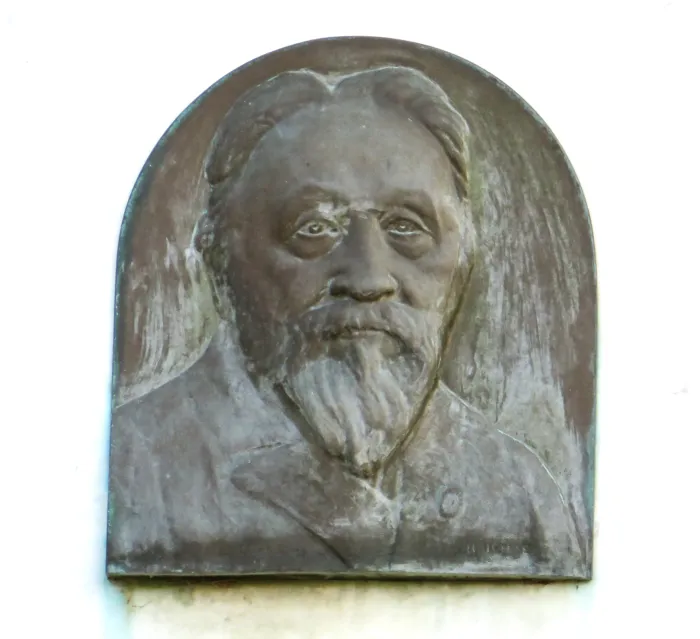
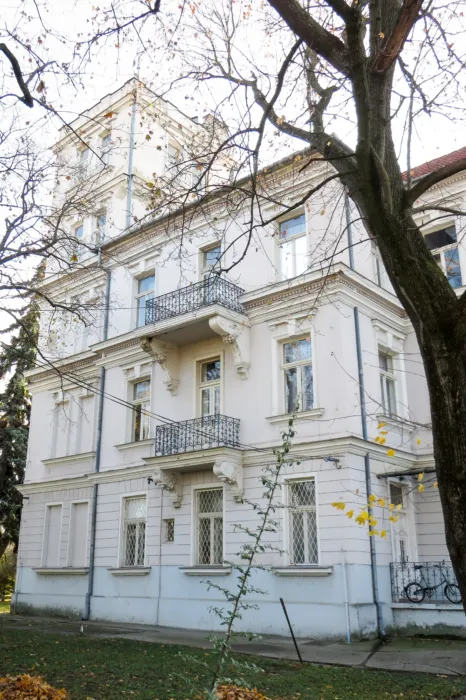
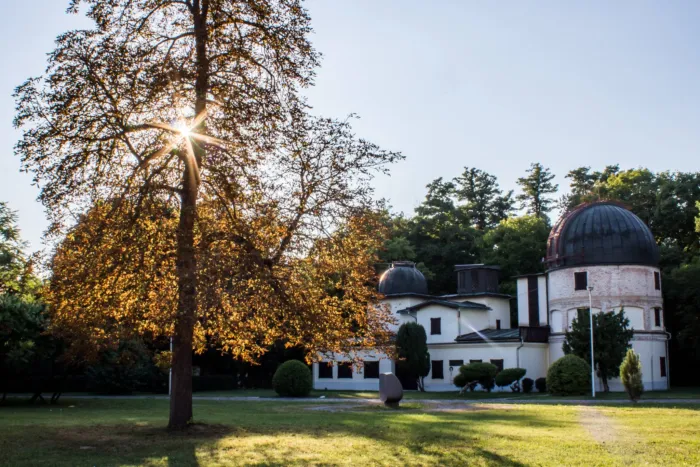
Miklós Konkoly-Thege was born on January 20, 1842 in Buda, and spent his life on his family's estate in Ógyalla. In 1857–58, he attended the physics classes of Ányos Jedlik, the chemistry classes of Károly Than, and studied mineralogy. He then took his matriculation examination at the Benedictines of Pannonhalma. The following year, he enrolled in the law faculty. In 1860, he went to Berlin to take his doctorate in law, but he also listened to the lectures given by Dove (meteorology), Magnus (physicist), Rose (chemist), and Encke at the Berlin Observatory. ; He worked with steam engines. He also loved sailing and locomotives. In the 1860s, he visited observatories (Paris, Greenwich, Milan, Zurich). He visited art galleries, loved the paintings of the modernists, and gave lectures on them. He married in 1863, but unfortunately both of his children died young. In 1867 he established a meteorological station and in the summer of 1871 an observatory in Ógyalla. Within astronomy, he was interested in astrophysics (primarily spectral analysis). He also engaged in shooting star and Sun observations (from 1872). He purchased instruments (spectroscope, refractor, etc.) and then made them. He also engaged in the observation of planets and shooting stars (meteors). Konkoly's private observatory gradually became a state task. In the 1880s, accurate timekeeping (chronograph) was important, which arrived in Budapest daily by telegraph. In 1882, Ógyalla and Szombathely-Hereny were connected directly by telephone via telegraph lines. In 1890, he organized the First Amateur Photographic Exhibition in Budapest, with great success, to which foreigners also sent pictures. In 1890, the Academy nominated Konkoly for the vacant position of director of the Meteorological and Geomagnetic Institute, and he was appointed in 1891. 21 years later, he retired, ten times more people worked at the institute than before he joined, and they moved to an elegant headquarters. A geomagnetic observatory was established in Ógyalla, there were 1,400 precipitation measuring stations throughout the country and 140 fully equipped climate stations. Konkoly dealt with the production of wind vanes and the most practical solution for thermometer houses. He also encouraged the photography of clouds and the Institute was transferred from the Ministry of Culture to the Ministry of Agriculture, where it was appreciated and supported ten times more. From 1896, he was a member of parliament for ten years (Freedom Party). He was a permanent member of the parliamentary committee on transport. He met with ministers. He corresponded with many astronomers and natural scientists: an American, a Canadian-American, a Frenchman, a Frenchman of Slovak origin, a Slovak, a Russian, a Russian-German, two Czechs, a Belgian, a Danish and an Italian, five Austrians, seven Englishmen, thirteen Germans and sixteen Hungarians. On the occasion of the millennium, he presented meteorology in the City Park and also set up an exhibition on the history of instruments. He organized the establishment of the world's first Meteorological and Astronomical Museum, with donations received from all parts of the country. "In 1914, there were already more than 500 objects in the collection. Unfortunately, a very large part of this was destroyed in World War II" - Bartha L. In 1896, the general assembly of the German Astronomical Society (Astronomische Gesellschaft) was organized in Budapest and in 1897 it was held (with French, English, Belgian, Italian and American participation). They also visited the Ógyalla observatory, about which they "expressed their appreciation". The Hungarian State Treasury agreed in 1898 and signed a contract on May 16, 1899, to take over the Ógyalla observatory, "on the condition that the director Miklós Konkoly-Thege would remain without salary". The deputy director was Radó Kövesligethy (the creator of quantum theory?), his assistants: Baron Béla Harkányi (he was the first to theoretically calculate stellar temperatures, he gave direction to work on photometry – light measurement – in Ógyallá), astronomer Antal Tass and observational astrophysicist Lajos Terkán (temperature is the determinant of measuring color brightness). ; The state took care of the maintenance of the instruments, but also acquired new instruments (a photoheliograph for photographing the Sun – designed by Konkoly and made by mechanic János Klasson, a photographic camera for photographing the Moon – during lunar eclipses, a comparator for photomeasuring the Sun – the Munich factory bought the manufacturing rights from Konkoly and manufactured it in series). He also used a self-made spectroscope, with the help of which his colleague, Radó Kövesligethy, catalogued the spectra of 2022 stars. A small observatory was built in Ógyallá (photometer, small telescope, theodolite – for geographical measurements). University exercises were held in the summer, which Konkoly discontinued. According to the agreement, the observatory could not be moved during his lifetime, but after his death the treasury was free to dispose of the instruments. In his time (1900), he had Europe's most modern Geophysical and Meteorological Observatory built in Ógyallá (earthquake detector, atmospheric analysis measurement, precipitation gauge), for which he donated land. On June 28, 1913, the office building, which also housed a library and storage for instruments, was handed over in Ógyallá, in the presence of Minister of Culture Jankovich and State Secretary Lajos Tóth. As a private person, he was "an extremely kind, cordial host who enjoyed playing - on the piano - for invited guests or even in a narrow family circle" - Bartha L. He told anecdotes, knew a lot of jokes. He could tell a lot of experiences about his travels. Due to his wide range of interests, he could say something to interest almost everyone. He was a quick-tempered, quick-tempered person, he stuck to his ideas and plans, but he quickly made peace. In his old age, he set up a small stargazer next to his mansion in Nagytagyospuszta near Környe, so that he could observe the sky even when he retired here to rest. He donated this "home observatory" to the Benedictine school in Pannonhalma in 1914. His best friend, along with the German astronomer H. Carl Vogel, were pioneers of spectroscopic research in Central Europe. He was a good friend of the leaders of the Belgrade (Serbian) Astronomical and Meteorological Institute and the Romanian Meteorological Center in Bucharest, and he praised these institutions in his articles. Konkoly was unable to complete the determination of the light-reflecting ability of terrestrial and lunar rocks with Lajos Terkán (he was drafted into the military in 1914). He died of cerebral hypoxia on February 17, 1916. Konkoly's memory is preserved by an asteroid, a bust in the Budapest institute, and a relief and a full-length statue in Konkoly-Thege Square in Ógyallá. He received a posthumous City Award in 2012 in Ógyallá. The MTA Konkoly Thege Miklós Astronomical Institute bears his name. ; ; Stories about Miklós Konkoly-Thege ; ; Konkoly recognized Árpád Feszty's talent: "he convincingly stated that 'one should not look down on or suppress one's son's precious talent, and that it is even worth making sacrifices to develop it.'" – from the recollections of Mari Váli – Jókai's niece. ; ; "I learned the basic elements of photography from him, by entrusting me with the development and fixing of exposed glass plate negatives. This reminds me of the fact that he once took photographs of the moon on a beautiful moonlit evening. At that time, he received the new 24x18 cm plates from the Lumier company in Paris to test. He entrusted me with the development of the negatives, because he knew that I would not scratch the emulsion. When he took over the still wet plate, he began to explain about the moon. He fell silent, looked at me, studied it, and after a short pause said: ; »– You are still young... but I know for sure that you will be ready when you get to know the Moon, which is 380,080 kilometers away, up close!« And the prediction came true! I saw Armstrong on TV when he stepped on the Moon!" – István Feszty. ; ;