
Holy Cross Church in Késmárki
Building, structure
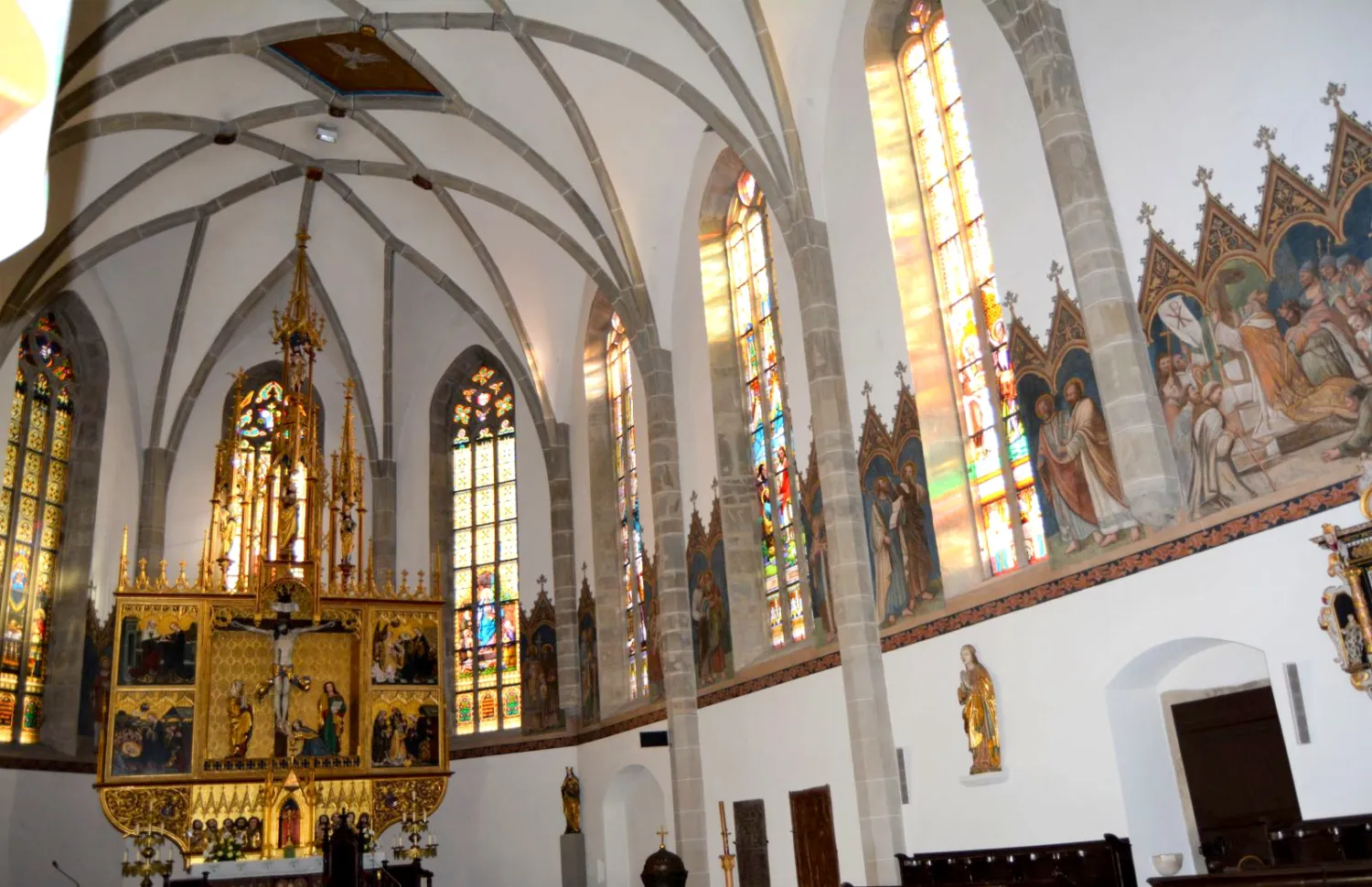
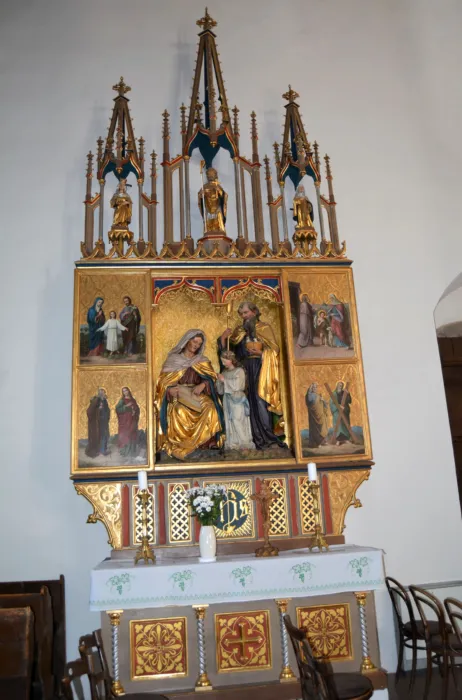
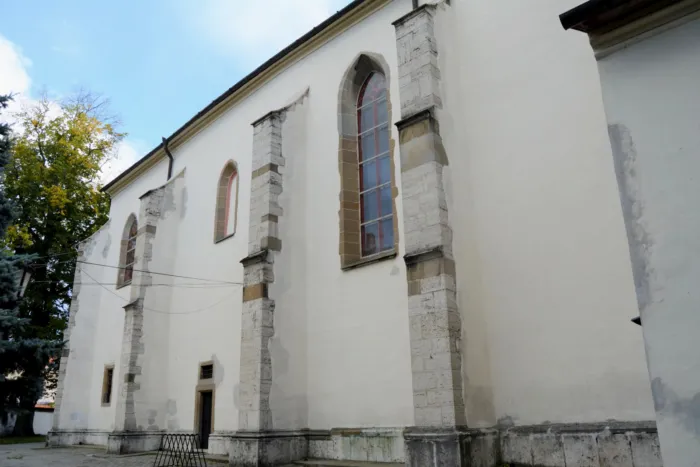
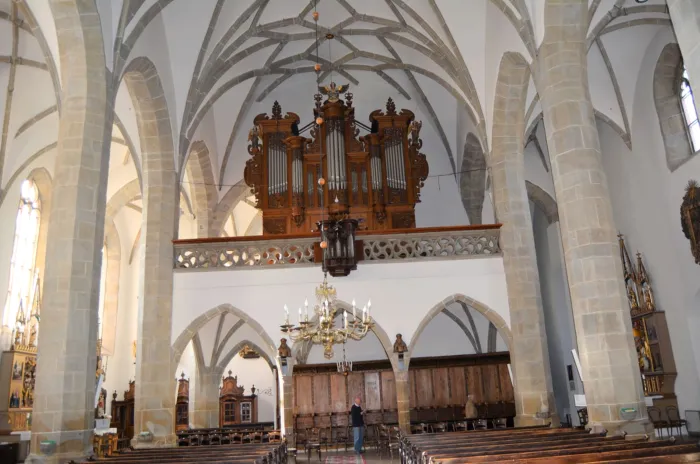
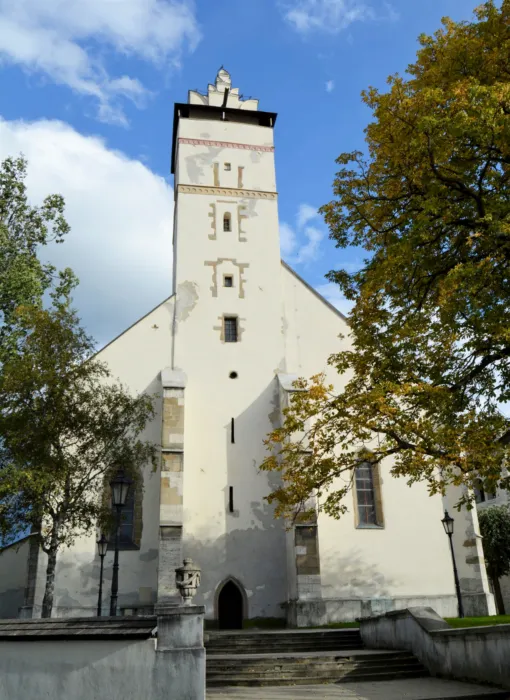
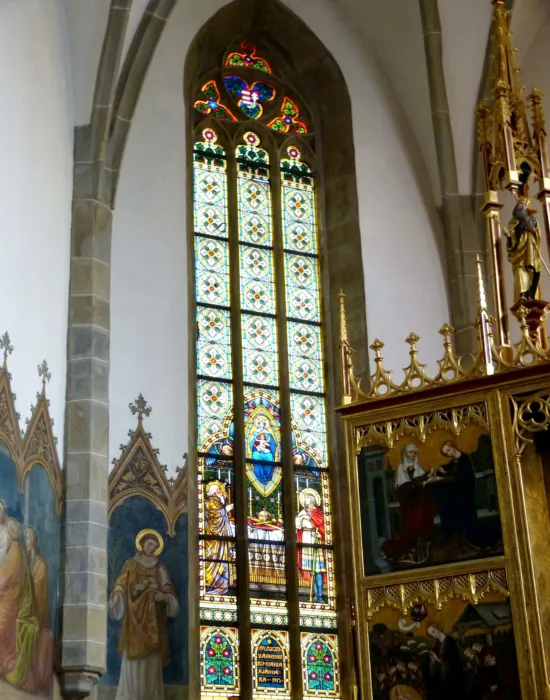
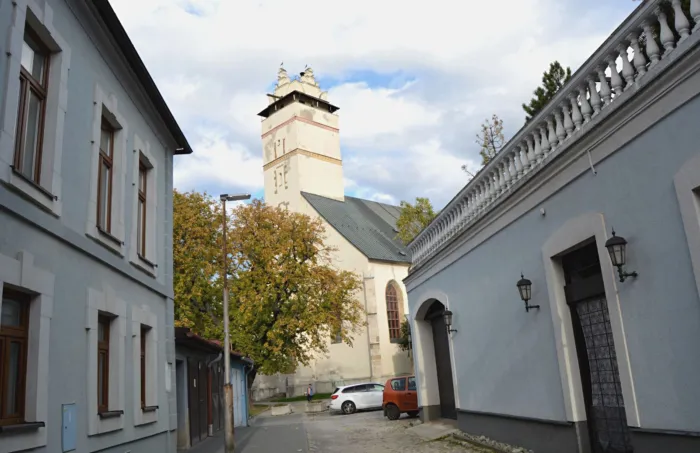
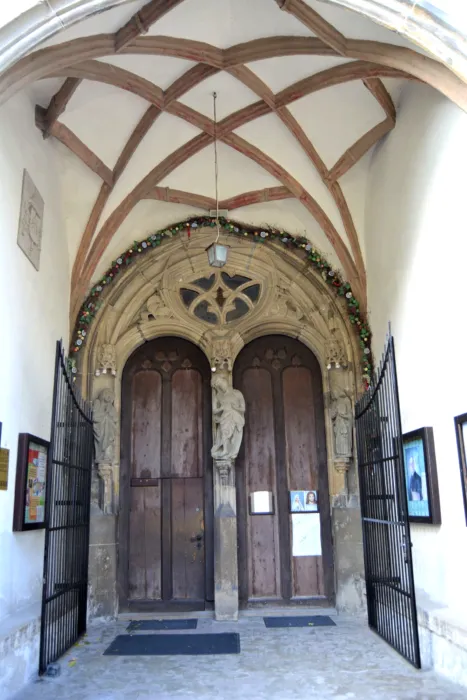
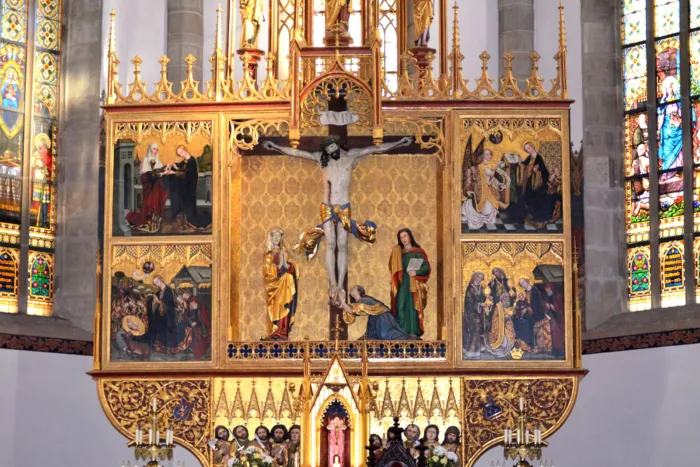
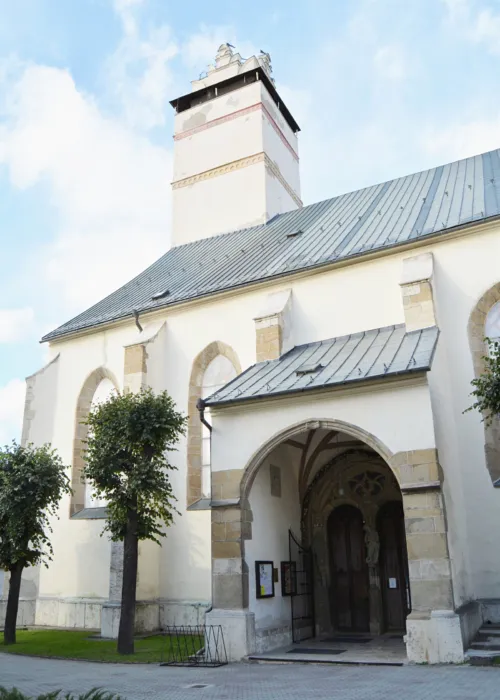
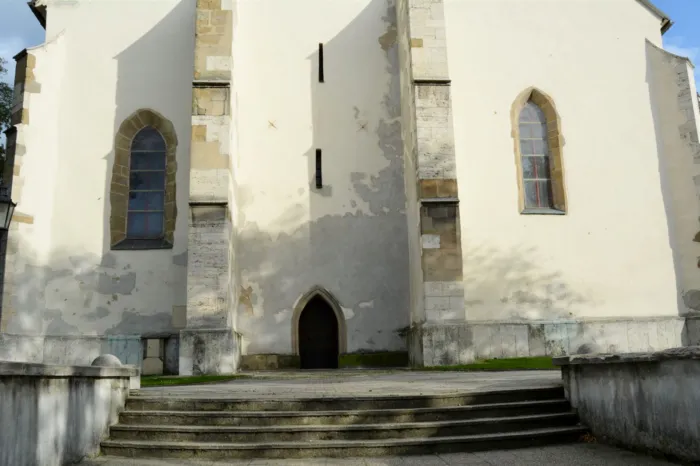
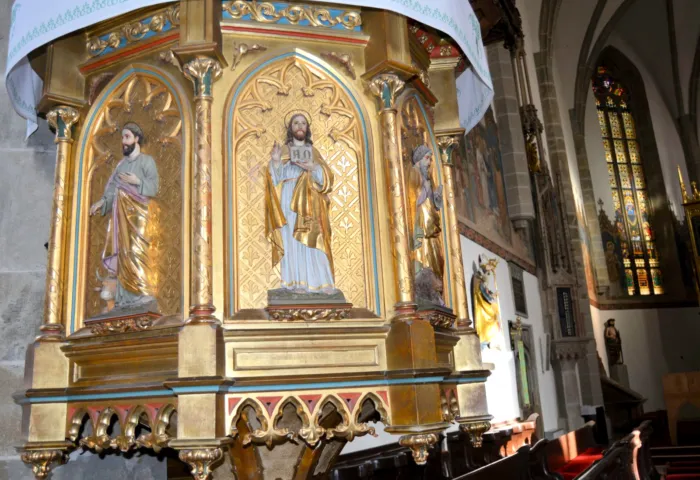
The foundations and origins of the Church of the Holy Cross date back to the early Romanesque period of the 13th century. The present-day magnificent Gothic church was built between 1444 and 1498. The reconstruction was supported by the Lords of Szapolyai and the city. Both “patrons” immortalized their own coats of arms at the small entrance to the church. The interior has three different vaults: a reticulated vault in the side nave of the church, a star vault in the main nave, and a cruciform vault in the sacristy of the church. The interior of the church is in High Gothic style, as are the side altars (Altar of the Apostles, Martyrdom, Coronation of the Virgin Mary), the main altar and the baptismal font from 1472. ; The Renaissance benches located under the gallery date back to 1518. These places were occupied by the bailiffs and members of the city council during mass. ; The church's special feature is its two organs. The small organ dates from 1651 and is the oldest functioning, playing organ in Slovakia. The most valuable artistic monument is the Crucified Jesus on the main altar. It was made by master Vít Stwosz (Vít Stozorai) in his own workshop in the mid-15th and 16th centuries. ; In the post-Reformation period, when most of the German population became Protestant, the church was part of the Lutheran Church between 1531–1673, 1678–1687, and 1705–1709. In 1997, Pope John Paul II consecrated it as a basilica.