
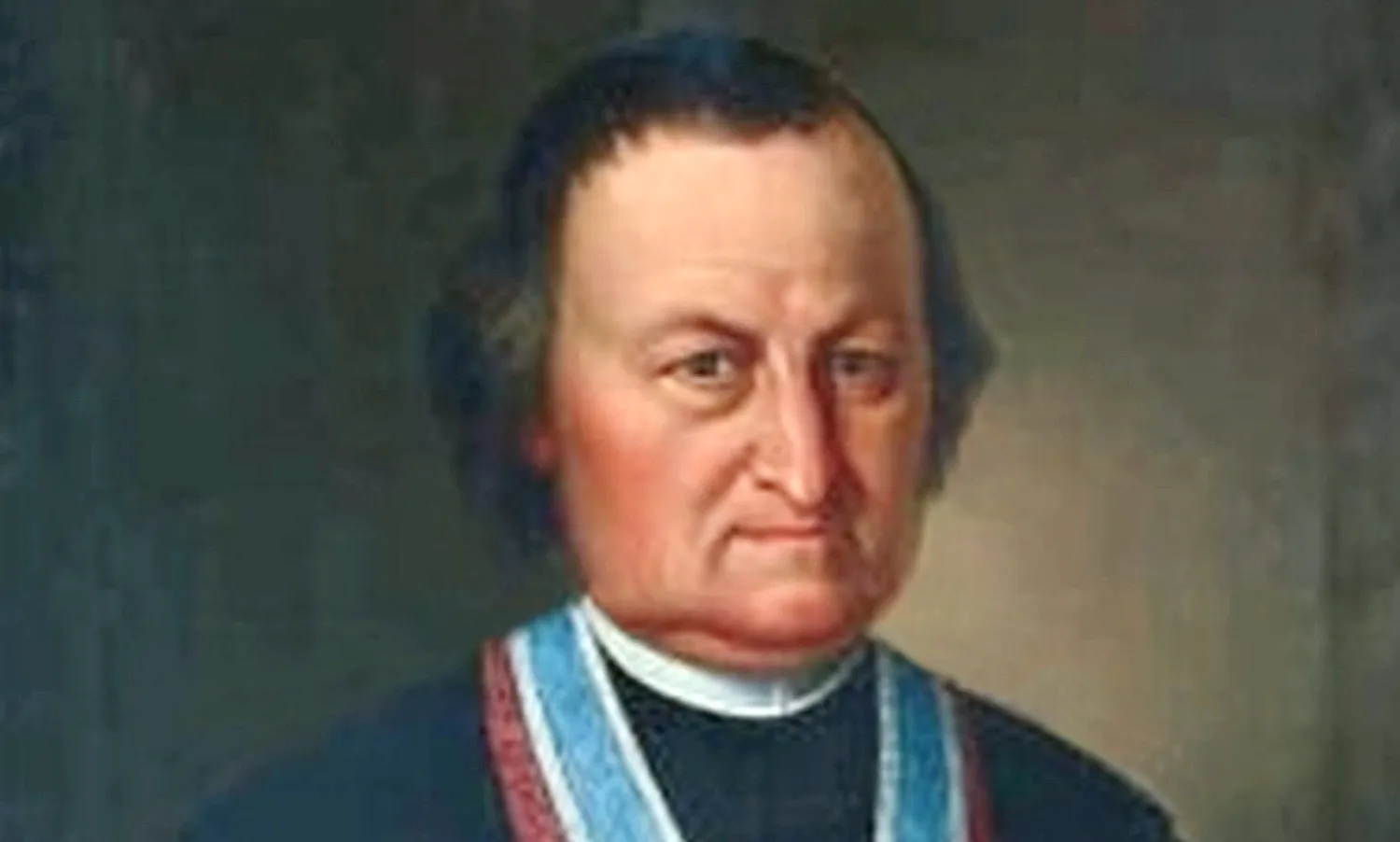
Soldier Stephen
Other - other
* Bolyk, December 13, 1732 – † Kalocsa, August 17, 1811 / Jesuit priest, historian ; ; He completed his secondary education in Eger and Esztergom. In October 1750, he entered the Jesuit order in Trenčín. He studied humanities in Košice, and from 1758, theology in Nagyszombat, and became a doctor of humanities. After that, he taught in the lower grades in the Jesuit order's gymnasiums: Gyöngyös, Nagyvárad and Komárom. From 1770, he lectured on history at the University of Nagyszombat, and after the dissolution of the Jesuit order (between 1773 and 1784) as a secular priest at the University of Pest. He was retired in 1784, because his knowledge of German was allegedly insufficient, and therefore he was considered unsuitable for the Second World War. to provide German-language education, which was made mandatory by Joseph. At that time, he settled in Esztergom, and from 1790 until his death he lived in Kalocsa, where he worked as an archbishop's librarian. As a scholar, he primarily dealt with Hungarian history and the compilation of Hungarian historical monuments. His most important work is considered to be the 42-volume Historia Critica Regum Hungariae I–XLII, published between 1779 and 1817, which remained one of the basic works of Hungarian historiography until the end of the 19th century, and most of the sources published here have not been reprinted since then. He also wrote a history of the Kalocsa archdiocese in two volumes (Historia metropolitanae Colocensis ecclesiae I-II.). Most of his works are in Latin, but he also has some works written in Hungarian: Praise of Saint Stephen, the first king of the Hungarians, which he prepared and proclaimed in a living language... 1788, The sifting of the history written by Doctor Sámuel Décsi about the Hungarian holy crown, 1793. József Szinnyei mentions in his bibliography that he also has a two-volume work on Hungarian Jesuit writers that remains in manuscript. This is in the library of the Rozsnyó chapter, and his other manuscript works can be found in the Budapest University Library and mainly in the Kalocsa Archbishop's Library.