
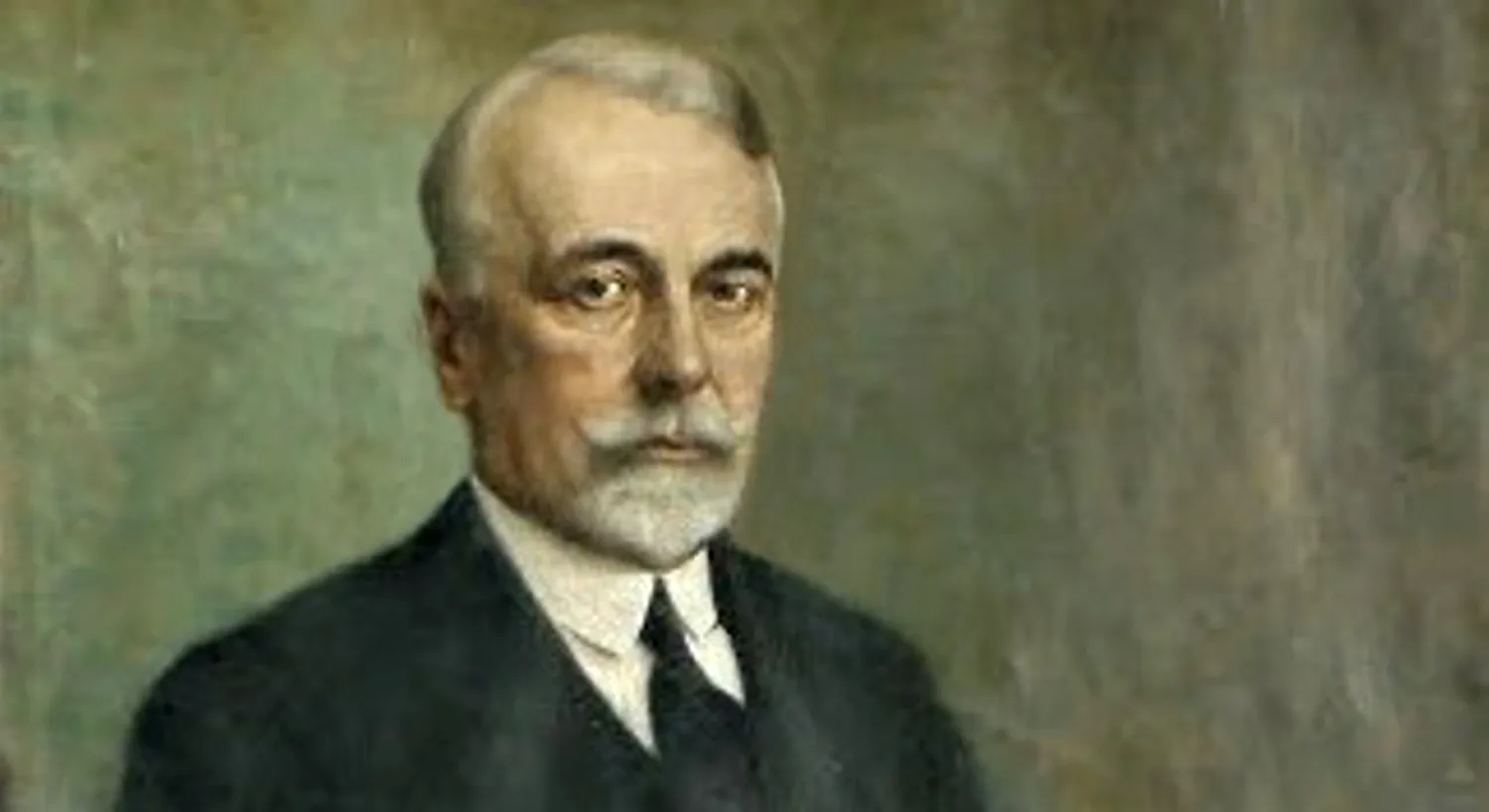
Ferenc Andras Hutÿra
Other - other
* Szepeshely–Zsibra, September 6, 1860 – † Budapest, December 21, 1934 / veterinarian, physician, pathologist, member of the Hungarian Academy of Sciences (1921) ; ; He actually spent his childhood in Szepesváraljá, and later returned there during the summer holidays. He completed his elementary school in Késmárk and Igló, and his high school in Znióváraljá, Eger and Lőcse. They spoke Hungarian at home, but he also learned Slovak and German, and later spoke English and French well. In his youth, playing music was also one of his favorite pastimes. He completed his medical studies at the University of Budapest from 1878, became a doctor of medicine in 1883, and from 1883 he was an intern at the university's pathology institute. In 1886, a vacancy arose in the pathology department of the Hungarian Royal Veterinary Institute, which he accepted “temporarily” at the suggestion of his boss, Gusztáv Scheuthauer, and in the end, to the great fortune of Hungarian veterinary science, he “stuck” in this field permanently. In order to deepen his knowledge, he also made a longer study trip to Europe (Vienna, Dresden, etc.). In 1888, he became a private teacher of animal epidemiology, animal health police and meat inspection at the university. ; In 1897, he was the director of the Veterinary Academy, and from 1899 to 1933, after the reorganization, he was the rector of the Veterinary College. In 1899, he was awarded the title of extraordinary university teacher, and in 1906, he was awarded the title of court councilor. In 1907, together with János Köves (1882–1977), he established the virological laboratory in Kőbánya (from 1912: Phylaxia Vaccine Production Company), which served as an experimental background for the study of swine fever. His results in connection with swine fever made it possible to introduce vaccinations against the disease, after he had demonstrated the viral nature of the pathogen and developed a method for the practical production of the vaccine. In 1917, he temporarily headed the Department of Pathology. He developed the College into a modern scientific institution. His work in the field of animal epidemiology received international recognition. He also achieved remarkable results in the study of other animal diseases (tuberculosis, glanders, bovine spongiform encephalopathy, Eastern rinderpest, anthrax, Aujeszky's disease, etc.). He participated in the modernization of animal health legislation. He also contributed to the editing of several professional journals (Veterinarius, Állatorvosi Lapok, Köztelek, etc.). He was a member of the upper house from 1927. The Hungarian Academy of Sciences elected him a corresponding member in 1910, a full member in 1921, and an honorary member in 1934. He was a member of the Saint Stephen Academy and numerous foreign scientific societies and academies. His work was recognized with the Order of the Iron Crown in 1898, the Corvin Wreath in 1930, and other honors. ; ; His main works: ; On the Permeation of Fats, Especially Under the Influence of Bile, 1881, ; Octane of Infectious Diseases of Domestic Animals, 1888, ; Pathophysiological Diagnostics, 1888, Animal Insurance, 1893, ; Veterinary Internal Medicine I–III., 1894–1898, ; Instructions for the protection against foot-and-mouth disease and the treatment of this disease, 1897, ; Spezielle Pathologie und Therapie der Haustiere I–II., 1905, then with co-authors Rezső Manninger and János Mócsy in several editions in English, Italian, Russian, Spanish, Turkish and Finnish, Forensic Veterinary Medicine, 1908, ; Experimental basis for immunization against swine fever, 1912, ; Tuberculosis of humans and animals, 1913, ; Eastern cattle plague, 1915, ; Infectious diseases of domestic animals, 1920, ; Veterinary Internal Medicine (with József Marek), 1924, ; The Past and Future of the Veterinary College, 1925.