
History of Hetény railway station
Other - other
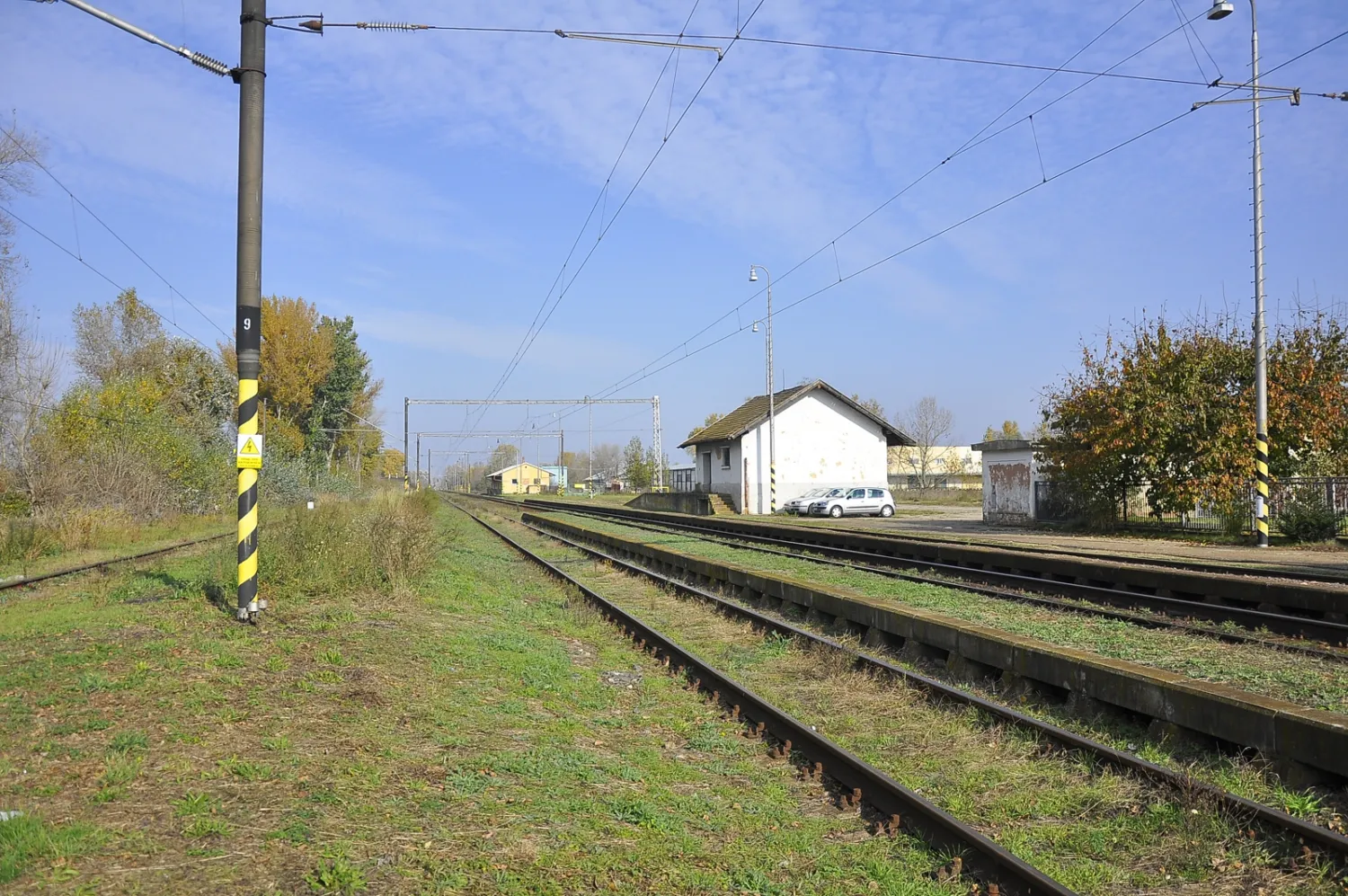
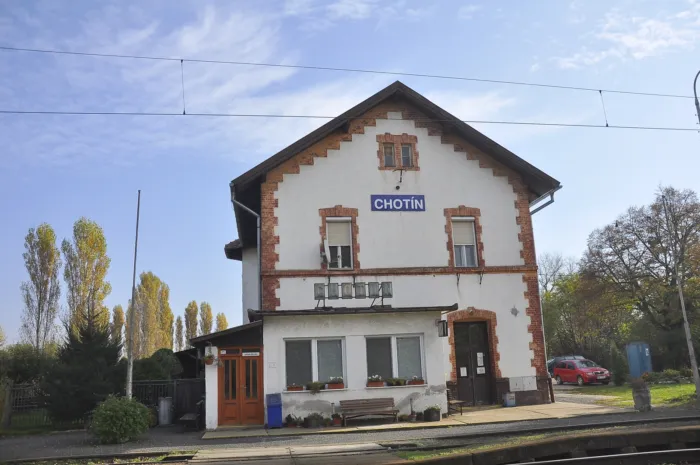
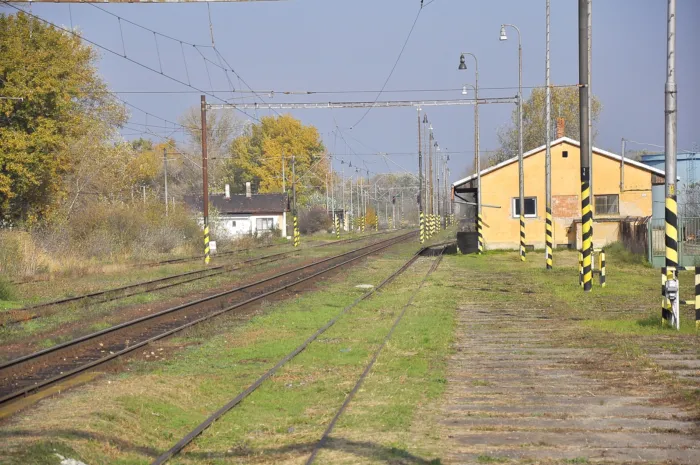
The history of the Hetény railway station was compiled based on the memorial books requested from the Bratislava Railway Museum. ; 1918–1919 / It is located along a single-track route between Érsekújvár and Új Komárom, at an altitude of 110 meters above sea level. The station consists of one building, two loading stations, two residential buildings, a small warehouse and a coal warehouse. It has three tracks, two for traffic and the third for storage. ; The station building houses the control office, a third-class waiting room, and the stationmaster's three-room apartment. Opposite the apartment is a smaller cottage, which is the property of the Surány sugar factory. This small cottage is used by the traffic controllers when changing shifts. The station was named after the village 5 km away. ; The service started in 1910 and the first trip was free for the residents of Hetény. However, in 1918-1919, the area was annexed by Czechoslovakia. The Hungarian stationmaster handed over the building to the soldiers who had come out of Új Komárom without any resistance. There were four workers here, two of whom immediately took the oath of allegiance to the Czechoslovak Republic, the other two were threatened that if they did not cross over to Hungary and take the oath of allegiance, they would be shot. The local population did not want to believe for a long time that the area would not be returned to Hungary. There was peace here until 1919, when the Bolsheviks occupied the area from Ógyalla for only two days. ; In 1920, the Váh River, six km away, overflowed its banks and even flooded the station area. In some places, small islands were formed, between which people traveled by boat, and mail was also carried out in this way. After a few weeks, the water receded and the damage to the railway tracks was repaired with the help of army soldiers. Two bridges were built in 1923, which completely eliminated the flood damage. ; In May 1924, the international express train number 63/64 ran through Hetény railway station on the Belgrade – Budapest – Prague – Berlin route. At that time, Mr. Krupicska also became the station manager, and later Alfred Sebek. ; On September 22 of the same year, Benő Hencz, a resident of Hetény, who worked as a track operator at the station, committed suicide. Family problems were cited as the reason for the suicide, which is why he chose to shoot himself in the head. According to the memorial book, he worked honestly and diligently. The employees of the Komárno and Ógyallai stations also accompanied him on his last journey. ; In 1925, the renovation of the building began, and a floor was added to the station, which was designated for the traffic officer Mr. Dosly. Anton Král, the station master's assistant, requested his transfer to Bratislava, and Kajan was appointed in his place. ; Since only one track at the station was used for storage, this proved to be insufficient, as the track was short. Freight traffic only increased when the port was built in Komárom. ; In 1926, in accordance with Law No. 613, the name of the Hetény station was changed to Hetín. With the opening of the Komárom port, freight traffic also increased, with 27 regular trains passing through the Hetény station daily. The first floor was also completed at that time, which was given to the station master, and his previous apartment was given to the traffic officers. ; The first tragedy was also recorded in December 1926. At 11:12 p.m., express train number 63 collided with train number 6268, despite the fact that it had Westinghouse brakes. Traffic was stopped for 16 hours, with one fatality, 3 serious injuries and 12 serious injuries. ; In June 1928, a huge hailstorm destroyed 80 percent of the harvest, which would be felt in the freight traffic of the following year. Although it is true that 26 regular trains passed through the station that year, they were forced to hire two more traffic controllers, as they could not keep to the mandatory night rest. ; In the same year, the renovation of the section between the settlements of Hetény Krátka Kesy Kurta Keszi (Marcelháza) began. Keszi residents could not reach the railway station in the bad weather, so it became necessary to fill the road section leading to the railway station with gravel. Two new settlements were also established – Srobárová and Mudroňovo, whose inhabitants were Slovak settlers. Here the state opened a Slovak school, which was handed over in October. On November 9, a Slovak school was also opened in Krátke Kesyn (Kurtakeszi), where 63 children were immediately enrolled, despite the fact that there was a Hungarian school in the village. This number increased to 103 by the end of the year: “Otvorenie této školy má velkí národný význam.” ; According to the memorial papers, the winter of 1928/29 was characterized by an abnormally cold and cruel winter. The temperature reached minus 32 degrees. The frosts lasted until March 20, many birds and small animals died, and fruit trees froze. ; In 1930, a census was held, the results of which were published the following year. At that time, Hetény had 1896 inhabitants, of which 12 were Czechs, 160 Slovaks, 1712 Hungarians, and 12 were Jews. Compared to the census data of 1920, the number of inhabitants increased by 169. ; The village received a permit from Bratislava to hold animal fairs in 1931. The permit number was 21704/15-1931, which was issued on February 7, 1931. Four animal fairs were permitted to be held on the following dates: March 11, May 20, September 23, and November 18. ; The weekly bus service between Komárno - Mocs and Párkány, which started in 1931, was aimed at developing transport. ; In January 1933, two carriages of train No. 6282 derailed, caused by human negligence. ; The history of the construction of the Roman Catholic Church in Šrobárovo is also outlined in the pages of the memorial books. The residents of the new village decided to build their own Roman Catholic church. The plans were designed by a Piešťany architect, Bresztiani, and then a six-member church council was created to direct the construction. The church was to be built on the site of a former landowner's stables. Construction began in October 1928, for which the initial capital was lent by a local resident, Ján Chovanec, in the amount of 27,000 Czech crowns. By the end of the year, the building was under a roof, having already cost 48,000 Czech crowns. A collection was also organized, from which 22,000 crowns were raised, supported by the Bratislava district with 20,000 crowns, the school office with 5,000 crowns and the Nitra bishop's office with 3,000 crowns. In 1933, an accident occurred on the construction site, when roofer Lajos Szíkora fell from the roof while installing the lightning rod, because the rope securing him broke. The construction work of the church was completed in 1934, by which time it had already cost 225,000 Czech crowns and there was a debt of 50,000 Czech crowns. ; Nothing special happened in 1935, 1936 and 1937, there is no entry in the memorial books. In 1937, the renovation of the tracks of the track began. ; The following entries are from 1945. In August, the railway transport between Érsekújvár and Komárno brickworks started. The memorial book says that there was German Hungarian rule from 1838. On March 20, 1945, the Red Army liberated the area, and we quote: "it gave back what was taken from us in 1938." The bridges and crossings along the entire road section were destroyed, and the tracks were removed. However, some Slovaks became aware of the importance of the railway and immediately began to renovate the tracks. Transport on this road section started on August 6, 1945. However, the railway route across the Váh River could not be repaired yet, it was only completed on May 28, 1946. An accident occurred on November 21, 1946. A passenger car collided with passenger train number 1605. The driver of the car, József Stredok, died on the spot. His passenger, Zoltán Grossmann, who was the owner of the car, died of his injuries in hospital the next day. ; In August 1947, the evacuation of the residents of the surrounding settlements began. In October, another accident is written about in the memorial book. A truck with the license plate S-Kn62 collided with a freight train. One person was seriously injured and three were slightly injured, and traffic was stopped for 16 hours, as the truck and its cargo were completely destroyed. ; In November 1948, the employees of the Hetény railway station, who also participated in training, completed their week of exemplary work. ; Electricity was introduced to the Hetény railway station in 1961. Approximately 55,000 people used the railway every year.