
Weekly wedding customs
Other - other
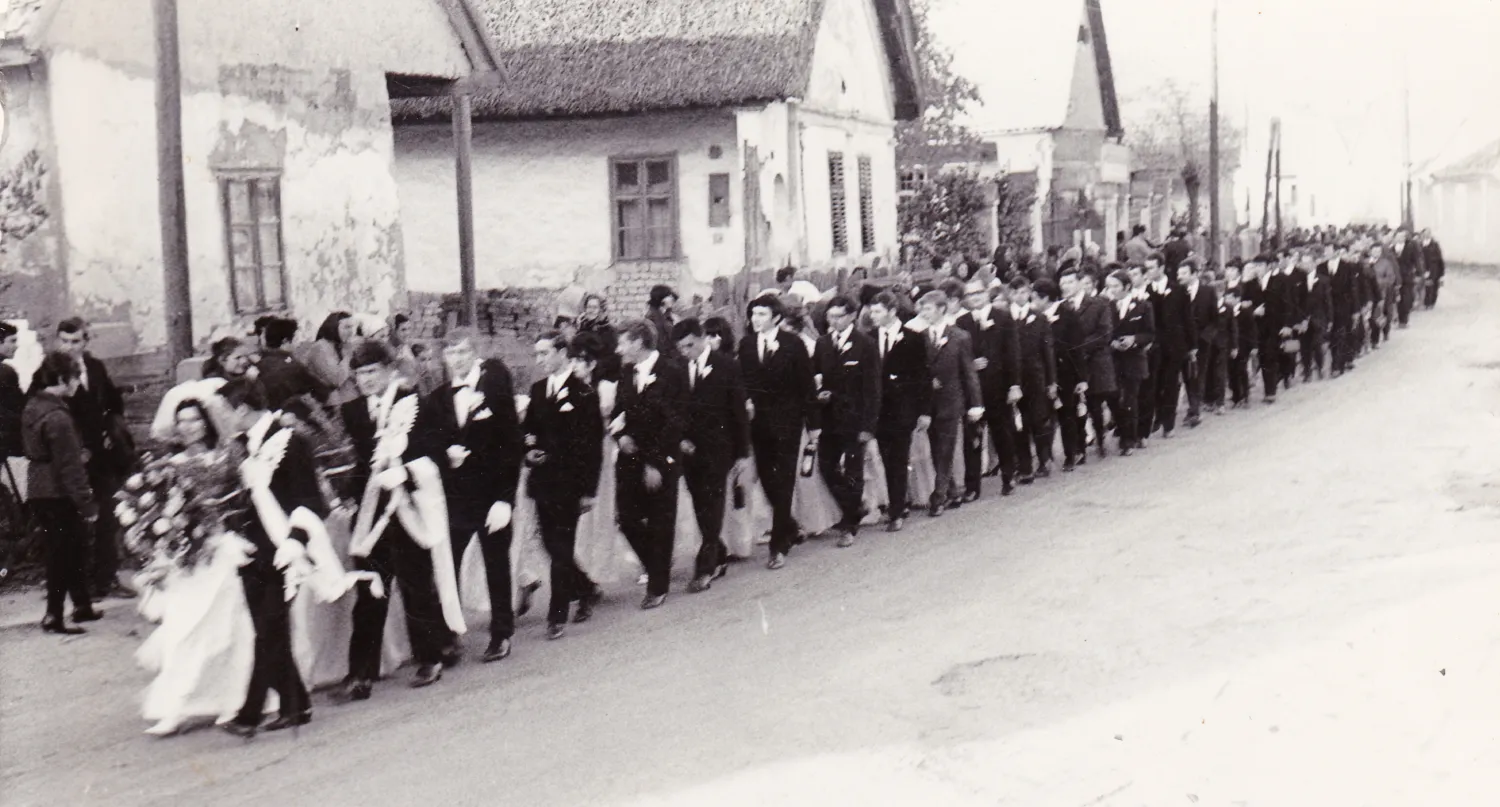
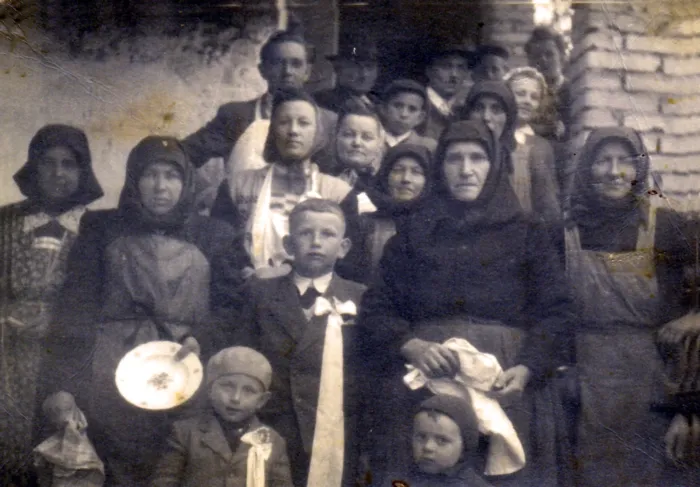
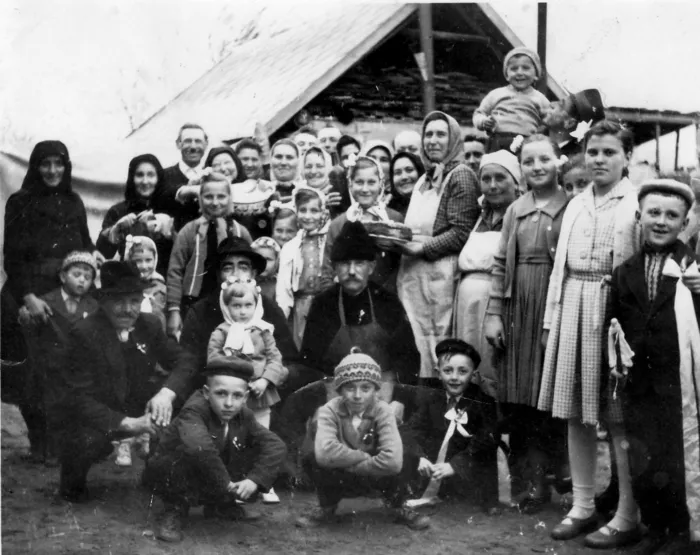
In today's wedding customs, it can be observed that many elements have been abandoned due to the economic and social changes that have occurred in recent decades. Despite these changes, we can still trace back to older customs. The work was inspired by a wedding exhibition held in our village, which was about old wedding photographs and wedding dresses. ; In addition to the bride and groom, the important figures in the wedding are the best man and the groom. The groom is the actual master of ceremonies of the wedding, the modern equivalent of the singing servants and servants of the 16th–18th centuries. One of his primary tasks was to invite the guests. On the Sunday before the wedding, the groom went to the bride's house with the groom, where he asked for the groom's handkerchief: ; "We arrived at this venerable house, where we set out, and knocked. We sought out our groom's wife, his precious treasure, his beautiful bride. If you intend to give a gift, please give it to us with respect. On our coat and stick, so that we may carry it with you." ; The bride pinned the best man's shawl on the coat, the ribbon on the best man's stick. At the bride's house, a bottle of wine was filled and the best men went out singing to invite him a week before the wedding. They invited the best man, the bridesmaids, the groomsmen, then the guests, brothers, in-laws, cousins, and immediate neighbors. If the groom or bride had a married brother, then the wedding guests, the godparents of the bride, and those whose family members were at the wedding were also invited. ; With the help of the best man poems, we would like to introduce the village wedding customs of Hetény, primarily the wedding day. Weddings were usually held on Tuesdays or Thursdays. (Tuesdays, Thursdays, and Saturdays were the girls' days - they probably tied the time of the weddings to these, which the priest did not allow on Saturdays or Sundays, because then many people would have missed the Sunday service.) However, from the 1940s on, weddings in Hetény were held on Saturdays. At that time, due to the lack of a community center, the bride received her guests separately and the groom received them separately, at his home. ; The two rooms of the house were emptied of furniture, only benches and tables remained inside. The gypsy band was placed in the hallway. There was a gypsy band in Hetény, the Pepes, they were the only Roma family in the village. The preparations began on Tuesday, when they started baking the dry, small cookies. The relatives arrived on Wednesday, bringing the baking ingredients, the hen and the gift. Friday was the day of the hen-dressing, in which not only the relatives but also the hired housewives helped. Usually 10–12 housewives were hired to cook the wedding meal. ; On the day of the wedding, everyone received their own guests. In the hour before the wedding, the best man appeared at the girl's house. The poems that were recited in our work were recited to us by Uncle Miklós Hencz, who had been the best man countless times. He also inaugurated the best man. ; The best man played an important role in the preparation and execution of the wedding. He was also the one responsible for the finances, so the best man was usually a wealthier man who was the master or owner of the bride and groom. He also participated in settling financial matters. The best man also received a bouquet, which was presented to him by the bridesmaids accompanied by the following poem: ; "Dear Mr. Groomsmen, dear guests! I would like to ask for a moment of silence! Dear Mr. Groomsmen, I will tell you how I got all these beautiful flowers. There is a beautiful bride of this house who came to me with great difficulty. She asked for my hand in marriage. Could you get her flowers? Flowers in winter and ice in summer? You can't find that everywhere, can you? I had to leave immediately to get flowers in time for the wedding party. I walked for 7 days and 7 nights until I found a beautiful flower garden. But I didn't even think that there could be trouble there, the garden cannot be left unattended. When I was already filling my little basket, someone pulled my skirt from behind. Oh, you little brown girl, that dog tree! How dare you pick the flowers from the garden? I didn't say anything. He took my arm and stroked my tail, whispered in my ear, then lured me. He led me into a small room, made me sit on the sofa, then asked for my payment! You can imagine what I suffered for it! So the flower is very expensive, because the gardener all crumpled my beautiful new dress. On the way home, I went to a weaver's boy, asked him for some linen, sewed it into a handkerchief, which I have now brought here. Please accept it from me, with due respect. But if possible, then quickly, because my journey is urgent. I must go to the doctor, my leg hurts so much! I can't dance with such a sore leg, and I want to have fun that night! My legs are tired, my throat is dry, so I would like a glass of wine, if you would be willing to give it to me. To our health!” ; Then followed the bride's farewell, which was the best man's task: ; "Dear master of ceremonies, behold, the hour has come for our beautiful bride to depart. She is leaving for the house of God to pledge allegiance to her beloved partner. Who will gladly lead her on the path of happiness. May their lives be happy, fortunate and blessed. I wish this from a pure heart. May sorrow never disturb this happiness. Dear master of ceremonies and dear guests, I invite you to accompany them." ; Another farewell text was delivered at the wedding of Béla Zajos and Irén Szuh in 1950: ; “I see your face wet with tears of joy. On the most beautiful day of your life, let me speak to you now. I know, half joy, almost as much sorrow, Because you are leaving your parental home now. You are starting a new life, I wish from my heart that your life will always be blessed. Holding each other’s hands, in true love, Live long in this life. May the star of love shine on you, I wish from God, that you be happy. I ask for a blessing for you, but I cannot give it. Our God will give it, just trust in Him. I wish from my heart.” ; The wedding party walked to the church ceremony. Since the 1950s in Hetény, weddings of 400-500 people have very often been held. According to Uncle Miklós Hencz’s story, in the 1970s, when there was a cultural center in Hetény, there was a wedding of 600 people, which took place in a very good atmosphere. The wedding party marched along the main street of Hetény, the bride was often accompanied by 7-8 bridesmaids. The bridesmaids wore long pink dresses that they had sewn themselves, according to their own ideas. Their task was to pin rosemary on the relatives invited to the wedding, and they led the wedding procession to the church together with the groom. On the way to the church, they also offered the people standing and looking on in the street key cakes, and the young men poured wine and distributed it on the streets of the village. ; After the happy yes in the church, the long-awaited dinner could come: ; At the end of the 19th century, they tried to slaughter a calf or buy beef for the wedding. At that time, poultry was only kept for the family's egg needs, and the old (mangalica) pig was a fat pig and did not give much meat. Between the main meals, they carried the cakes in a small basket: walnut horseshoe, jam horseshoe, poppy seed horseshoe, yeast doughnuts. Soup and cabbage were made from the beef. These dishes were placed on plates. 4–5 people ate from each plate with a spoon. Instead of cake and cookies, there was cake. Since the wedding had already started in the morning, dishes were already served at that time: ; breakfast: coffee, pálinka, kulcsos kalács, ; lunch: beef soup, juicy stew with kulcsos, ; dinner: meaty cabbage, wine, ; midnight: jelly, lit pálinka. ; The food was served by the best man, who said a greeting before each meal. The greeting before the soup was as follows: ; "Dear master of ceremonies, worthy guests! I have not come empty-handed! Both my hands are loaded with food. Before the spoons touch them, Let them give thanks to the master with a fervent heart. Let no one stagger before me, For I will scald their necks. There is still meat juice behind my back, It will really fry their hands. Here you go, master of ceremonies, now let them touch it. I wish you fresh, good health after it!" ; The best man's poem was also sung before the drinks. Guess what drink was served after the poem was sung: ; "I just had a ten-gallon barrel drained, If you don't believe me, come and see for yourself. I know no one will lie to me. Everyone drinks enough wine. Ladies, brides, you must reach for it. Good wine is also used to slipping on women. Let it not be said about her, Let no one's bun stand aside. I saw a drunken woman, I hated her so much. When I think about it, my back still shivers. Here you go, my master of ceremonies!" ; Midnight slowly came, when the myrtle wreath was removed from the bride's head, and the wedding dance began. First, the wedding dance took place at the girl's house, because the young couple had a house there until midnight. ; "Here, here stands the beautiful bride, To have her first fun as a bride. Let each guest sing a song. Then sew a shoe from the gift. Let everyone dance a short dance with her, But don't rub the heels of her shoes. Because they know that they were sewn for a price, So let them fill their hands with Banko! There is an empty plate in the middle of the table, I will start the dance and the others will have their turn. Pull on it, gypsy, for the new couple!" ; After the wedding dance, the fun continued. After midnight, they went to the groom's house, where they performed the wedding dance, where the Kállátósok also arrived. It was said: - Mr. Násznagy, the kállátósok have gathered, have them sit down! They were guests invited to the groom's house after midnight. ; Even the ghouls were important figures in the wedding. They were friends, acquaintances, who went to congratulate and look at the wedding house. The guests were also treated to sausages, sausages, cakes, wine, and brandy. The next day, they brought the good news of the wedding. If the guests were not satisfied with the offerings, considered the parents of the bride and groom to be “söher”, then they certainly took revenge. Sometimes they would unhook and hide the entrance gate. There was a time in Hetény where they would take a small wagon apart and put it back together on top of a haystack for everyone to see. ; By dawn on Sunday, the guests slowly dispersed, but for lunch the relatives gathered again, ate the leftovers, and then went back to their rooms. The best man was the last to leave the wedding house. In our work, without claiming to be complete, we wanted to give a glimpse into the work of the groomsmen of Hetény, and to record and immortalize the poems that were recited at the wedding in Hetény, because for us this is not only beautiful, but also important.