
Weeks of World War I memories
Other - other
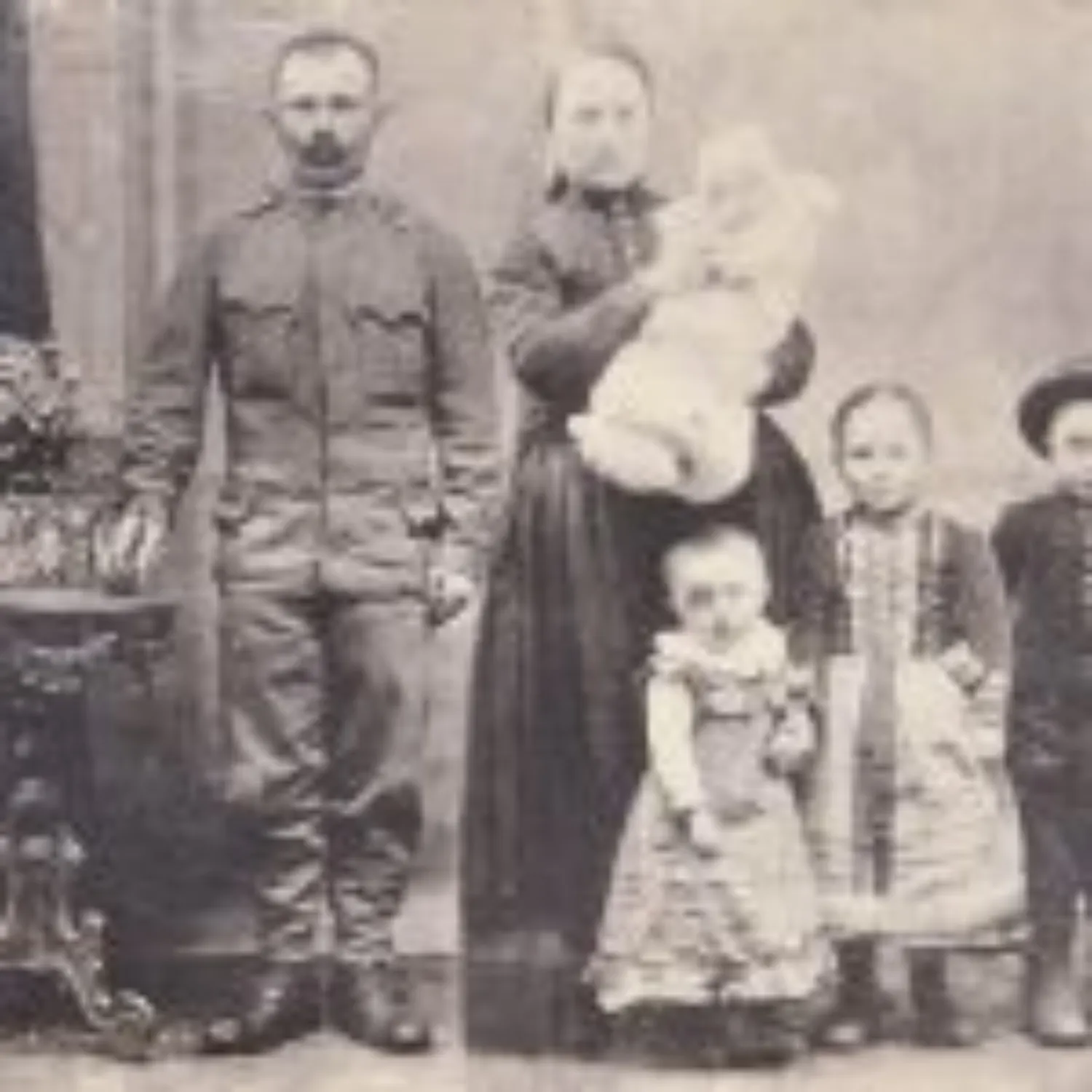
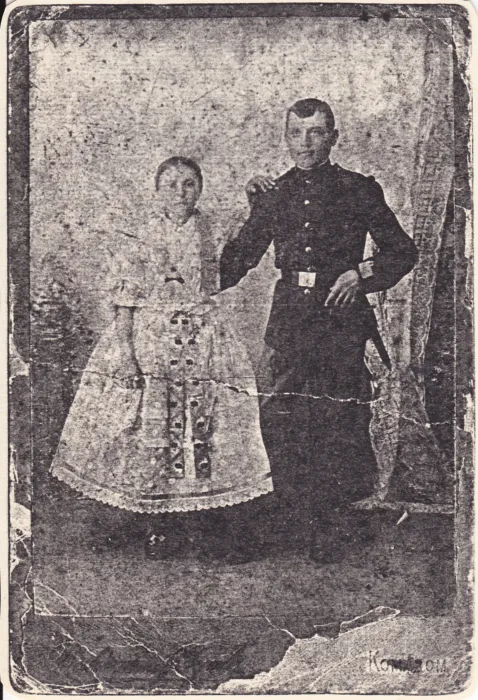
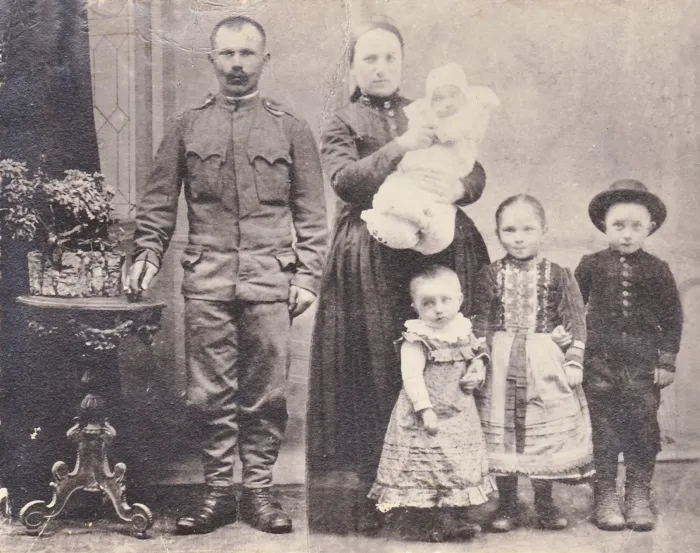
Numerous exhibitions and publications commemorated the years between 1914 and 1918. “By the time the leaves fall, our soldiers will be home!” – This is how German Emperor Wilhelm II sent his soldiers off to World War I, as it was called at the time: the “Great War”. Not only he, but probably all the participating nations believed that the operations would end in six months, but the conflict that broke out in September 1914 expanded into a four-year bloody struggle and caused the deaths of more than fifteen million people on three continents. ; The residents of the village of Hetény also felt the war. Many men enlisted as soldiers, who informed their families about their whereabouts and the events of the war in their letters. We have acquired several such photographs, letters and postcards. We compiled our work based on the battlefield documents of András Kocsis – his diary entries, the discovered notes of Ernő Zajos, István Péczi’s poems written during the First World War, the recollections of his great-grandchildren and original photographic documents. ; András Kocsis was born on December 27, 1877, in a house on Fő Street in Hetény. His parents died early, so he was raised by Sára Udvaros, a childless woman who lived in their yard. He completed six elementary schools, and once attended a repeat school. He married in 1902. His wife Julianna Berényi was 18 years old at the time. They had 3 children: Klára in 1905, András in 1911 and Miklós in 1919. ; Their daughter Klára married Balázs Hencz in 1925, and died in 1945, when she was hit by a Russian bullet. Their son Miklós died on the Russian front on February 22, 1944. Their son András died in 1989, it was from his family that we received the memories of our great-grandfather. ; The Kocsis family was one of the wealthier families. They had 10 cadastral acres of land: in Székhát, above Szőlök, Öregtag, Alsóhosszú, Faluhely, Zsitvapart, Homoktagi, Kertekaljá, Vaskapu, Zsellértag, Középdűlő, Szőlőláb and Koczkás. They also had a forest area, from which they could cut down trees with permission. In the winter, Uncle András played the zither seriously, and his wife made needlework. ; When the news of the outbreak of war broke out, András Kocsis also enlisted. On August 2, 1914, he went to Tata, but at that time there were many people, and he was sent home. He was successful in his second conscription. On August 24, he was already in Tata, and from there he was taken to the Serbian battlefield. He fought until November, when he fell ill with typhus. He was hospitalized in Zavidovici, from there he was transferred to Zagreb and then to the Veszprém hospital. He was declared cured on December 20. He remained as a nurse in the Seminary Reserve Hospital until January 18, 1916. He also wrote about his nursing experiences there in his diary. ; He considers washing important, even during wartime. It is particularly important for soldiers to wash themselves from head to toe at least once a month, because, as he writes: “…to wash off the sweat under the warm winter clothes, because that is where the most harmful germs grow, as soon as a person works and the bad moisture comes out and the warm clothes prevent the air from reaching them, but they go back into the body and from this the so-called bacilli are produced, which many people do not realize is what is causing their problems.” In this section, he specifically discusses foot washing, which should be done on a weekly basis, at least twice a week. Foot washing makes the feet light and fast, moves the blood better, gets them moving, thereby preventing chafing and headaches. This is the essence of body care. We can say that the essence of maintaining health, the basis of which is hygiene, was recognized 100 years ago. Following these tips can also help prevent typhus. Typhus is an infectious disease spread by a cellular parasite that lives in clothes lice. The pathogen is very sensitive to heat and various chemicals, so it is important to keep our clothes clean. ; He also recommends medicine for treating diseases. For typhus, the medicine Piramidon. He specifically mentions shingles and shingles. Shingles is the most common disease of the musculoskeletal system. This pain is relieved by moving the joint. The place that hurts should be rubbed with camphor spirit, and the blood should always be rubbed towards the trunk. The medicine is called Ligniment Valabit. I found its current form – several types of liniment balm, which are made according to an old, well-proven recipe and are really used to treat muscle pain, supposedly containing Icelandic algae extract. For diarrhea, Opirim drops and a warm brick on the abdomen, which is very good for abdominal cramps. The poultice as a remedy has centuries-old traditions, but nowadays it is considered an old-fashioned method, although it can be an effective aid in treating many symptoms of many diseases, and is also excellent for relieving cramps. ; In the rest of his diary, he discusses healthy nutrition – you can have your fill once a day, but before going to bed you should only drink empty tea – without rum, because it really relaxes the stomach. He also advises people to be moderate in smoking, but smoking is only allowed after eating, because it helps digestion. ; After working as a hospital nurse, he went to the battlefield again. First, he was sent to Bratislava to the collection squad of all guard detachments, then to Esztergom. Here he worked in the infirmary in the prison camp. On July 5, 1916, he went to Boszniai Zelicsé – near Tucsepi, followed by Begov Honba, then Granica. Among his poems I found two in which he mentions the place where he served: “On the banks of Trebenytsia the night is talkative, ore birds walk, flying everywhere...” and “On the banks of the Drina the night is talkative, with a fast-paced wind that passes through battlefields...” The Drina River is located in Montenegro, Bosnia-Herzegovina and Serbia, and is the longest tributary of the Sava. In the poem he describes how many of his good friends died on the battlefield, whom he remembers. ; His friends were: Antal Dömötör, from Győr county, Pázmánd village, István Kuruc, a master shoemaker from Esztergom, János Ertli, a resident of Tata, and József Bódi, whose exact address we even know: József lived at Komáromi Street 74 in Tata. ; Amidst all the suffering, he wrote in his diary that he asked God to grant him a quick death, to put an end to the slow suffering. András Kocsis was lucky to get home from the war, but he didn't get to enjoy peace for long, he died in 1949, and his wife Julianna in 1951. ; Dezső Csintalan sent a message to his mother in June 1917. He was injured on the Italian front, one of his ears was torn off, and he was hospitalized in a military hospital. He wrote home while recovering. We received the postcard from his great-grandson. ; Lajos Péczi's great-grandson also helped us with a photograph. His great-grandfather also fought on the Italian front, but unlike Dezső Csintalan, he died a hero's death there. István Péczi was a medic on the Italian front. He came home in 1918 to visit for 14 days, and that's when he brought his poetry collection with him. He didn't take it back because he thought the war would soon be over. That's what happened, but unfortunately he couldn't live to see it. A grenade tore it apart. His fellow soldiers told the family, and later they testified so that the family could receive widow's compensation. ; By preserving these memories, we commemorate the heroic dead of the First World War.