
Traditional fruit trees
Other - other
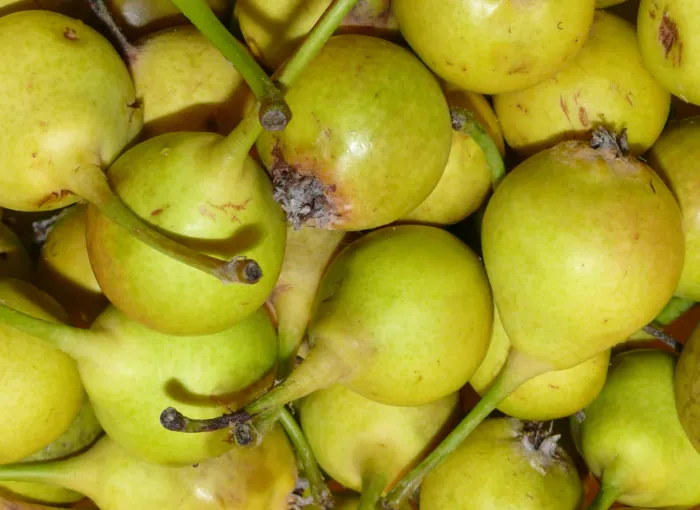
Part of the traditional diet is fruit consumption. Over the centuries, the old varieties have adapted well to the local soil and climate conditions, so their cultivation is still recommended today, and much less chemical use would probably be required. Apples can be considered the most widespread fruit species, and many local varieties were known, such as Bőralma, Panyikalma, Jonatán, etc. They were also stored for the winter, wrapped in straw. The pear tree is already mentioned in the so-called 2nd Zobor Letter issued in 1113 in the vicinity of Nitra. Bodok still has a great cult today (Arpára írő pear, Hermán pear, Piros bélő pear, Télikörte, etc.), they were used both for fresh consumption, and the late varieties suitable for this purpose were used as a winter source of vitamins, but also for making pálinka. Plums were used to make jam, dried plums and pálinka, the best known varieties being Hosszúszemő, Gömbölyő, Sárgaszemő, Duráncai, Besztercei, etc. Yellow apricots were often grown (their trees were much longer-lived than the other varieties), and autumn apricots (the latter, for example, among the capitals of the vineyard), cherry trees (in courtyards, on the vineyard), walnuts (they were popular in pastries and cakes). The mulberry tree (here “blackberry tree”), which was relatively rare elsewhere, became one of the most widespread tree species because this species accompanied all the border roads (Öreg Pogrányi út, Lázaki út, Bábindal út, Szőlőhegyi út). According to our knowledge, silkworm breeding promoted its cultivation on such a large scale, but it was also consumed fresh or used to make pálinka. On the vineyard hill we can find a few more rowan trees, which are highly valued (almost every tree produces a different type of fruit!), they were eaten fresh after they turned brown, but they were also used to make pálinka. Similarly, they waited for the slight fermentation of the fruit of the medlar bushes (here “muskoja”) on the vineyard hill. Today, more and more modern species are spreading and rare specimens of figs, kiwi, pomegranates and now pistachios have also invaded.