
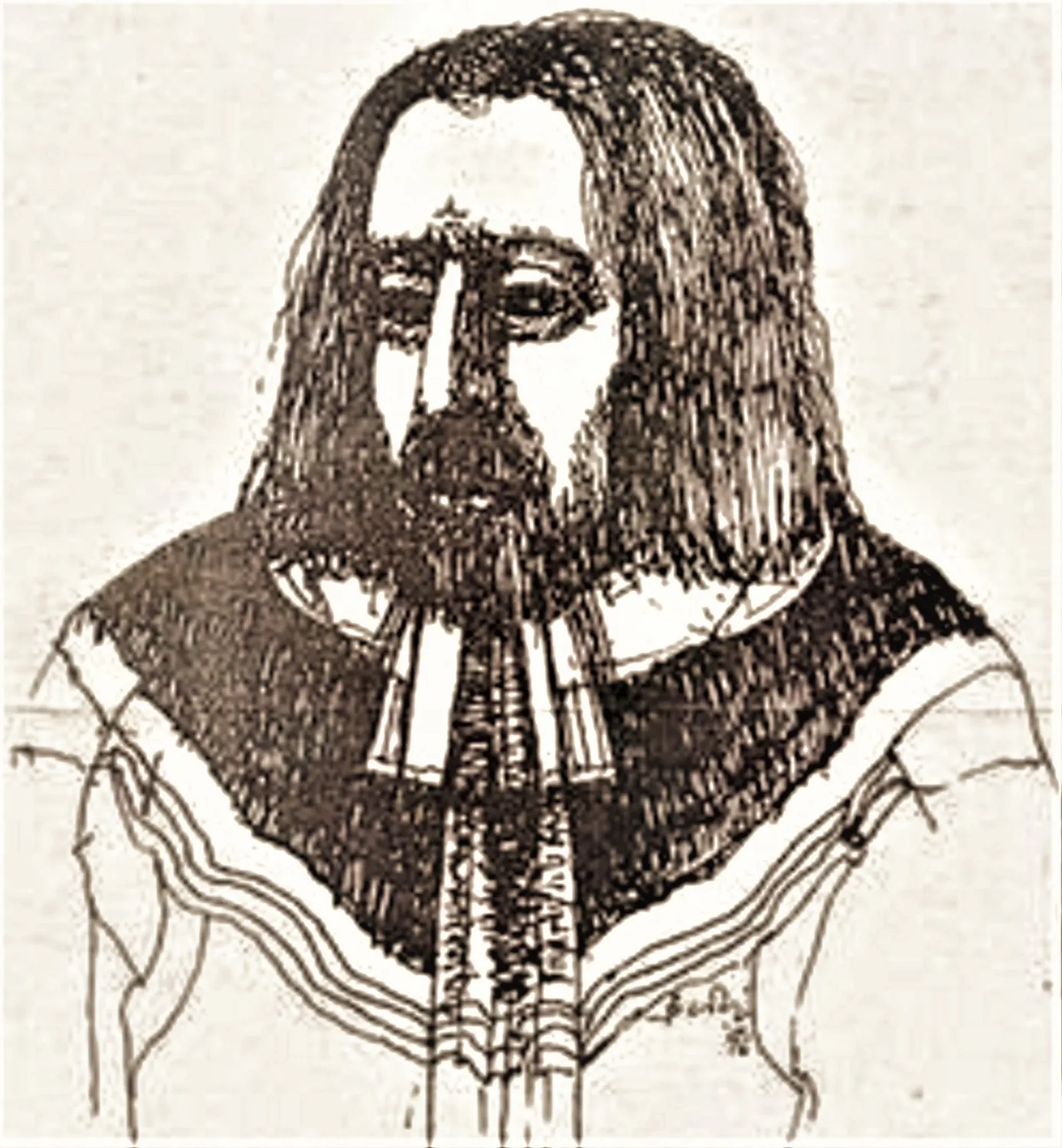
Sweet Gregory
Other - other
* 1763. January 24., Madar - † 1847. October 20., Tiszatarján / poet, pastor ; ; The Édes family of Székely origin moved to Szabolcs or Szatmár during the time of Gábor Bethlen. In the territory of Royal Hungary, around Érsekújvár, they received land and nobility from King Ferdinand III in 1638, along with the name Édes. Gergely Édes was born as the sixth child of a small landowner family. When Gergely was 2 years old, his mother died, and his father soon remarried. In 1776, he became a student at the Sárospatak college, and then 3 years later at the Debrecen college. His poetic ambitions were not fulfilled during this time, and his father died in 1787 - so his financial resources dried up and he was forced to take up work. He first worked as a rector in Hetény in 1787, then in Martos in 1788. ; After that, his pastoral positions began: ; Nagykinizss 1794, Nagyvázsony 1797–1800, Csór 1801–1806, then later between 1811–1813 again Litér 1807–1811, (Csór 1811–13), Balatonhenye 1813–1816, Pápa 1816, Kup 1817–1833 (16 years of service), Pápaderecske 1833–1846, Tiszatarján between 1846–47, where he stayed with his son Albert until his old age until his death. ; His work was characterized by both a serious and a light tone. His more serious works dealt with theological and natural science issues. Thus, his thought-provoking poem The Book of Nature. He wrote a novel in verse under the title Szefir and Dalirózsa, in hexameter form. His main work can be considered the manuscript work The Muse of Immortality, with which he wanted to create the Hungarian “divine comedy”. The poem, consisting of 15 “songs”, is a description of a dream in which an earthly mortal is guided through the worlds of earth, hell and heaven. At the same time, he translated a lot: among his translations, the transpositions of poems by Anacreon, Theocritus and Horace are valuable. His light tone was characterized by his extremely witty ideas, which also helped the development of our literary language. Among these works, his best-known work is a hexameter based on vowels, written during the Greek War of Independence. In addition, he wrote danes, i.e. odes, epigrams, bitters, i.e. elegies, blandishments – i.e. poems intended for entertainment, and as he called them “original educational tales”. Not least, songs, such as A petri goulash, which was only later revealed to have been written by Édes Gergely and not by the people: “Five Greeks are beating five Turks amidst eternal pleasures”. The core of his public relations is formed by his correspondence with Franz Kazinczy. His personal position determined the assessment of Édes Gergely at that time, which unfortunately was not positive. He was also in correspondence with Count István Széchenyi, Miklós Wesselényi, János Batsányi, and Count Gedeon Ráday, who was considered a patron of the time, Dávid Szabó Baróti, who rests in Vir, and the modern poetesses of the time: Borbála Molnár and Julianna Fábián from Komárom. It was in Julianna Fábián's house that Mihály Csokonai Vitéz met his Lilla, who became a good personal friend of Gergely Édes. After the unsuccessful siege of Lilla, "Miska Vitéz" found refuge and solace for his mental sorrow for about six months precisely in Gergely Édes's home in Nagyvázsony. Gergely Édes later wrote in memory of his deceased friend: ; ; "Miska, you! Many have praised you already, ; Who, as close as I, perhaps did not even notice, ; They have deservedly placed a wreath on your head, ; Seated you in your place next to the virgin Muses, ; But I only say, looking at your many songs, ; That you should have lived even longer." ; ; As a further private fact, we would mention his family life: ; During his stay in Csóri, he married Katalin Szászi, with whom he lived for 20 years and had 7 children, although only three survived: Albert, János and Lídia. He corresponded extensively with Albert, and in his old age he found solace with him in Tiszatarján, where his tombstone can still be found today. His second wife was the widow of a priest, with whom, however, his marriage was unhappy and bitter - according to his letters to his son, Albethez. ; In his time, Gergely Édes was popular, but only among the reading public. The majority of writers, poets and critics shared a common dislike for the entire literary movement, the artists, of which he was the most famous representative. Poets competed with each other in search of new ways and possibilities of poetry. Under the influence of János Gyöngyössi, Gergely Édes passionately experimented with the poetic possibilities of the Hungarian language. However, the famous leading figures of the time rigidly rejected the movement and its representatives. But there were exceptions even then: the Transylvanian Hungarian Language Development Society counted our poet among its fellow scholars. He was a favorite author of Vörösmarty's youth. In 1860, János Arany rediscovered the representatives of the movement in his study entitled Directions. In 1932, the Original Educational Tales were published, and in 1941 Gyula Illyés highlighted the “fresh flavors and pure colors of the Hungarian language” as the influence of our poet’s works. Sándor Weöres published some of his works in his poetry history anthology entitled Three Sparrows with Six Eyes, published in 1977. After this, several lines of research revived Gergely Édes’s work within the framework of volumes and memorial conferences. ; A full assessment of Gergely Édes’s poetic oeuvre has not yet been made, as it is a oeuvre of 113,000 lines. Yet the existence and activity of the poet-pastor have been present in Hungarian cultural public life for about two hundred years, and as he once predicted: he is waiting for a resurrection. All this proves that the native of the village of Madar, “a worthy poet of our Renaissance literature”, has a place in the Hungarian literature of the 18th and 19th centuries. ; ; Works: ; Petri gulyás, A kúj és fiai (teaching tale), Édes Gergely: Iramati és danái (1803), A Teosi Anakreon versei képfelé trávébann szállás szélesenn fől grekk által Édes Gergely (1803), Quinti Horatii Flacci opera latina ejusdem generis versibus Hungarice explicata. közés Horácz munkáji széleben széleben meggetázáva széleben Settlements related to his life: ; Nagykinizs 1794, Nagyvázsony 1797–1800, Csór 1801–1806, 1811–1813, Litér 1807–1811, Balatonhenye 1813–1816, Pápa 1816, Kup 1817–1833 (16 years of service), Pápaderecske 1833–1846, Tiszatarján 1846–47 ; ; ; ; 