
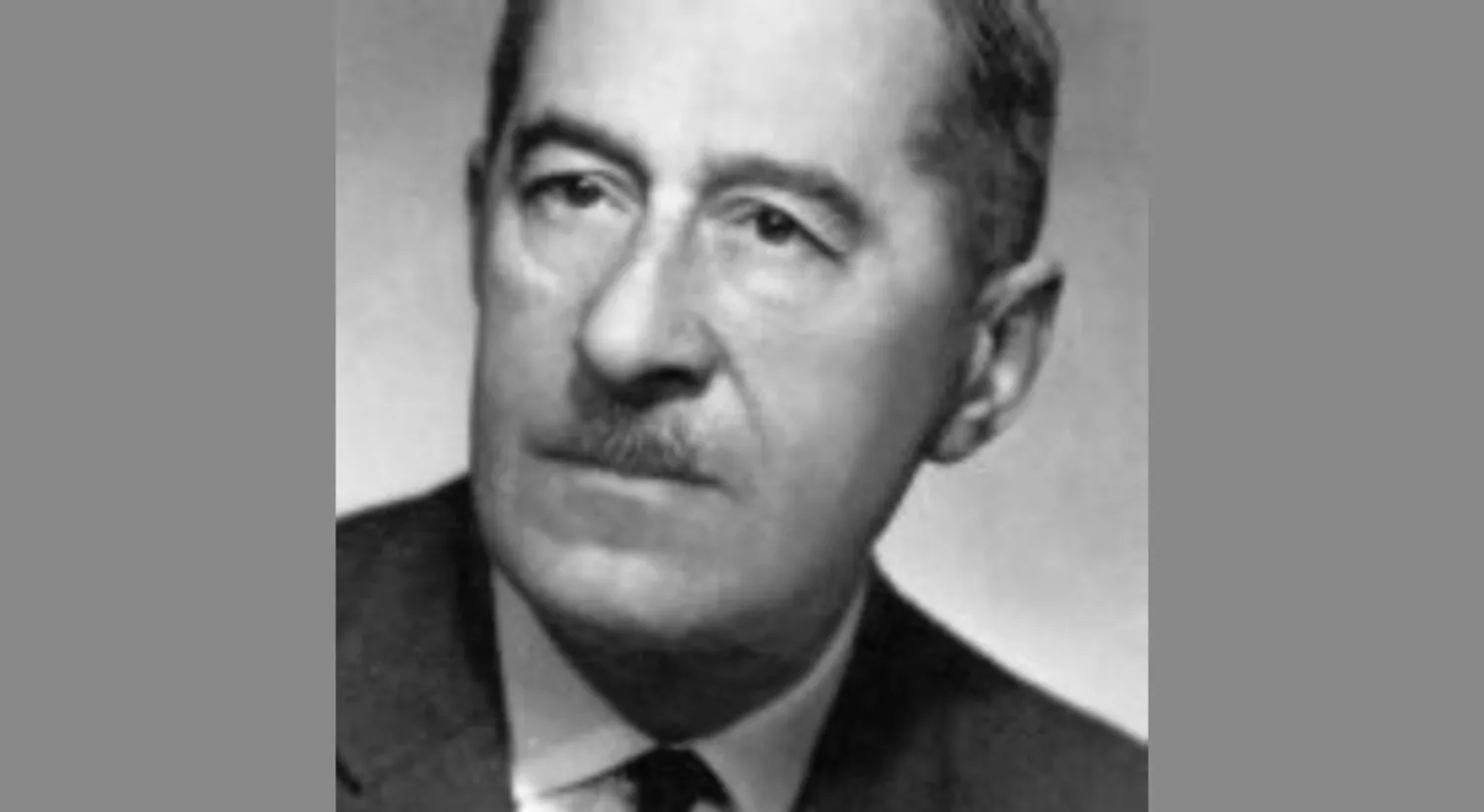
Duka-Zólyomi Norbert
Other - other
* Esztergom, July 10, 1908 – † Bratislava, September 21, 1989 / lawyer, politician, medical historian ; ; He completed his studies in Bratislava. In 1929 he obtained a doctorate in law, and in 1934 he obtained a lawyer's degree in Košice. In 1929–1934 he studied French and Italian at the Faculty of Humanities of the university. In 1954 he obtained a teaching certificate in piano at the Bratislava Conservatory, and in 1961 in accordion. Between the two World Wars and during World War II. During the 1930s, he took on a public and political role (e.g., in 1929, he was president of the Hungarian Academicians' Circle in Czechoslovakia, in 1937–1938, secretary general of the Masaryk Academy, etc.) and was a permanent contributor to various newspapers (Prágai Magyar Hírlap, Magyar Hírlap, Magyar Néplap). In 1927–1928, he was secretary of the Italian consulate in Bratislava, and in 1934–1945, he was a lawyer. He participated in the Hungarian national movement in the Highlands from his university days. His first article, entitled Slav-Hungarian cultural relations, was published in the publication Vetés of the Sickle Movement (1929). In the 1930s, he was a contributor to Hungarian minority newspapers in the Highlands and Transylvania, and several of his articles were also taken up by the Magyar Szemle. In 1946, he was arrested for political reasons and sentenced to prison. In 1949–1953 he was a miner in Handlová. In 1954–1956 he was a teacher at the Handlová music school, in 1956–1957 at the Nagymegyer music school, and in 1957–1969 at the Bratislava folk art center. From 1962 he dealt exclusively with the history of medicine. Thanks to his extensive knowledge of languages (German, French, Slovak, Czech, Italian, English, Swedish, Romanian), he soon gained international fame. He regularly published in the Orvosi Hetilap and the Orvostörténeti Közlemények. In the 1960s he became a colleague at the Institute of Technical History of the SZTA. His main research areas were the history of the Nagyszombat medical faculty (1770–1777), the activities of Hungarian doctors who studied abroad, and the issues of healthcare and medical administration in the Upper Hungary. He is a member of the International Association of Medical History and member of the Society for the History of Pharmacy, the International Academy of the History of Medicine in London. In 1972 he was awarded the István Weszprémi Memorial Medal. His son, Árpád Duka-Zólyomi, is a nuclear physicist, and one of his daughters, Emese Duka-Zólyomi, is a musicologist. ; ; His main works: ; The Assimilation (In: Hungarians in Czechoslovakia 1918–1938), 1938, ; Szórványmagyarok (In: The Life of the Slovak Magyars 1938–1942), 1942, ; Zacharias Gottlieb Huszty 1754-1803, 1943, ; Smallpox Epidemics and Smallpox Deaths in Bratislava at the End of the 18th Century (1786-1800), 1944, ; The Students of the Faculty of Medicine in Nagyszombat, 1966, ; Zacharias Gottlieb Huszty Co-founder of modern social hygiene, 1972,. ; The Faculty of Medicine in Nagyszombat and its historical antecedents. (In: Új Mindenes Gyűjtemény 4.), 1985, ; We are and we will be. The social picture of the Hungarians in Slovenia 1918–1938 (ed. by József Fazekas, 1993).