
Threshing machine
Other - other
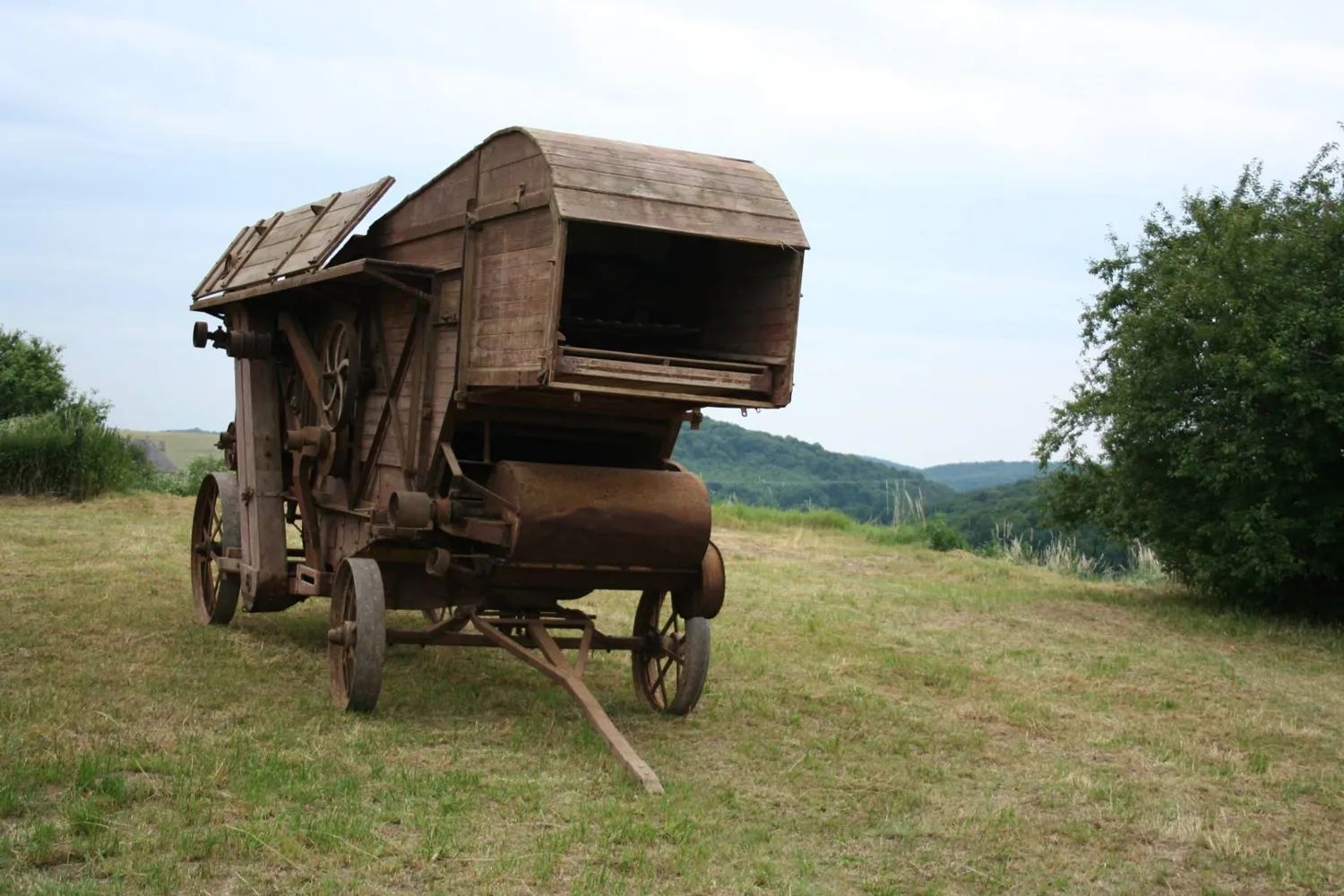
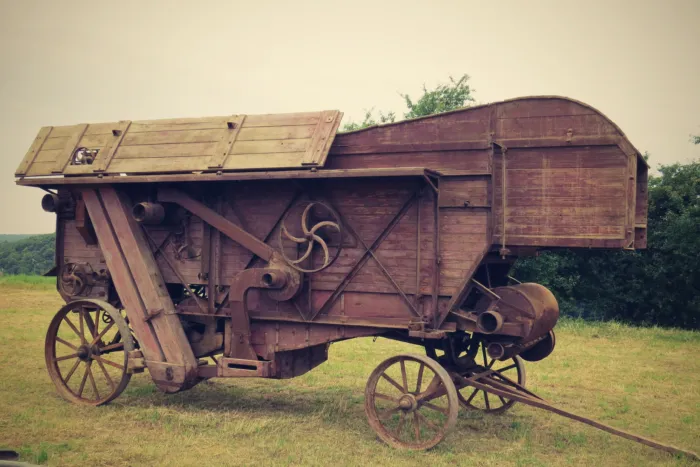
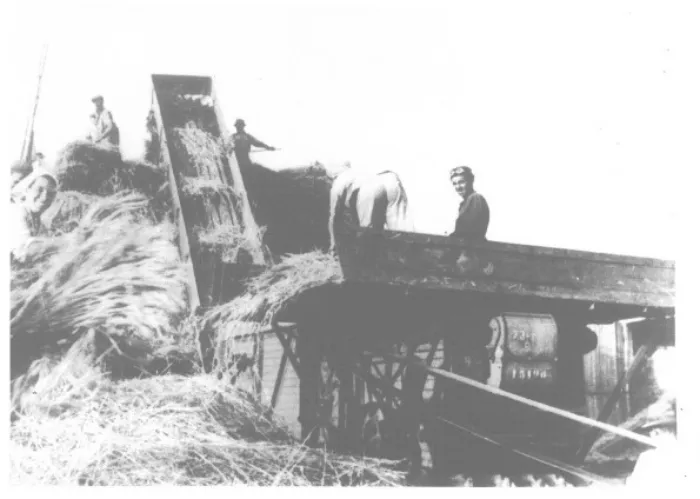
The threshing machine was purchased in 1948 by the brothers of the deceased Imre Dely, Béla Dely and József Dely. It was a Hofer Shravna 1000 type threshing machine, powered by a short 12 HP steam engine. The threshing machine was pulled by horse or oxen from one place to another by small farmers from the surrounding villages. ; After the war, on July 23, 1950, the threshing machine became the property of the local producer cooperative and is still there today. The steam engine was replaced by the SLÁVIA naphtha engine in the late 50s. Then in the 60s, this type of threshing machine was replaced by the SK 4. ; The harvest, which began in August, was initially done by hand, using scythes, and the sheaves were collected by hand and placed in crosses. A cross consisted of 25 sheaves (the ears of wheat were placed opposite each other on the ground) and a sheaf was placed on top. In the late 1950s, the harvester appeared, which was pulled by a tractor and which put the harvested wheat into sheaves. During the harvest season, the children's task was to collect the sheaves, which the adults put into crosses. These crosses were carried in piles and the threshing machine was placed next to the pile. ; About 12-14 people were needed for threshing. The most important task was that of the machinist. Two people fed the sheaves from the pile. A woman stood on top of the threshing machine, who cut the rope connecting the sheaves and passed them on to the feeder, who lowered the sheaves with the ears of wheat into the drum. The drum broke the ears of wheat and the grains were discharged through the drum basket onto the coarse sieve. The straw walker separated the chaff and the grain. The grain then went from the large sieve to the fine sieve, and finally the clean grain came out. At the end of the threshing machine, two men stood by the four bags, which contained the clean grain, the half grain, the second grain and the dirty grain. Two more men were needed to put the straw on the stack. The hardest work was that of the man who raked the chaff, because it created a lot of dust. ; The threshing machine was taken to Doma Mountain, on the outskirts of the village, in August, and everyone brought their own crop in small stacks for threshing. The threshing machine usually worked until the end of October. It was still powered by a steam engine, and fires often occurred, but its biggest disadvantage was that there was a lot of dust around it. However, it was a huge help to small farmers, because it replaced threshing with a flail, which was physically very exhausting.