
Csemadok Bird Foundation
Other - other
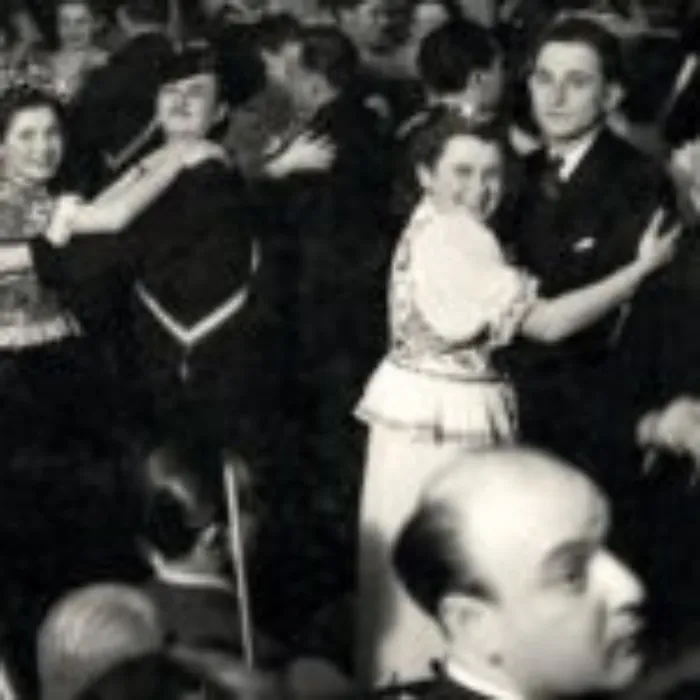
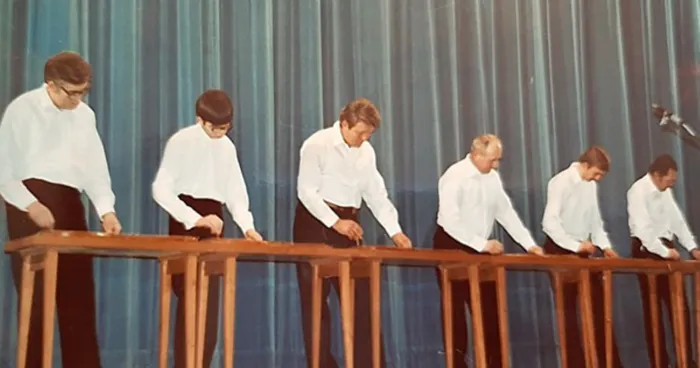
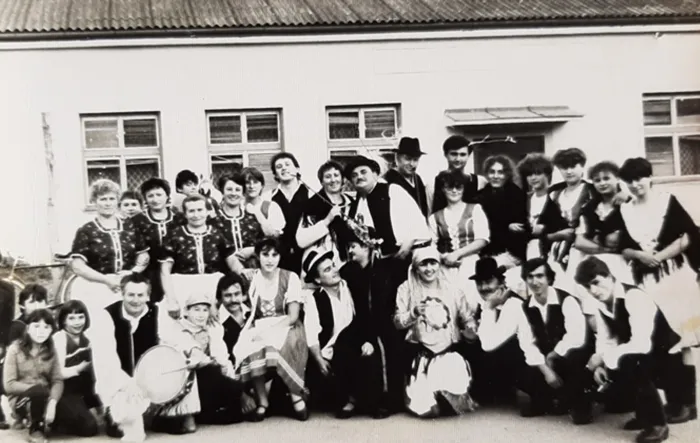
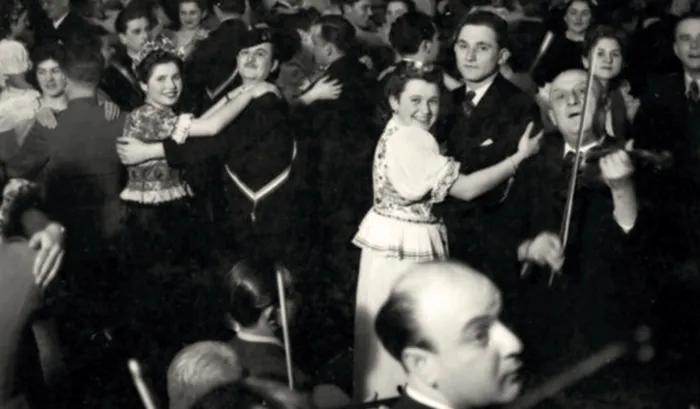
Csemadok was founded in Madar on February 4, 1952. Among its founding members were a Reformed pastor, teacher, cooperative workers, and later the president of the Hungarian National Bank and a district representative. ; In the surrounding villages, just like in Madar, drama and folk dance groups, choirs, and orchestras were established. They organized joint performances, traveled, and met each other. The main task of Csemadok was to cherish traditions and pass on folk culture to future generations so that it would not be forgotten. ; The first play was directed and performed by the founding members of Csemadok, led by Pinke Benő and teacher Manyi Kis in 1953. The play was titled “GYPSY”. It was performed in the old tobacco dryer, and a real blacksmith’s workshop was created on the stage. At that time, there was no electricity in the village, only in this dryer. ; The next plays were “The 11th Commandment” in 1961, “Sógorság komaság”, “Duda Gyuri” in 1968, “Ez aztár a észépész” in 1976, “Ludas Matyi”. ; On April 14, 1968, at Easter, the play “There’s a Problem with Love” was performed in the already rebuilt community center. And there was a real problem, not only with love, but also with marriage, because the director, a teacher, fell in love with the main character and divorced his wife. ; In the past 7 decades, the elected presidents of the Csemadok in Madar were: Márton Tóth 1952-1962, András Tóth, 1963-1968, Dezső Czékus 1968-1974, Géza Tóth 1975-1990, Erzsébet Szenczi 1990-2002, Péter Czékus 2003-, Júlia Borsányi ; The folk dance group also actively participated in cultural work. In 1958, it presented its glass dance at several locations and occasions. ; Under the leadership of teachers Irma Németh and Ildikó Szalai, in the 60s, the dance group performed at various events accompanied by gypsy music. ; The Madar dance group also received a certificate of recognition in 1966. ; In the 70s, 80s and 90s, the youth gathered at harvest parades, folk song festivals and neighborhood gatherings, and danced to entertain themselves and their guests. ; One of the best sources of income for the basic organization of the Csemadok was the men's ball. It was organized every year from 1969, and the gypsy bands competed to see who would play music at the ball. ; The women's choir was founded in 1971. The 6 founding members performed for the first time at the Who Knows? competition. In the beginning, they worked alongside the Women's Organization, and then from 1975 they reorganized to the Csemadok. The members of the women's choir, which is still actively operating today, can look back on many successful performances. ; They received gold and silver medals at national competitions, were recorded on television several times, appeared several times on the Hungarian broadcast of the Bratislava radio, and participated in the St. Stephen's Day celebration in Vienna on August 20. ; The Bratislava television staff made a film about the folk culture of our area that is still alive today. One of the main characters of this program was the members of the Csemadok Women's Singing Group from Madar and the Hajós folk dance group. Directed by István Katona, the leader of the Komáromi-Hajós folk dance group at the time. ; After 70 years, several bands tried to entertain those hungry for culture. ; The zither players have preserved the traditions alongside the Csemadok for 50 years, and they still perform at cultural programs today. In fact, there is always a member who passes on the knowledge of using the instrument to the youth. ; The band called Olimpia 68 was from the Tiszavirág era. This young group was together for a short time, but their love of music accompanied them throughout their lives. ; It was a great joy in the 80s at the folk song festivals, because a unique peasant orchestra entertained the audience. The amateurs founded by the Reformed pastor made the evenings more atmospheric with crisp Hungarian songs. ; The harvest parade has a long tradition in Madar. Since 1958, the harvest paraders have been riding on carts, wagons, or carriages. It was organized after the harvest was over, with a few years of absence for decades. There was always a two-horse carriage in the village, which was decorated with grape branches at this time. The women and men sat on the carriages, who marched through the village singing. The judge and the judge's wife sit in the carriage, and the petty judge, who calls people with the sound of drums. At each stop, after the announcement of the judge, the youth danced. After the parade, the dinom-dánom began. The harvest ball provided entertainment until dawn for many of the Madari and their guests who wanted to have fun, where everyone danced away the fatigue of the harvest work. ; In the spring of 1988, the Csemadok organized a writer-reader meeting with the writer József Mács and Katalin Ordódy under the leadership of the cultural center. ; Commemorations: In 1996, the local organization of the Csemadok held several commemorations. First of all, the traditional group, the women's choir, celebrated the 25th anniversary of its establishment. On this occasion, the district Csemadok awarded it the "Silver Degree of Folk Art". ; On the occasion of the Millecentenary, we dedicated a plaque together with the Reformed Church. Nothing else was written on the plaque except two letters MC. The text was only added to the board after the change of regime. ; The Madar members also commemorated the 50th anniversary of the founding of Csemadok. Every Csemadok member who had been active in recent years received commemorative plaques. A commemorative plaque was unveiled and placed on the wall of the community center. ; Madar is a wine-producing region, with many grape farmers. The family cultivated the grapes together. The farmer made the wine, and this knowledge was also passed down from father to son. But the newer grape varieties demanded more and more demanding work. Winemaking also took on a modern form. The management of the local organization of Csemadok thought that it could improve the quality of the already fine Madar wines by providing advice to the wine farmers. It organized the Wine Competition, to which it invited wine experts. Since 1999, the quality of the wines has been assessed every year by the village's winemakers. The wine competition is still held today, but since then the "Winemakers" association has been established and they continue this tradition. ; Radio and TV recordings. Our traditions are very important to us Madari people, but we are happy to share them with others. The editor of Pátria Radio has contacted the leadership of the Madari Csemadok on several occasions to organize a recording. At that time, they contacted the elderly people of the village, Aunt Margit Salgó and Uncle Jenő Szűcs, who told us about the old Madari customs. ; The TV recording was made in 2010 under the title Easter Customs in Madari, and was shown on Komárom TV. All the participants were very happy to make this recording.