
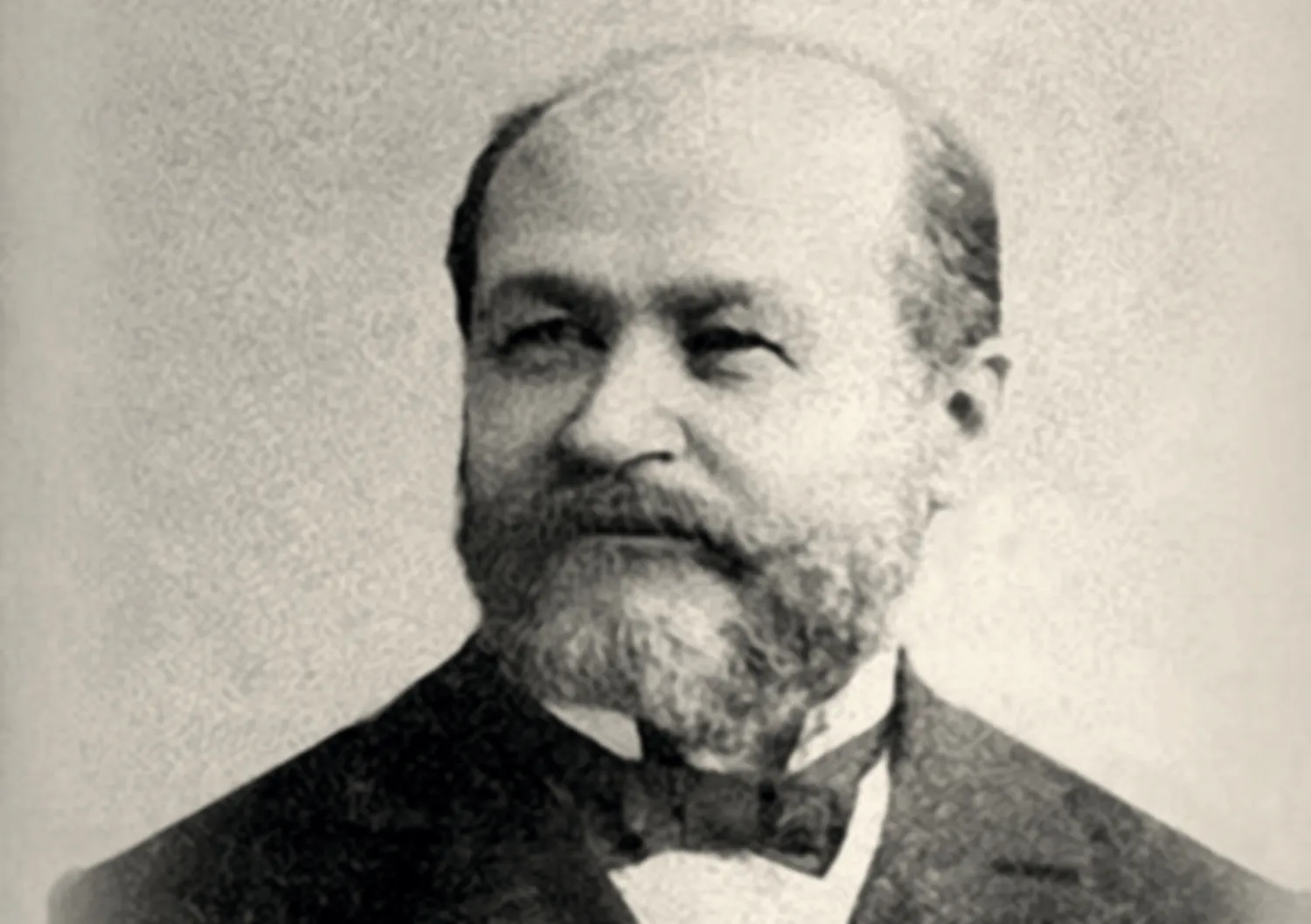
Kornél Chyzer
Other - other
* Bártfa, January 4, 1836 – Budapest, September 21, 1909 / physician, balneologist, zoologist, member of the Hungarian Academy of Sciences. ; ; He began his elementary and high school studies in his hometown, graduated from high school in Košice, and then graduated from medical school in Pest in 1857. In the meantime, he also studied natural sciences at the University of Vienna. In 1860, he was the assistant keeper of the zoology department of the Hungarian National Academy of Sciences and the deputy teacher of natural history at the Pest General Hospital. In 1861–1869, he worked as a spa doctor in Bártfa. After that, he was appointed the chief physician of Zemplén County and settled in Sátoraljaújhely. He made great contributions in combating the cholera epidemic in Zemplén County in 1872/73. In 1892, he was appointed as a ministerial departmental advisor and primarily performed tasks related to public health, epidemic diseases, alcoholism, and tuberculosis. For more than 20 years, he was the secretary and then president of the Association of Hungarian Doctors and Naturalists. The Hungarian Academy of Sciences elected him a corresponding member at the age of 25. He played a significant role in the reorganization of the traveling meetings of Hungarian doctors and naturalists, and was once the secretary and then vice-president of the meetings. From the very beginning, he worked tirelessly to introduce and popularize Hungarian spas. The health committee of the 1885 national exhibition entrusted him with the introduction of Hungarian spas. In 1868, together with Károly Orzovenszky (1815–1876) and Emil Felletár (1834–1917), he launched the balneological journal Fürdői Lapok, and also contributed to the founding of the National Balneological Association. ; He was also a private teacher of forensic medicine at the Law Academy of Oradea, and later at the University of Pest, where he gave lectures on the subject of the examination of adulterated baby food. He also dealt with arthropods (spiders, beetles, hymenoptera, orthopterans, bees). He especially studied the insect world of Zemplén County. He also played an important role in organizing the fight against phylloxera. He made study trips to many European countries, regularly publishing detailed reports about this in newspapers. He was buried in Bártfá. ; His son, Béla Chyzer (June 15, 1868 – January 12, 1910, Budapest) was also born in Bártfa and received his medical degree from the University of Budapest in 1891. He was a prominent practitioner of occupational health. ; ; His main works: ; On the leaf-footed shrike of Pest11, 1861, ; Systematic review of the freshwater fish of Hungary, 1863, ; Public health relations of Zemplén county, 1871, Final report on phylloxera research in Sátoraljaújhely…, 1880, ; Data for the natural history of Zemplén county. I. Fishes of Zemplén County, 1882, Health Resorts and Mineral Waters of Hungary (in German and French), 1885, The Connection of Our Public Health Problems with the Deficiencies of Our Natural Science Knowledge, 1886, ; Bees of Zemplén County, 1887, ; Araneae Hungariae Volumes I-II. (on the spiders of Hungary, with Ladislaus Kulczynski), 1891–1897, Mental Illness, Asylums for Drunkards and Protection against Pneumonia (with Niedermann ; Gyula), 1897. ; ;  ,