
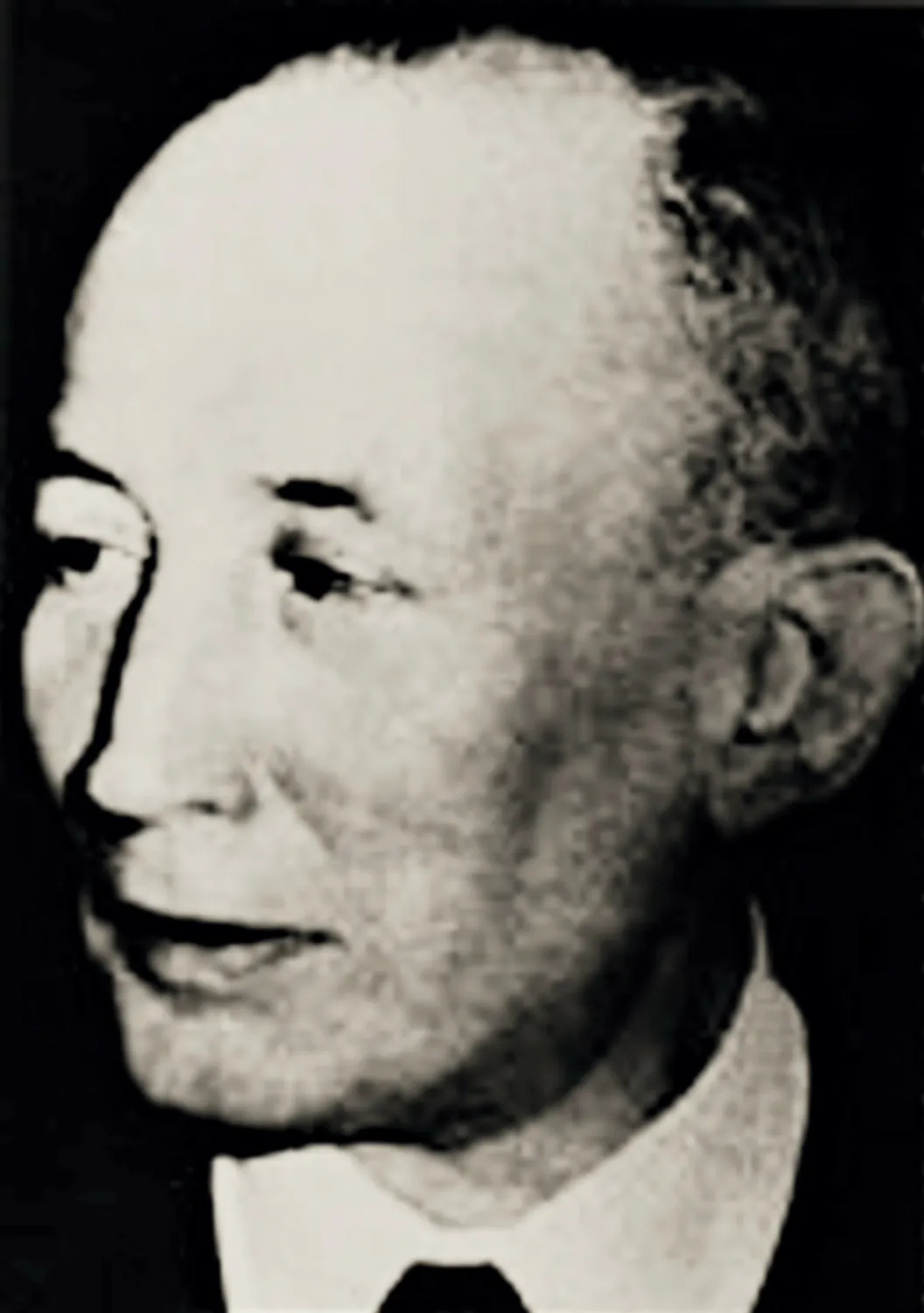
Aladar Buzagh
Other - other
* Derencsény, July 6, 1895 – † Budapest, January 20, 1962 / colloid chemist, university professor, member of the Hungarian Academy of Sciences; ; In 1918 he obtained a degree in chemical engineering from the Budapest University of Technology, and in 1921 a doctorate in humanities from the Budapest University of Science and Technology. In 1926–1927 he conducted research on colloid chemistry at Wilhelm Ostwald’s Leipzig Institute. Later he further deepened his knowledge in this field at other research institutes in Germany. In 1933–1940 he was an assistant professor at the Institute of Chemistry No. II of the Budapest University of Science and Technology, during World War II he was a titular public extraordinary professor of colloid chemistry, later a public full professor, and from 1950 until his death he was a professor at the Department of Colloid Chemistry. He is considered the founder of Hungarian colloid chemistry. His research was primarily focused on the investigation of peptization processes, as a result of which he created the Ostwald–Buzágh sedimentation rule in 1929, as well as the Ostwald–Buzágh continuity principle characterizing the force effects occurring in disperse systems and the stability of sols. He also studied the structure of the electric double layer. The Hungarian Academy of Sciences elected him a corresponding member in 1936 and a full member in 1946. He received the Kossuth Prize for his work in 1949 and 1954. ; ; His main works: ; The scientific significance of colloids, 1931, ; Colloid Systems, 1937, Kolloidika I-II., 1946-1952, ; A kolloidika praktikuma, 1954.