
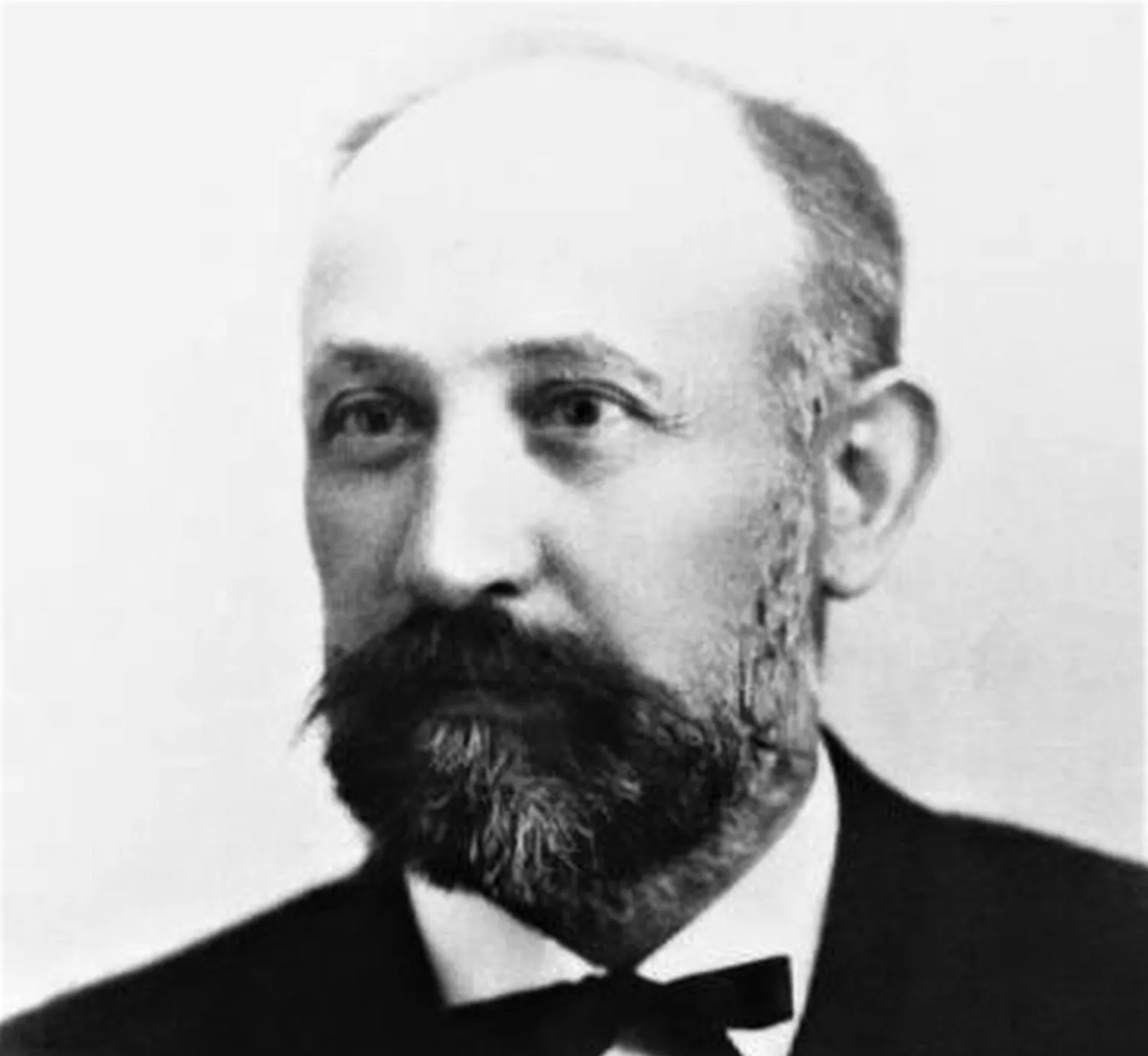
Charles Boehm
Other - other
* Bánya, September 17, 1846 – † Cluj-Napoca, May 19, 1911 / philosopher, university professor, member of the Hungarian Academy of Sciences ; ; He completed his theological studies at the Lutheran Lyceum in Bratislava in 1868. He was subsequently a student at the universities of Göttingen, Tübingen and Berlin. Between 1870 and 1896, he taught first at the Lutheran Lyceum and then at the Lutheran Gymnasium in Bratislava, of which he was also the director from 1883 to 1896. In 1896, he was appointed public philosophy teacher at the University of Cluj-Napoca. In 1901–1902, he was also the dean of the Faculty of Humanities. He was one of the most significant Hungarian philosophers who created an independent philosophical system. Initially, he based his teaching on the ideals of Protestantism, but he was influenced by Hegel's dialectics and Comte's positivism, and he tried to combine all of this with elements of natural science, but he was also greatly influenced by the ideological system of Immanuel Kant, and in the last years of his life by Fichte's subjective idealism. His theory of value enriched philosophical thinking with many new elements and attracted many Hungarian students. In 1884, he started the journal Magyar Philosophiai Szemle. The Hungarian Academy of Sciences elected him a corresponding member in 1896 and a full member in 1908. ; ; His main works: ; Experimental Psychology, 1888, ; Logic, 1889, ; The History of Modern Philosophy, 1896-97, ; The Task and Basic Problems of Value Theory, 1900, ; Understanding as the Central Moment of Cognition, 1910. ; His five-volume work Man and His World, Parts I-V, was published after his death