
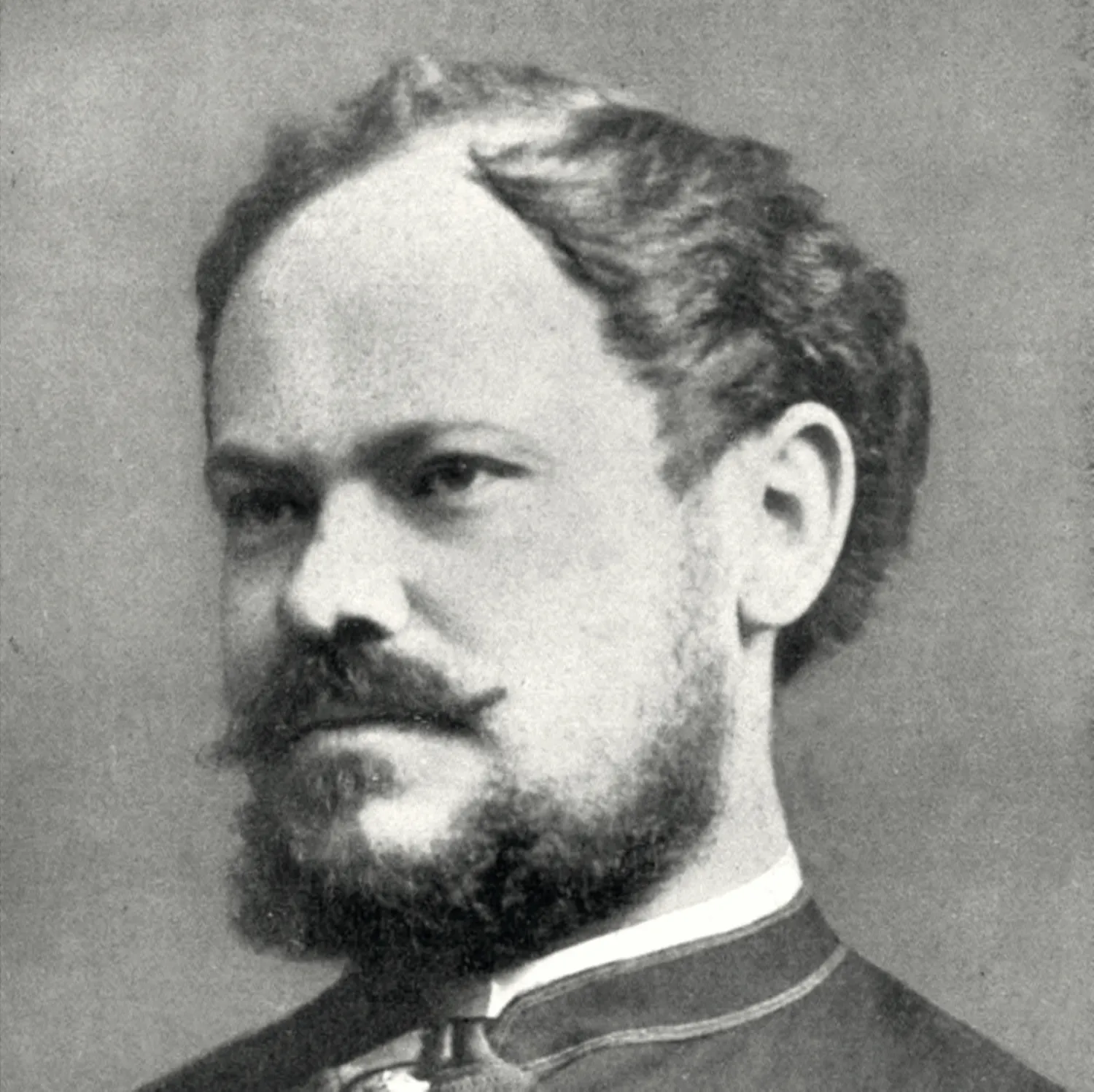
Gabor Baross
Other - other
* Barossháza, July 6, 1848 – † Budapest, May 9, 1892 / politician, Minister of Transport and Trade ; ; He completed his secondary school studies in Léván and Esztergom, and his law studies in Budapest. He was already a very energetic and determined public figure at a young age. He became a county official in Trenčín. Here he founded and edited a newspaper in Hungarian, German and partly Slovak. In it, he boldly criticized, especially administrative irregularities. From 1875, as a liberal party representative, he was a supporter of Kálmán Tisza. From 1883, he was Secretary of State for Transport, from December 29, 1886 to June 15, 1889, Minister of Public Works and Transport, and then until May 8, 1892, Minister of Trade. As a member of parliament, he worked hard to boost public education, the economy and transport, and as a minister, he tried to implement his ambitious plans with a strong hand and consistently. He proudly assumed the title of “iron minister”, as he was often referred to in the press. Gábor Baross reformed the railway tariff system, launched the construction of the Vaskapu Canal on the Danube, on his initiative the construction of the Adriatic Sea port of Fiume began, a telephone connection was established between Budapest and Vienna and the Postal Savings Bank was founded. ; He considered the construction of the country’s transport and IT infrastructure, the establishment of new factories and economic enterprises and the training of the necessary specialists to be an important task. The launch of more than 50 schools is related to his activities. He founded the Postal Savings Bank, merged the post office and the telegraph office, made correspondence in Hungarian instead of German mandatory on state railways, and knowledge of Hungarian required for railway officials. He paid great attention to the promotion of domestic products, and for this purpose he established the Museum of Commerce, which initially served as a kind of model warehouse. He often personally supervised the works started based on his ideas, and during one such tour he caught a cold at the Iron Gate and, after not taking his condition seriously, the disease took hold of him and the doctors proved powerless. He was laid to rest in a mausoleum built by the Hungarian state near his native village, Klobusic near Illava.