
The Szilassy Castle in Losonc
Other - other
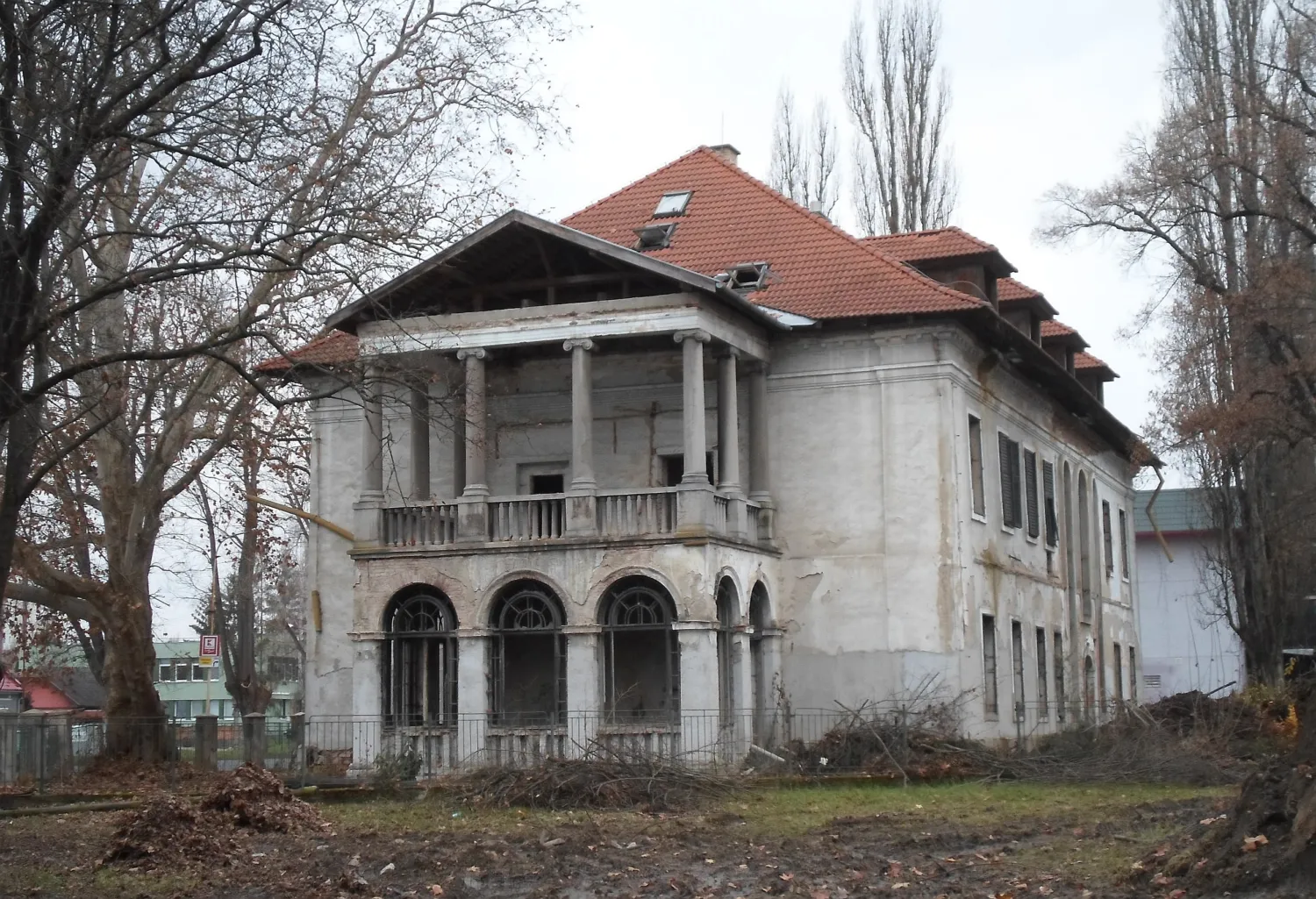
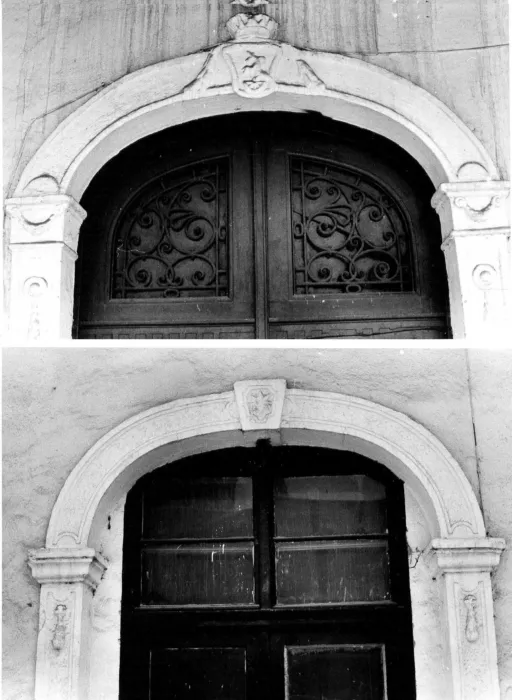
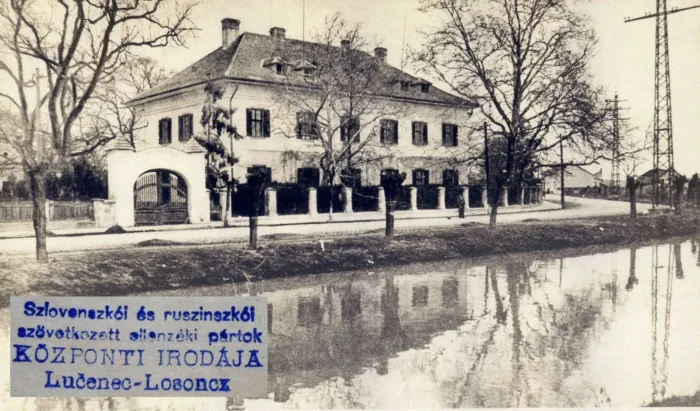
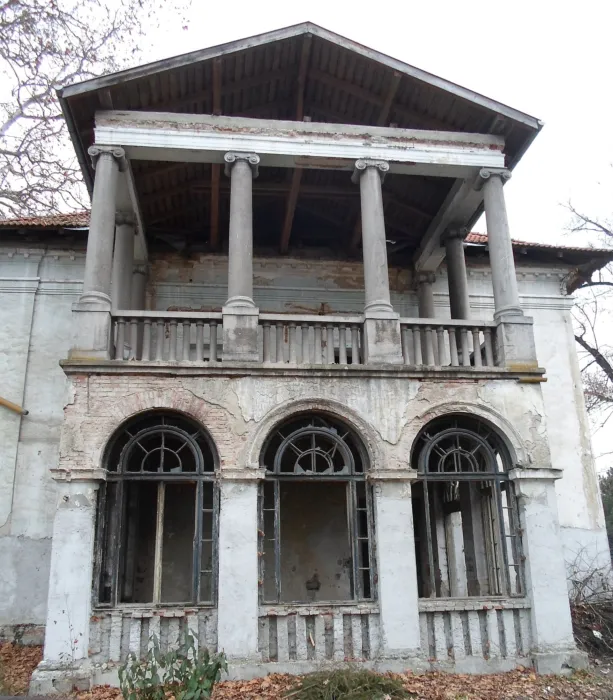
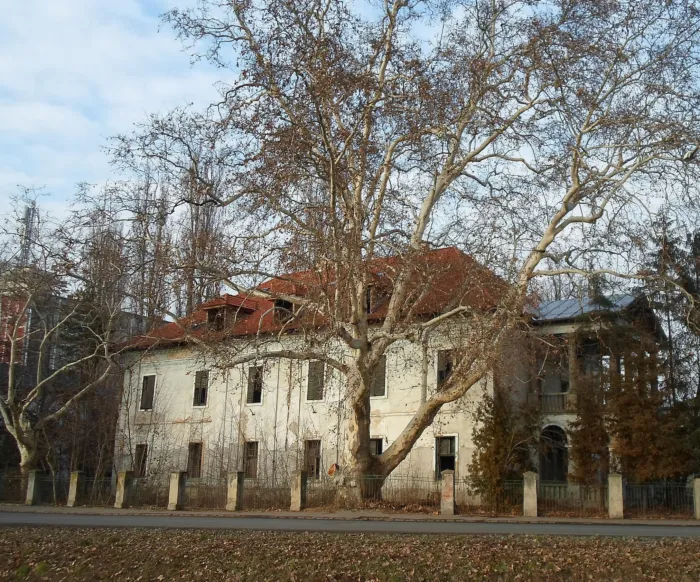
In Losonc, on the banks of the Tugár stream, under protected plane trees, stands the Szilassy castle, a historic building with a long history, but which has been empty for years. The excavation assumes a 17th century baroque mansion in the ground floor of the building. The street facade, divided by a classicist frieze and wall pillars, with its shuttered windows, has been preserved intact. The carved stone-framed, coat-of-arms portal of the main entrance evokes the building's heyday. The most beautiful part of the rectangular, one-story, classicist building with a hipped roof is the central projection of the eastern facade, a neoclassical addition from the 2nd half of the 19th century. The upper part is an open terrace, with 8 Ionic columns, and the tympanum closing the roof resting on them, reminiscent of an antique portico. ; The Szilassy family from Silesia and Pilis was present in the market town of Losonctugar for 500 years. In the 18th century. The descendants of Ádám Szilassy, who lived at the end of the 17th century, held secular and ecclesiastical positions and worked for the public good. József Szilassy Sr. 1755-1835 was a judge of the Seven-person Board, a crown guard, the chief steward of Zemplén and Torna counties, participated in the founding of the Reformed Church of Pest, and was its chief trustee from 1821. He also served as the chief trustee of the Transdanubian Reformed Church district. He also took care of his Losonctugar estate and castle. He transformed the Baroque mansion into the classicist castle that still stands today, which was expanded by his son and grandson. József Szilassy Jr. 1792-1854 was a royal vicar, a presbyter of the Reformed Church of Pest, and the chief trustee of the Drégelypalánk diocese. He was the supervisor and patron of the famous Reformed Lyceum of Losonc. After the destruction of the town in 1849, he participated in the reconstruction of the church and school. Two of his sons, Ferenc 1819-1876 and Béla 1839–1908, were the chief guardians of the Losonc ref. church. Aladár's son was born in Buda in 1847, but spent his childhood and student years in the ancient nest in Losonctugár. A lawyer, judge, member of the noble house, head of the financial department, he alternately stayed in Losonc and Pest, where he participated in the establishment of the Baár-Madas girls' educational institute and the Keresztyén Youth Association. His work was recognized with an honorary theological doctorate. In 1924, he was buried in the family cemetery in Losonc next to his son, Dr. Aladár Szilassy Jr., a doctor who died in 1912 at the age of 33. He wrote his name into Hungarian cultural history by founding scouting in Hungary (1910). He was the first commander of the 1st team of the Bpest Ref. Keresztyén Youth Association. The son of Béla Aladár Szilassy, Sr., from 1881 to 1962 was the chief guardian of the Losonc Ref. church from 1914 to 1944. Although he was a lawyer, he devoted his attention to the administration of his estates and active politics. He participated in the organization of the Hungarian National Party, and in 1920 he became the executive vice-president of the Joint Committee of the Sloveneszkoi and Ruthenian Associated Opposition Parties, whose office was set up in the Losonc castle in 1922. In 1925 and 1929, as a senator of the MNP, he was the spokesperson for the Hungarian minority in the Prague parliament. He was the secular president of the Convention of the Reformed Church of Slovenia and Transcarpathia, and the chief trustee of the church district of Dunáninnen. He participated in the organization of the Reformed Theological Seminary opened in Losonc in 1925, in the raising of funds, and in the maintenance of the institution. He last appeared on the Czechoslovak political scene in 1937-38 as a senator of the United Hungarian Party. After November 1938, he worked as a summoned representative of the Hungarian Parliament. In 1938-40, he was the state secretary of the Ministry for Highland Affairs, and in 1939-44, he was the government commissioner for the settlement of Highland estates. At the end of 1944, he emigrated with his family. In 1948, he became the founding president of the National Committee of Hungarians in Czechoslovakia in Munich. He settled in the USA in 1950 and was one of the leaders of the Hungarian Liberation Committee. He died in Pekin, Illinois, in 1962. With him, the Losonc branch of the family became extinct.