
The weekly school
Other - other
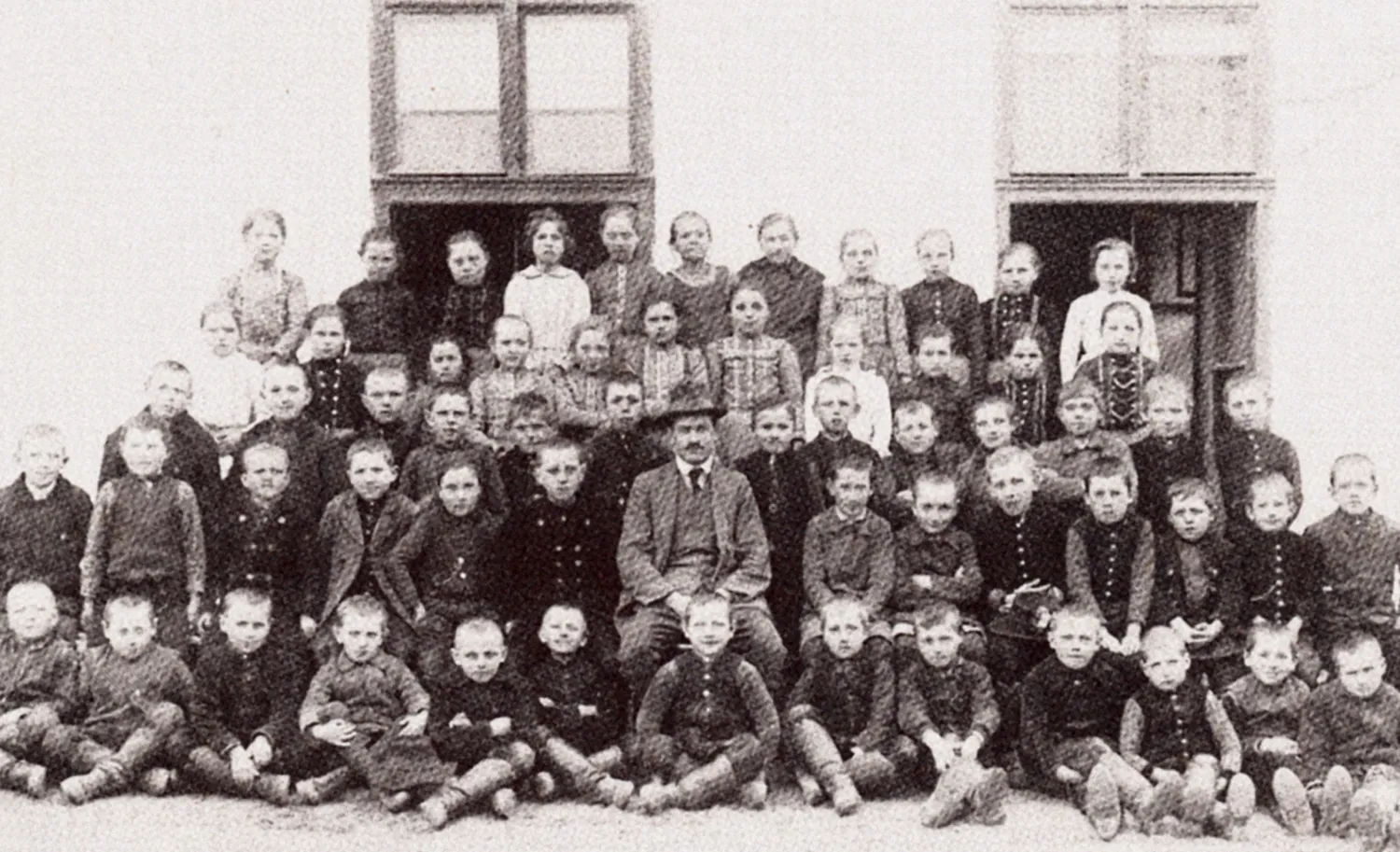
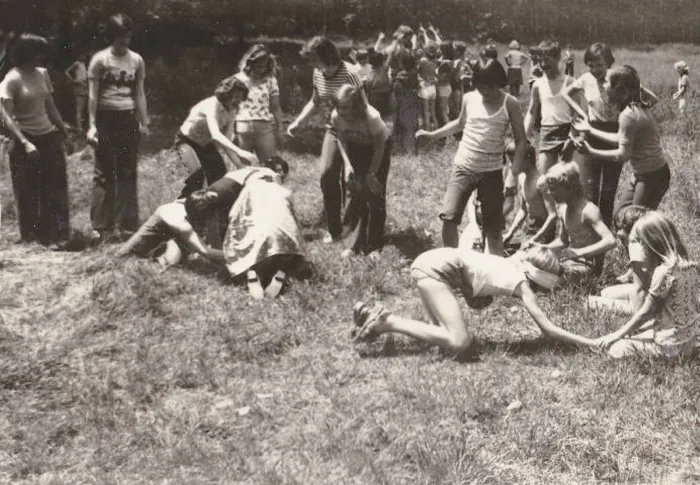
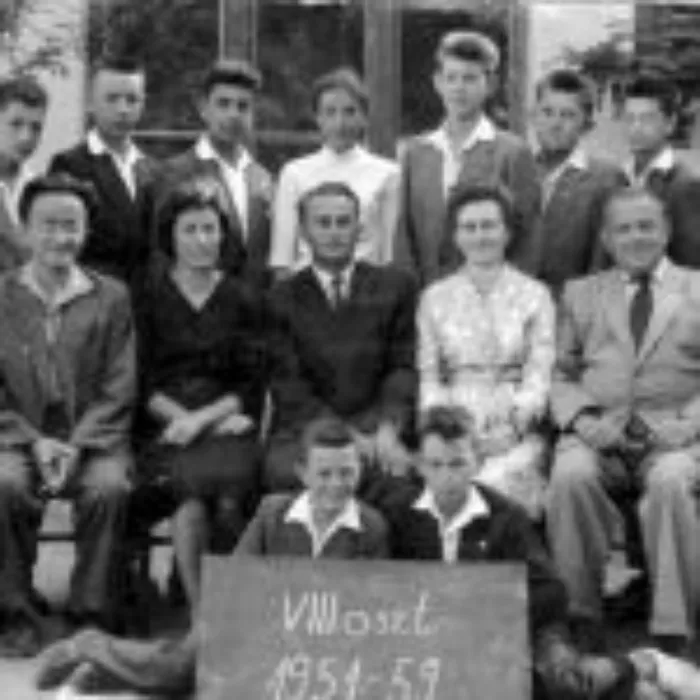
The life of Hetény schoolchildren in the 1950s and 60s ; ; As students of the Tarczy Lajos Elementary School, we became curious about how our ancestors experienced their school years, what they learned, and whether they were really as good children as we now hear so often from our grandparents and parents. ; Historically, from 1867 to 1928, there were 6-grade elementary schools in the Kingdom of Hungary. From the 1928/29 school year, eight-grade elementary school was mandatory. In 1953, the elementary school became an Eight-Year Hungarian-Language Secondary School, the graduating students of which took a small matriculation exam and a final exam. A Nine-Year Elementary School has been operating since the 1960/61 school year. The eight-year elementary school was introduced in 1978/79. ; The Hetény school took on the name of Lajos Tarczy in 2000. At that time, a memorial book was published, which briefly contains the historical chronology of the school. The first written mentions date back to the 17th century, when the village pastor was also a teacher. He taught the children to write, read and count. ; However, the duties of a pastor-teacher were not always carried out adequately. In 1753, the people of Hetény expelled Sámuel Megyeri, and in 1907, teacher Ferenc Dobos was dismissed from his job because he did not teach the first graders how to write and count. ; One of the school's most outstanding teachers was István Császár, who raised the Hetény school to one of the best village schools in the first half of the 1800s. ; The minutes of the Camarica Visitatio are from 1827, written in Hetény on November 26: ; 1. Matriculations, Protocols, Accounts are well kept. ; 2. The goods of the Ecclesia are preserved and have not been lost, which they were. ; 3. The Assevráltatás is bound to the hearts (A beautiful peace and agreement reigns in the Ecclesia). ; 4. No complaints were made. ; 5. The good old Calculus of the Oskola was still kept. (József Kalmár Esperes, Preachers of Komárom and Pál Karika Apaca-Szakállas). ; ; Further minutes details: ; ; 1829/30 ; “Oskola Rector István Császár.” ; “Summer school and autumn exams are in order. All Eminences, except that some small weakness was experienced in the attempted type of Accounting.”. ; (Transdanubian Church District Archives, Examination Report) ; 1830/31 ; “Osk. Rector István Császár Professor Sóki was a master.” ; “Summer school and autumn exams are in order. If the rector did not teach some poor child here for free: the Ecclesia would pay for it. There are school inspectors. The school is a Good Clápis Cum Eminischime”. ; (Transdanubian Church District Archives, Examination Report) ; 1836 ; “Oskola Rector István Császár.” ; “The school is known for its successful diligence. The teacher's tireless work is in the best hands, especially commendable is the beautiful order, attention, courage and intelligent response in the students. Summer School and Autumn Examination are in order and although the requested Assistant Teacher would bring joy to the teacher's relief. The teacher who lives in his office wishes to spare the Church from this burden and will do everything with the greatest loyalty himself”. ; (Interpretation of Summer School and Autumn Examination: After March 12 - Gregorian Day, they went to school, they did not stay home to work. They took exams on the work done in the fall.) ; (Archives of the Transdanubian Church District, Examination Report) ; 1839/40 ; “O.T. István Császár, assistant teacher János Benő, born in Zemplén County, Losonczi Deák.” ; “The school is one of the best village schools, it is usually a summer school and also during the Autumn Exam. The teacher is tireless in his diligence. His students answered the Great Catechism with intelligence, they tell religious histories in the style of the core, they study Physics and Geography. The teacher was praised. The students also made a good progress in the Small School.” ; (Archives of the Transdanubian Church District, Examination Report) ; 1842/43 ; "The number of schoolchildren is fi. 89, l. 62, that is, 151. Of whom 1 is Roman Catholic. What the older ones learned is the following: Church History, Natural History, General History, Geography from the Atlas, Moral Rules, ABC according to the four parts of the calculation, in addition to this, the girls' rule. Four also study as deacons. Prayer, reading and writing. They sang with harmony. The news is good. In a distinguished school, discipline spreads in Hetény, there one finds one that can be a real praise not only for the locality, but also for the Ecclesiastical County itself. The smart, intelligent teaching is emotional, which is evident from the Teacher's merits without books or writing and from the answers of his students to them. That appropriate courage, on the forehead of every student and in the whole reality, is seen, that beautiful behavior that is in the children an unfailing sum of respect for his teacher. He encourages all those who appear in the Emperor's school to some joy, and he motivates those who come out of it to mention him with his unparalleled diligence. And with this fervent desire he leaves it with whom, with whom. If only every school could have suitable students. The younger ones also meet expectations commendably in the Little Catechism, History, arithmetic, reading, and prayer. There was also an autumn test.” ; (Archives of the Transdanubian Church District, Examination Report) ; 1895 ; “Even today, as for years, movable letters are only available in the schools of Kisujfalus, Zsigárd, Hetény, and Perbetei, although their use would greatly facilitate the teaching of reading and writing. ; Home industry is being practiced with great success in Bucs, Hetény, Ujlak, and Perbetei, so that in all three places the students wear shoes made by themselves, by hand.” ; (Report from the minutes of the Rév-Komárom general assembly of 1895.) ; 1907 ; “The diocesan general assembly expresses its disapproval of the work of Ferenc Dobos, a former first-grade teacher from Hetény, and urges the churches belonging to the diocese not to employ the said teacher anywhere.” ; “It has been taken into account.” ; "VIII. school district: According to the report of the district inspectors, an unprecedented case occurred in this district in the church of Hetény. Ferencz Dobos was in charge of the first class. He had 38 students and none of them knew a single letter, since the teacher did not teach them to read and write at all. The assessment of the case is entrusted to the education committee: Considering that the said teacher is not responsible for any negligence in the inspection or the Hetény school board, because teacher Ferencz Dobos evaded the vigilance of the school board president and the frequent inspection confirmed by the attendance log, as he always set new and new terms for the school board president, in which he would present the children's ability to read and write, until finally he made the statement that he had failed in all the methods tried so far, and because, as a result of this serious official negligence, the said teacher also resigned from his teaching position in Hetény. submitted to the school board president, therefore the education committee cannot avenge the serious omissions of Ferenc Dobos, therefore it recommends to the diocesan general assembly to express in its minutes the scandal and disapproval of the diocesan general assembly over the aforementioned teacher’s teaching activities in Hetény.” ; (Report from the minutes of the Rév-Komárom general assembly of 1895.) ; ; The appointed teacher in Hetény was responsible for the school’s director’s duties and for leading church singing on Sundays and holidays. ; The students went to school every day except Thursday. The lunch break was between 12 and 14 hours, when they had lunch at home. In the afternoon they usually dug in the practice garden and planted trees. In the winter they learned a play, which they also performed. ; The records found in the Archives of the Transdanubian Church District prove that Császár was not only an excellent teacher, but also a great person. We can also find the name of Császár in the memoirs of Lajos Tarczy, who was the rector of the higher school. According to the memoirs, the rector was a very kind, smart, intelligent, but strict person. After school work, he led his better and older students to his orchard, where he diligently taught them how to care for trees: pruning and grafting. His orchard was famous far and wide in the countryside. He also started teaching Latin, which was later continued by the local pastor Péter Kovács. ; A record from 1842 shows that at that time the school had 151 students, of which 62 were girls. The students studied church history, natural history, general history, geography from a geographic atlas, moral rules, the ABC, four parts of arithmetic and the girls' rule. It is interesting that four of them also studied as deacons. Not only the school, but also its students received great praise: "if only every school could have students like this." ; ; Our 19th-century school had an excellent rating. We present the 20th-century Hetény school based on the recollections of two former students, recalling the atmosphere of the 1950s. ; ; Our 1st informant: ; Vlacsekné was Irén Hencz, who attended the Hetény elementary school from 1950 to 1958. In 1951, the school had 106 students, and in 1955, it had 162 students. Aunt Irénke's favorite subject was Hungarian literature. She was an average student in the other subjects. The school was then in the building of the current kindergarten. There were 2 classes, with the teacher's room in between. The lower grades were combined into one class. For example: in the 5th grade, they were combined with the 3rd graders. Her class teacher was László Mézes, who was loved by many for his patience. In the lower grade, Katalin Bordán taught, her sister Magdolna Bordán taught folk dancing and singing, and the teacher Margitka Viczena taught the children needlework. After the compulsory classes, they went to folk dancing, there was an acting group, and there was a choir. They performed in the community center on every holiday. ; During this period, the girls were only allowed to wear full dresses, skirts, and aprons. When they got older, sweatpants became fashionable. ; In the third grade, children were initiated into pioneers. Their uniform consisted of a red tie, white blouse/shirt and dark skirt/pants (but this was not a uniform). Later, they only received a light blue shirt and dark blue underwear. ; They also had to go to school on weekends (Saturdays). They learned Russian from the 7th grade, and at the end of the 8th grade they had to take a final exam, which they drew and graded based on. The first grade started with 23 students (13 boys, 10 girls). Fewer students finished the 8th grade because many failed. ; Before religious studies, a girl (Eszter) was teased, they told her: “The hussar is going to Esztergom!” the priest came in and said to the boy: “Oh, oh, what if they told you that the express train comes from Komárom?!” ; ; Our 2nd informant: ; Ilona Csontosné Komjáthy, born in 1955. She attended school from 1962 to 1971. In 1962, the school had 168 students, and in 1970, it had 180 students. Aunt Ilonka’s favorite subject was history. At that time, there was also a Slovak school in Hetény, but there were consolidated lower grades, with only 22 children. The school’s principal was József Nagy, and his deputy was Miklós Csintalan. 24 children started the first grade. The teacher, Júlia Farkas, was strict and very short, so she always stood on a chair when she wanted to hit a child. ; The aforementioned teacher László Mézes had one leg shorter than the other, so he limped, and was teased a lot for it. He was very modest. ; There were wooden toilets outside. The seventh graders were assigned to the heating, carrying coal and wood for the stove. There was also a bulletin board and a cleaner and a cashier. ; The cleaners checked their nails and whether they were wearing clean clothes. The seventh grader reported how many were there and how many were missing. The seventh graders prepared the tools from the toolbox. ; They had their environmental education (work education) class in the school garden, planting vegetables, digging, and raking. ; They always did gymnastics outside, because they didn't have a gym. Their sports field was now Széchenyi Park. They did gymnastics every morning before the first class. In the winter, physical education was held inside the classroom (somersaults, pole vaulting, rope climbing). They had sports after school. ; They sang before every bell instead of shouting. ; They studied from eight o'clock until noon, then everyone went home for lunch, and from one or two to four there was afternoon classes. They also went to school on Saturdays. ; Éva Dékány also taught folk dance, where the parents sewed the clothes (Hungarian ruha9), she led an acting group. The students corresponded in Russian. ; There was a school dentist in the building of today's Gallery, which was mandatory. And the pediatrician went to the school to give the children the mandatory vaccinations. ; The typical characteristics of the Hetény school in the fifties and sixties were acting, folk dance, needlework and correspondence in Russian. For us, the current Tarczys, the teaching of the Russian language has been replaced by English and German, but we continue the traditions started by our ancestors, and we continue to actively participate in the acting and folk dance professional circles.