
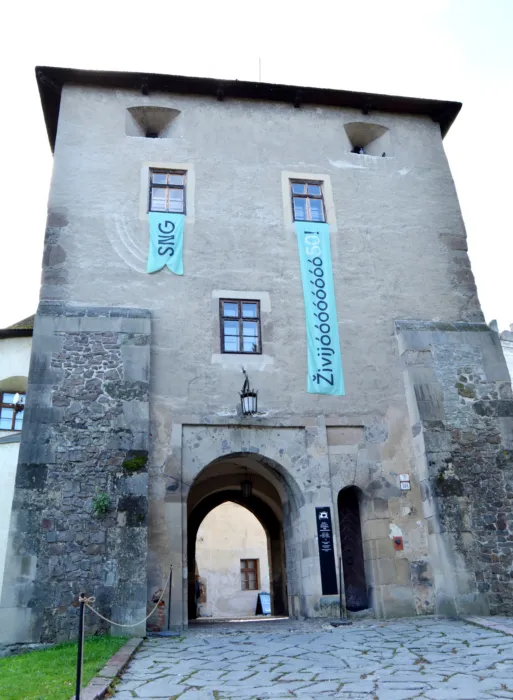
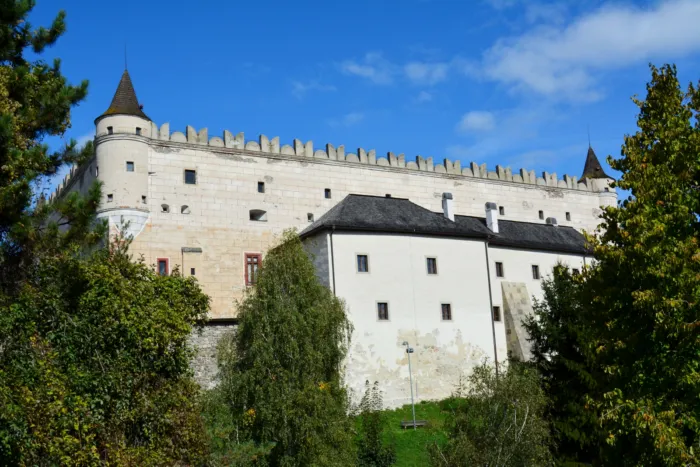
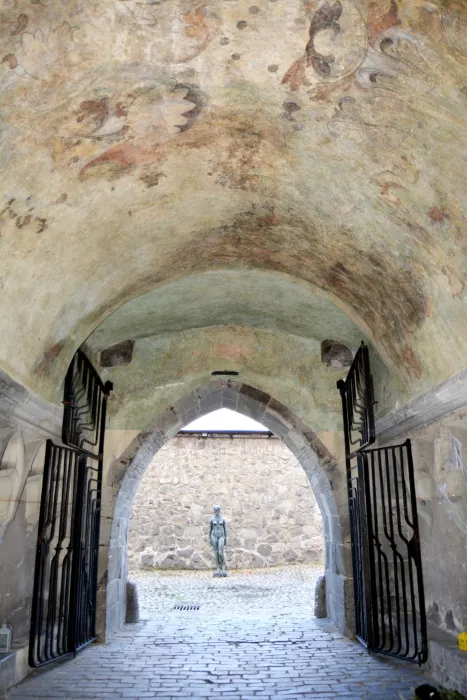
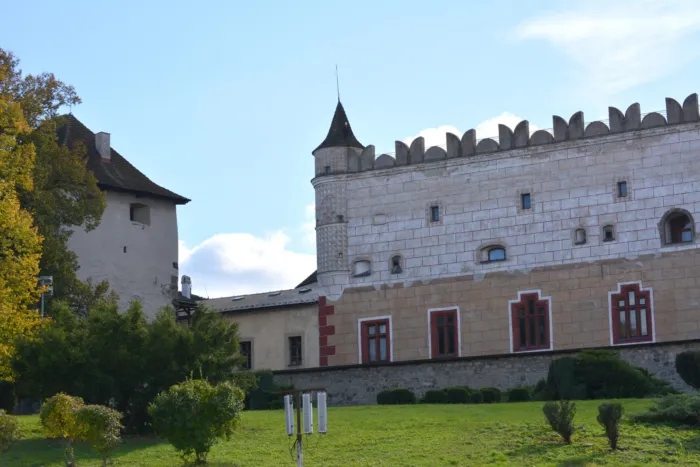
Zvolen Castle
Building, structure
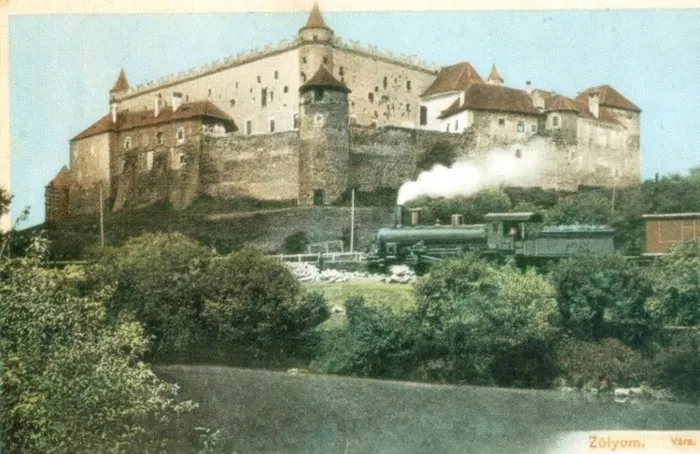
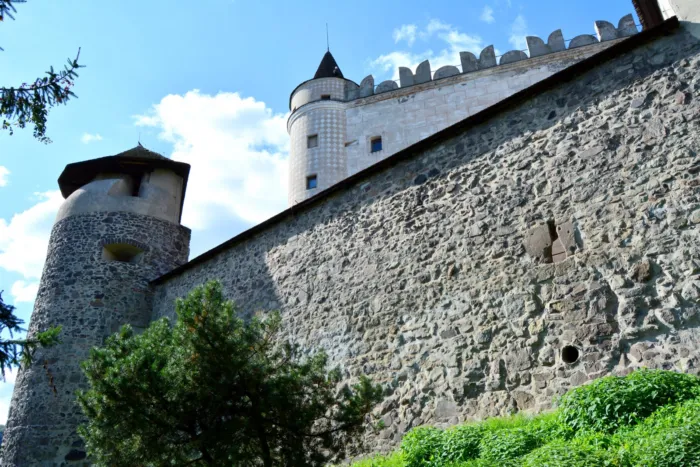
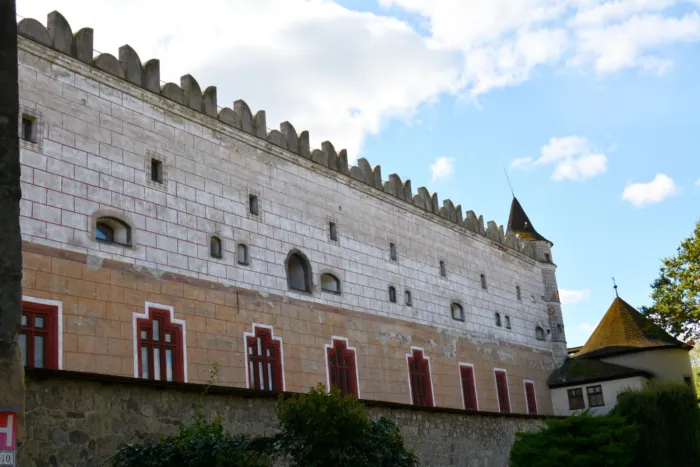
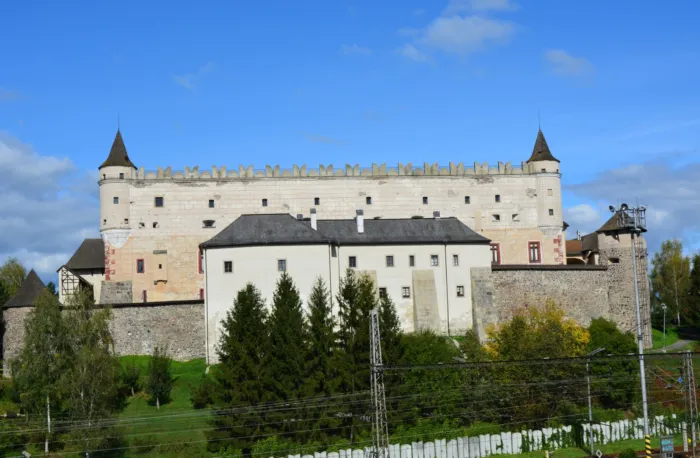
The early history of the Garam River region is lost in the mists of historical times. All that is certain is that the endless forests, as elsewhere in the country, were used by the Árpád rulers as their private hunting grounds, and the sparse population served as forest and game guards. The first documented mention of the Zólyom forest rangers that has survived to this day dates back to 1222, when the Zólyom (later the Balassa family) clan held this royal office. Its earliest known castle is Zólyom – Pusztavár, whose two separate fortifications were built in the middle of the 13th century and the beginning of the 14th century. The historical events of this period can be linked to them. According to the results of archaeological research, the former church, which stood on a small hill near the Szalatna and Garam rivers, was demolished on the orders of King Louis the Great in order to build a castle palace with a regular ground plan in its place. While older research compared it to the noble residences seen in the Italian campaigns, more recent expert opinions see it as a replica of the noble residences that had existed in Central Europe since the 12th century. According to written sources, the Anjou ruler stayed here more and more often from 1357, and the date of completion of the building can be dated to 1364. Its advantageous location, together with Diósgyőr to the southeast, meant that King Louis could easily reach the Polish and Hungarian kingdoms from here. It was within its walls that the Hungarian ruler and the Czech and German ruler Wenceslas IV met in 1379, when they confirmed the marriage of the former's daughter, Mary, to Sigismund of Luxembourg, Margrave of Brandenburg. Shortly before his death, the Polish noble orders paid homage to the ailing King Louis here. In 1424, Queen Borbála Cillei acquired it as a gift from her husband. Later, King Albert of Habsburg also gave it to his wife, Elizabeth, who in 1440, after she was widowed, gave it to the Czech Hussite leader Jan Giskra, who had been called to the country to protect her next-born son, and at the same time appointed him as the chief captain of Košice. The battle-hardened Czech warriors soon brought most of the highland areas under their rule. In 1449, Governor János Hunyadi himself led a campaign against them, but without success, so he had a fortress built on the nearby Strázsa Hill to keep an eye on them. The Czech occupation ended in 1462, when King Matthias Hunyadi came to an agreement with Jan Giskra, who handed over his castles to him. In the following centuries of the Middle Ages, it was owned by the widowed Queen Beatrix and the wealthy Thurzó noble family, the latter of whom built the outer castle walls at the beginning of the 16th century. It was acquired by the Balassa family during the losing Battle of Mohács with the Turks, and as a member of them, Bálint, the greatest Hungarian Renaissance poet of the era, was born here on October 20, 1554. The medieval castle itself was fortified with outer walls and then a huge Italian bastion, but it was no longer a strategically important fortress. Thus, its garrison generally opened the gate to the Transylvanian armies marching against the tyranny of the Habsburg imperial house without a blow of the sword, thus in 1605 the hajdús of István Bocskai surrendered, while in 1619 they surrendered to Prince Gábor Bethlen. At that time, Miklós Esterházy was already the chieftain of Zólyom, whose fortune was rising ever higher due to his advantageous marriages and unwavering Habsburg loyalty. Turkish raiders rarely reached this far, not so the army of the Transylvanian prince György I Rákóczi in 1644. The rebels of Imre Thököly, who had lowered the flag in the Turkish alliance, also occupied it without a fight in 1678, but were forced to surrender after the losing battle of Barsszentkereszt on November 1. The rebels next reached the walls of Zólyom in the autumn of 1682, after the capture of the castle of Fülek, which had been occupied with Turkish help, and which remained in their power until the following year, along with the rich mining towns. Later, Emperor and King Leopold of Habsburg appointed László Csáky as the chieftain of Zólyom, who held his office in the fortress, which was already completely obsolete from a military point of view at that time. This is probably why it was not among the Hungarian castles designated for demolition in 1701. The last military events took place under its walls during the War of Independence led by Ferenc II Rákóczi. In September 1703, the cavalry troops of the Kuruc captains László Ocskay and Balázs Borbély invaded the area of Léva and Zólyom almost without hindrance, but the unsuspecting insurgents were defeated in October by the mercenaries of the imperial general Schlick. On November 15, 1703, the commander-in-chief of the “great prince”, Miklós Bercsényi, appeared on the Zólyom plain with an army of about 15,000 men. Opposing him was the army of Simon Forgách, who was still loyal to the emperor at the time. According to contemporary chronicles, before the battle, in accordance with a custom dating back to Turkish times, two knights from the opposing sides fought each other. László Ocskay, known as the “Lightning of Rákóczi”, clashed with the old frontier warrior, János Bottyán. Both were injured in the pistol shots, and in the battle that unfolded, the insurgents also captured the city. The remnants of the imperial forces locked themselves in the castle, from where Count Forgách secretly fled that very night. The defense fell to the wounded Bottyán, who surrendered the fortress three weeks later, on December 7, in exchange for a free retreat. The flag of the insurgents flew on its walls until October 1708, when the Kurucs, increasingly forced to retreat after the losing Battle of Trenčín, evacuated the mining towns and Zvolen. Fortunately, it was not destroyed after that, and was owned by the unwaveringly loyal Esterházy noble family. The Treasury bought it from them in 1802, and warehouses and offices were placed within its walls. It was used by state offices until the 20th century, and then in 1944 it became the headquarters of the Thalmann partisan brigade fighting against German troops. Monument protection experts began the restoration of the centuries-old walls in the 1960s, in which, nowadays, visitors can see a historical exhibition and an art gallery.