
Embroidery stitches on Zoboralji thread
Cultural heritage
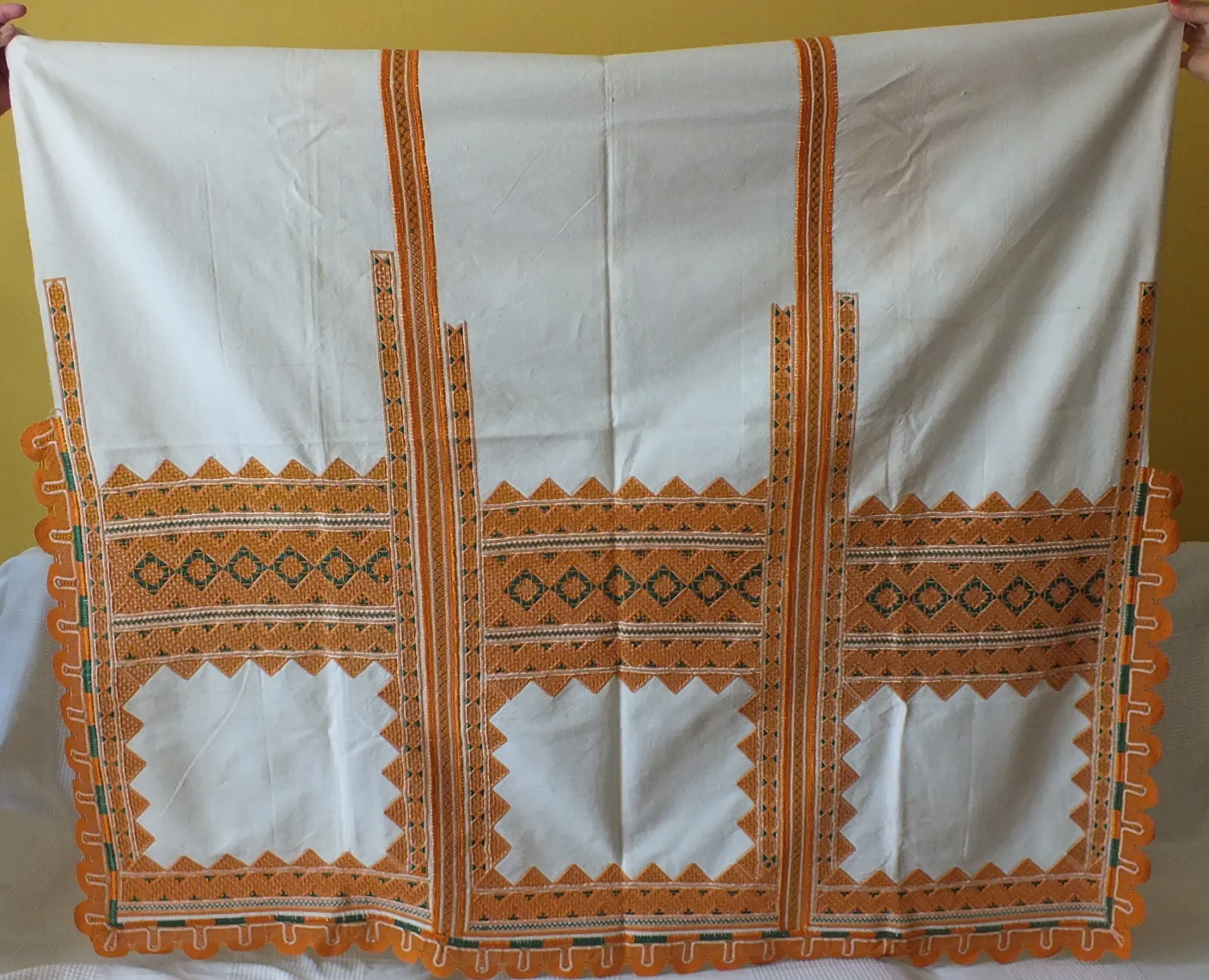
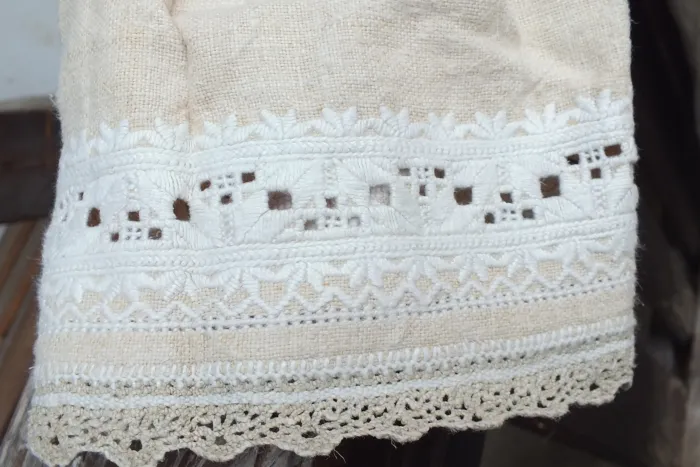
We know as Zoboralj embroidery those pattern compositions decorating women's sleeves and shirt shoulders, which, according to the unanimous opinion of ethnographers studying Zoboralj, developed at the beginning of the 20th century. Of course, there were embroidered shirts in the villages of Zoboralj earlier: the oldest pieces that can still be found and the data related to them date from the second half of the 19th century. Their decoration differs in the northern and southern areas of the region. In the northern villages, the shoulder blade was previously emphasized, which is confirmed by the shirts found in the Hungarian Ethnographic Museum, which Zoltán Kodály collected in Eger-szegen at the beginning of the 20th century2. In the southern villages, however, only the end of the long sleeve was embroidered, and fine examples of this are the long shirts from Pográny from the end of the 19th century, which have been preserved for posterity, for example, in the Pográny Village Museum. The shirt embroideries known today as Zoboralji were formed from a combination of the two.
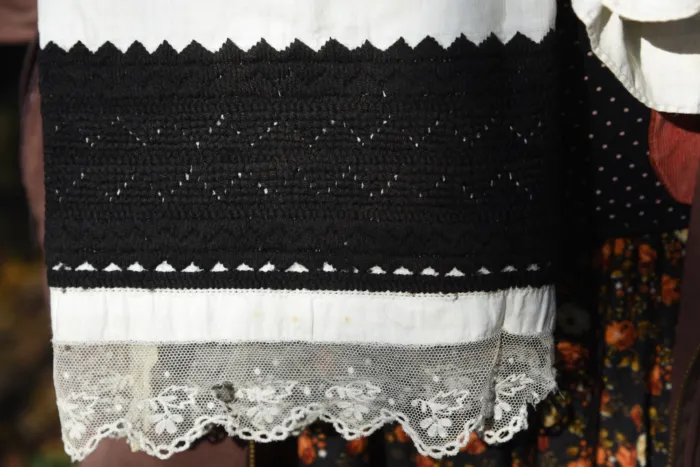
Despite the fact that the canvas embroideries of Zoboralji women's shirt sleeves known today are relatively recent, their motifs do not reveal the method and direction of transmission (as can be seen, for example, in women's headdresses). The pattern treasure also presents a uniform picture only to the outside observer, a more thorough knowledge distinguishes the patterns of the micro-regions (villages of Vízmeg, Hegymeg, and the northern and southern villages of the region) and the compositions found on the sleeves. The pattern treasure and compositions of the northern areas are richer, more varied, and more colorful. (For example: the hamka or hamkó pear tree and the dense lace are typical patterns of northern villages.)
The “post-writing váhegy” or the solid embroidery of the shirt shoulder also enriched the pattern treasure of northern villages and shows affinities with the folk costume of the Slovak regions further north. It is characteristic that among the embroidery of women’s shirt shoulders from Zoboralj, Slovak literature also considers this.4
In northern villages, one or more rows of additional patterns were always sewn above the lower pattern composition of the sleeve (patterns on the side and around it). On the northern side, the patterns also began to become colorful earlier.
In southern villages, patterns embroidered with cvern (homemade linen thread) or blue dye (dyed yarn) remained longer. By the time the colorization had reached this part of the region, the stripping began and then was completed.
The use of decorative sheets ended even earlier (after the 2nd World War), but the richly embroidered pieces are still preserved (even in modern houses) in the depths of the cupboards, waiting to be given a new function. Even in the middle of the 20th century, the women of Zoboralj were still weaving, but the material of the linen was no longer hemp, but a mixture of hemp and cotton or pure cotton.
The shirts and embroidery patterns of Zoboralj today constitute the living folk art of Zoboralj with a changed function.
The local value of old embroidered textiles that had lost their function is shown by the fact that they tried to keep them alive in a new form. For example, The embroidered pattern of the men's shirt is found as a tablecloth insert: the two edges of the fabric were worked together with the embroidery of the sleeve; at the same time, for example, a man's shirt embroidered by a farmer was clearly sewn from the saffron-embroidered bedspread, probably for stage performances. The wearing of the narrow-sleeved short shirts, which have become common today, therefore lasted for a maximum of 3-4 generations in their original function.
Despite the fact that the canvas embroideries of Zoboralji women's shirt sleeves known today are relatively recent, their motifs do not reveal the method and direction of transmission (as can be seen, for example, in women's headdresses). The pattern treasure also presents a uniform picture only to the outside observer, a more thorough knowledge distinguishes the patterns of the micro-regions (villages of Vízmeg, Hegymeg, and the northern and southern villages of the region) and the compositions found on the sleeves. The pattern treasure and compositions of the northern areas are richer, more varied, and more colorful. (For example: the hamka or hamkó pear tree and the dense lace are typical patterns of northern villages.)
The “post-writing váhegy” or the solid embroidery of the shirt shoulder also enriched the pattern treasure of northern villages and shows affinities with the folk costume of the Slovak regions further north. It is characteristic that among the embroidery of women’s shirt shoulders from Zoboralj, Slovak literature also considers this.4
In northern villages, one or more rows of additional patterns were always sewn above the lower pattern composition of the sleeve (patterns on the side and around it). On the northern side, the patterns also began to become colorful earlier.
In southern villages, patterns embroidered with cvern (homemade linen thread) or blue dye (dyed yarn) remained longer. By the time the colorization had reached this part of the region, the stripping began and then was completed.
The use of decorative sheets ended even earlier (after the 2nd World War), but the richly embroidered pieces are still preserved (even in modern houses) in the depths of the cupboards, waiting to be given a new function. Even in the middle of the 20th century, the women of Zoboralj were still weaving, but the material of the linen was no longer hemp, but a mixture of hemp and cotton or pure cotton.
The shirts and embroidery patterns of Zoboralj today constitute the living folk art of Zoboralj with a changed function.
The local value of old embroidered textiles that had lost their function is shown by the fact that they tried to keep them alive in a new form. For example, The embroidered pattern of the men's shirt is found as a tablecloth insert: the two edges of the fabric were worked together with the embroidery of the sleeve; at the same time, for example, a man's shirt embroidered by a farmer was clearly sewn from the saffron-embroidered bedspread, probably for stage performances. The wearing of the narrow-sleeved short shirts, which have become common today, therefore lasted for a maximum of 3-4 generations in their original function.