
Zichy-Ferraris Castle
Building, structure
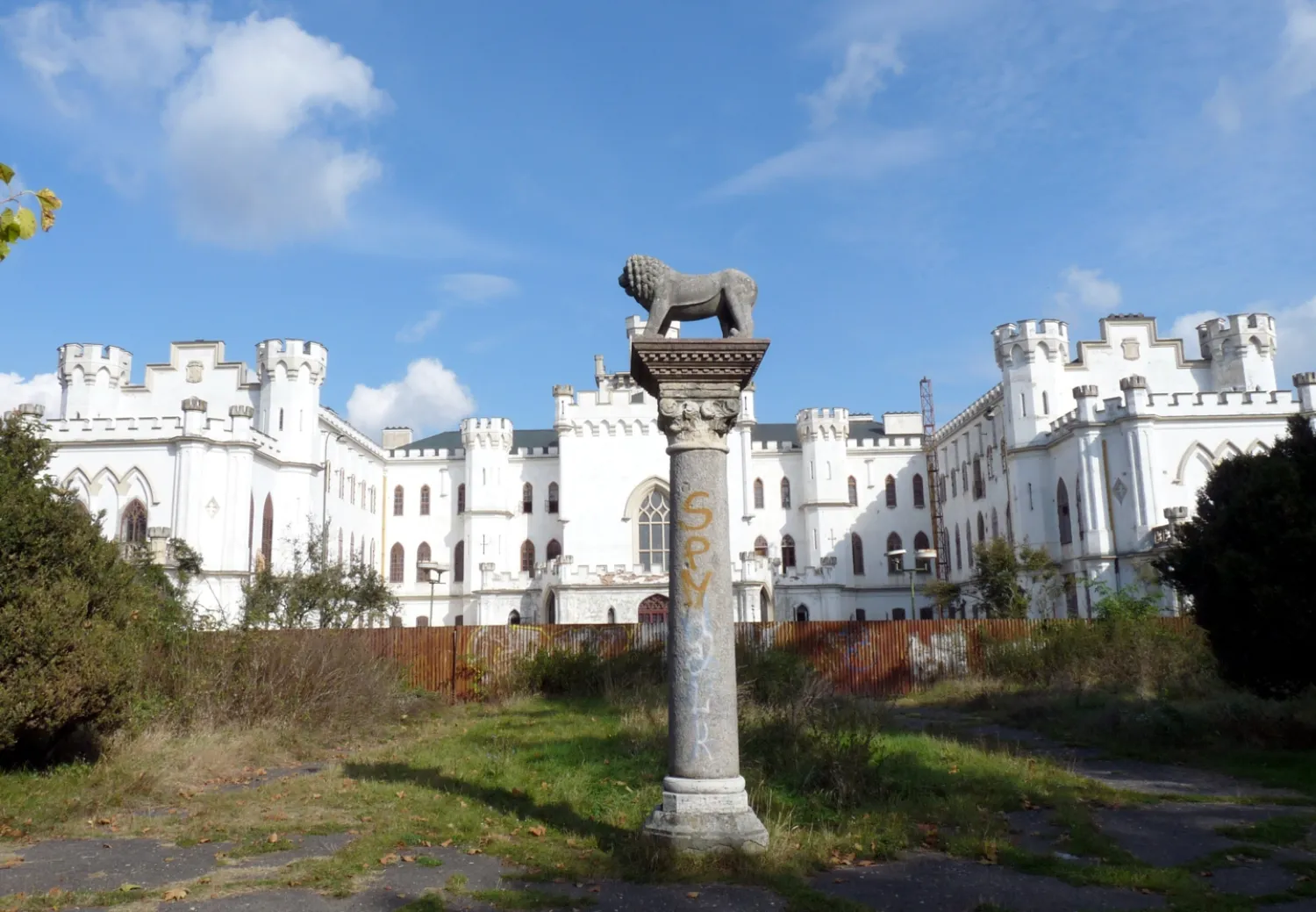
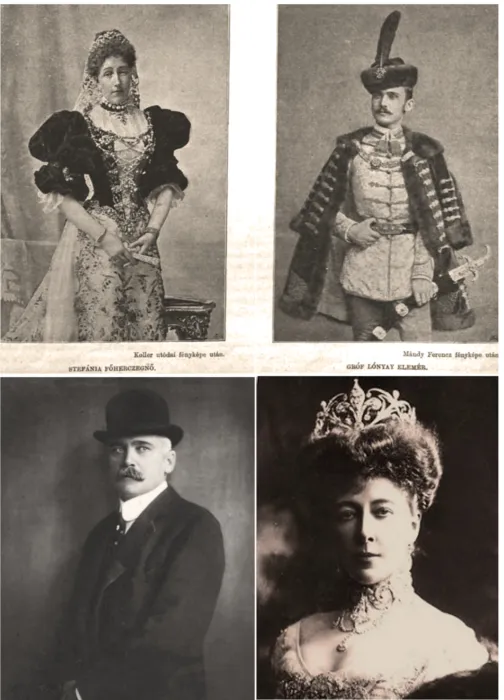
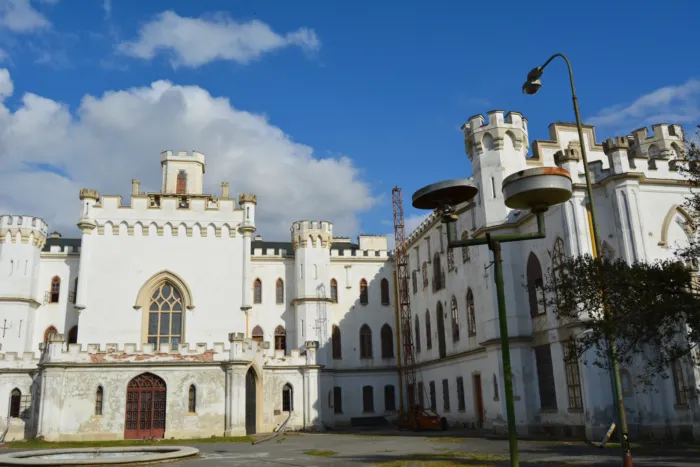
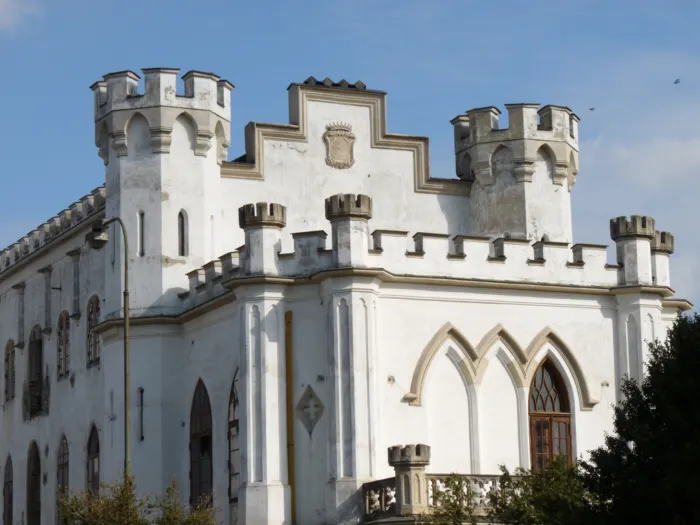
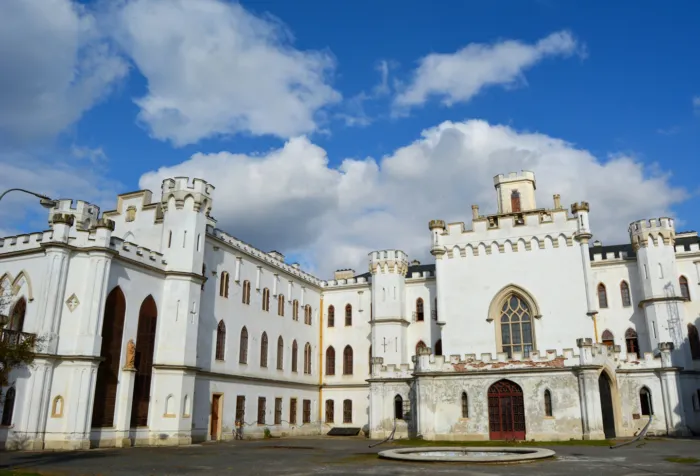
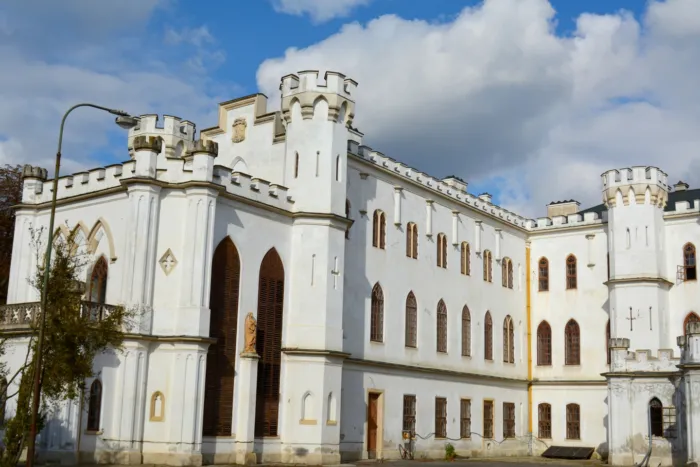
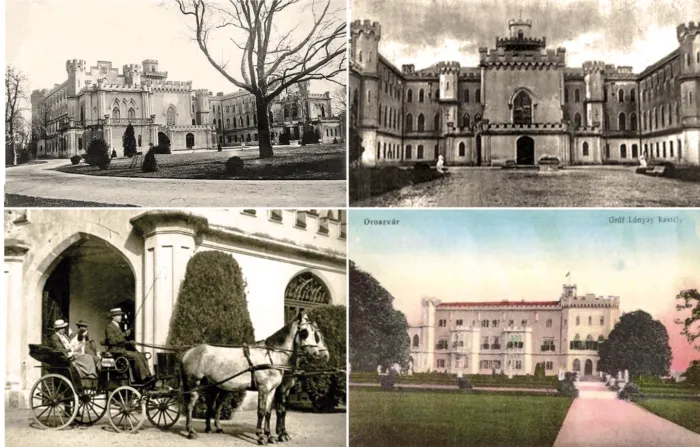
Behind a gated, dilapidated brick fence, shady, ancient trees protect a huge, snow-white, English Gothic-style castle. ; Between 1841 and 1844, in just three short years, the originally Baroque manor house was rebuilt, becoming the first Tudor-style nobleman's castle in Hungary. The reason for the Anglo-Maniac design was the client, Count Zichy-Ferraris Emánuel (1808-1877), i.e. the wife of Count Manó Zichy, the English Lady Charlotte Stachan, who was known as a fabulously beautiful woman, Count Zichy adored her and built Oroszvár for her. The woman also supposedly loved the "Hungarian Windsor", but she did not live happily here until her death. She met Count Mano Andrássy, fell in love with him, and left her husband to follow her love to Africa, Egypt, and India. But in vain, she returned home and committed suicide. Her husband buried her in the Calvinist church on Kálvin Square in Budapest. The sad count closed and sold his beautiful Oroszvár castle, and moved his headquarters to Somlószőlős, where he also built an English castle – which today also belongs to the estate….. ; Hugo Henckel bought it in 1872. After many other owners, in 1906, Count, later Prince Elemér Lónyai, landowner and diplomat, bought Oroszvár. His wife was the Belgian royal princess Stefania, who was the wife of Crown Prince Rudolf, heir to the Austro-Hungarian throne, until Rudolf’s suicide in 1889. Stefania – after whom the Stefania of Pest and Bratislava were named – was an aristocrat with a sad fate before she met Lónyai. Her parents raised her strictly, with little love, they gave her to Rudolf as a child, her husband cheated on her forever, then infected her with a venereal disease, so she could not have children after having one little girl. He was hated in Vienna, and Elisabeth - in a not very friendly way - called him Trampeltier, which means camel, tramp. Later, she was also blamed for her husband's suicide. Thus, when she married a Hungarian count of lesser rank in 1900, it was not difficult for her to part with her Belgian royal title and her father's still meager friendship. However, practically all contact with her daughter was severed, and Franz Joseph took over her upbringing. It is also interesting that after Rudolf's death, her father, King Leopold II of Belgium, and his father-in-law, Franz Joseph, tried to arrange for the heir to the throne not to marry Zsófia Chotek, but they were unsuccessful. However, the friendship was able to remain, as the Habsburg princely couple were later frequent guests in Oroszvár. Stefania lived happily married to Elemér Lónyai for nearly 50 years. They spent the winter in Oroszvár and the summer in Bodrogolaszi, near Sárospatak. ; During the First World War, there was a military hospital in Oroszvár, but the Second World War put an end to the idyll for good. The old princes had to flee, they were given refuge in Pannonhalma, and Princess Stefania died there in August 1945. She is buried in the abbey's crypt with her husband. As early as 1944, they left all their movable and immovable property to the Abbey, along with the estates of Bodrogolasz and Oroszvár. Oroszvár - being located on the border of three countries - also had estates in Austria, which, according to the prince's will, already belonged to the Hungarian Benedictines. ; Oroszvár has belonged to Slovakia since 1947. According to the Benes Decree - which speaks for itself - the castle was nationalized by the Slovak state as the property of the "Belgian princess of Hungarian nationality" and has considered itself the rightful owner ever since, despite the clear provision of the legally pure will. Pannonhalma has been persistently suing the hopelessly hostile Slovak state for the ownership of Oroszvár since 2002. In 2012, the renovation costs were estimated at 33 million euros, which would certainly prove to be insufficient, as the house is constantly deteriorating. ; Today, a 2-meter-high, rusty corrugated iron fence surrounds the building, a row of socialist realist stalls at the back enhances the view, dogs guard the illusion of renovation, there is no actual work being done, the castle is in decline, what works efficiently, right?… Hopefully, the wood paneling, paintings, plaster stucco, and colored glass are still there, and they will wait heroically until its rightful owner finally wins the lawsuit, renovates it, and provides the castle with a worthy function. ; You can walk around the castle. Some hideous statues suggest socialist use, as does the inner courtyard, which is concreted from the inside, but the old plane trees stand, as do the walkways surrounded by boxwoods and yews. ; ; Although the commemorative plaque for the laying of the foundation stone speaks of the demolition of the old castle, it is likely that the foundation walls of the previous, baroque castle with a cour d'honneur were dug up, and the new castle was built using this in 1841-44. Its plans were drawn by the Viennese architect Franz Beer, and the construction was supervised by the Bratislava master builder Ignác Feigler. The ceremonial and symbolic laying of the foundation stone - probably with significant progress in the works - took place on June 11, 1843, in the presence of distinguished personalities. The castle, which is a pioneer in the English style, is characterized by a peculiar duality: its traditional, cour d'honneur basic layout – which seems to be a legacy of the predecessor building – contrasts with its architecture striving for a picturesque effect. Its "castle-like" appearance is ensured by a flat roof plane, the embrasure parapet of the main cornice, and the corner turrets with embrasures located at important points of the building. A ribbed-vaulted carriage driveway connects to the ground floor of the central projection, the upper floor of which is a terrace with an embrasure parapet. The relatively small tower, which crowns the box-like central block of the building, tapering in two steps, is rather timid and does not exploit the potential of the architectural form. Its solution is similar on a more modest scale to that of the castle in Frauenberg (Hluboká, Czech Republic), also designed by Franz Beer. The castle-like form is more typical of “ecclesiastical Gothic”, combined with latticed balconies and pointed arched openings, of which the rear window of the great hall, overlooking the park, is the most impressive. The spacious main staircase located in the central projection plays an important role in the interior of the building, both in terms of location and artistic design. Inside, the two-flight staircase resting on pillars is accompanied by a wooden railing carved with Gothic motifs, and its space is covered with Gothic-style, but flat wooden ribs. The middle of the rear wing of the floor is occupied by a two-story high great hall. Its design is extremely rich: its walls and ceiling are covered with wooden paneling with hanging arches and pointed arches, and its large, pointed arched window is filled with colorful inlays. The special decoration of the hall is the high artistic standard panel cycle embedded in the wooden paneling, evoking the world of the age of chivalry. The hall rests on cast iron supports located in the lower room. The other rooms are decorated partly with wooden cladding and partly with stucco ceilings. The former library is located on the ground floor, where the carved wooden ceiling – in keeping with the iconography of the room’s purpose – features relief busts of writers and poets. (The Lónyay Library’s materials (about 8,000 books) and the family’s archives were moved to the Pannonhalma Main Abbey Library in 1945.) The original plan of the castle indicates a star-vaulted chapel at the end of the left wing. At the beginning of the 20th century, when Count Elemér Lónyay owned the castle, there was also a lavishly furnished Turkish room. The landscape-like castle park is separated from the highway by a fence, and a porter’s lodge stands next to the entrance. Opposite the main facade of the castle, in its main axis, a column crowned with a lion statue was erected sometime after the turn of the century, and a sunken parterre was created near the main building to enliven the former uniform landscape garden. An octagonal-planned water tower with a loophole parapet and a Gothic-style flower house were erected in the park, with Roman stones inserted into the walls of the latter. In the mid-19th century, a famous garden belonged to the park.