
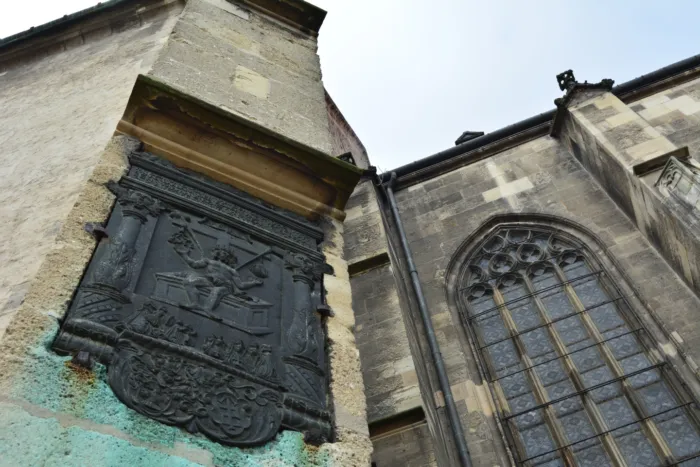
Epitaph of Borbála Widman
Cemeteries, tombstones, graves
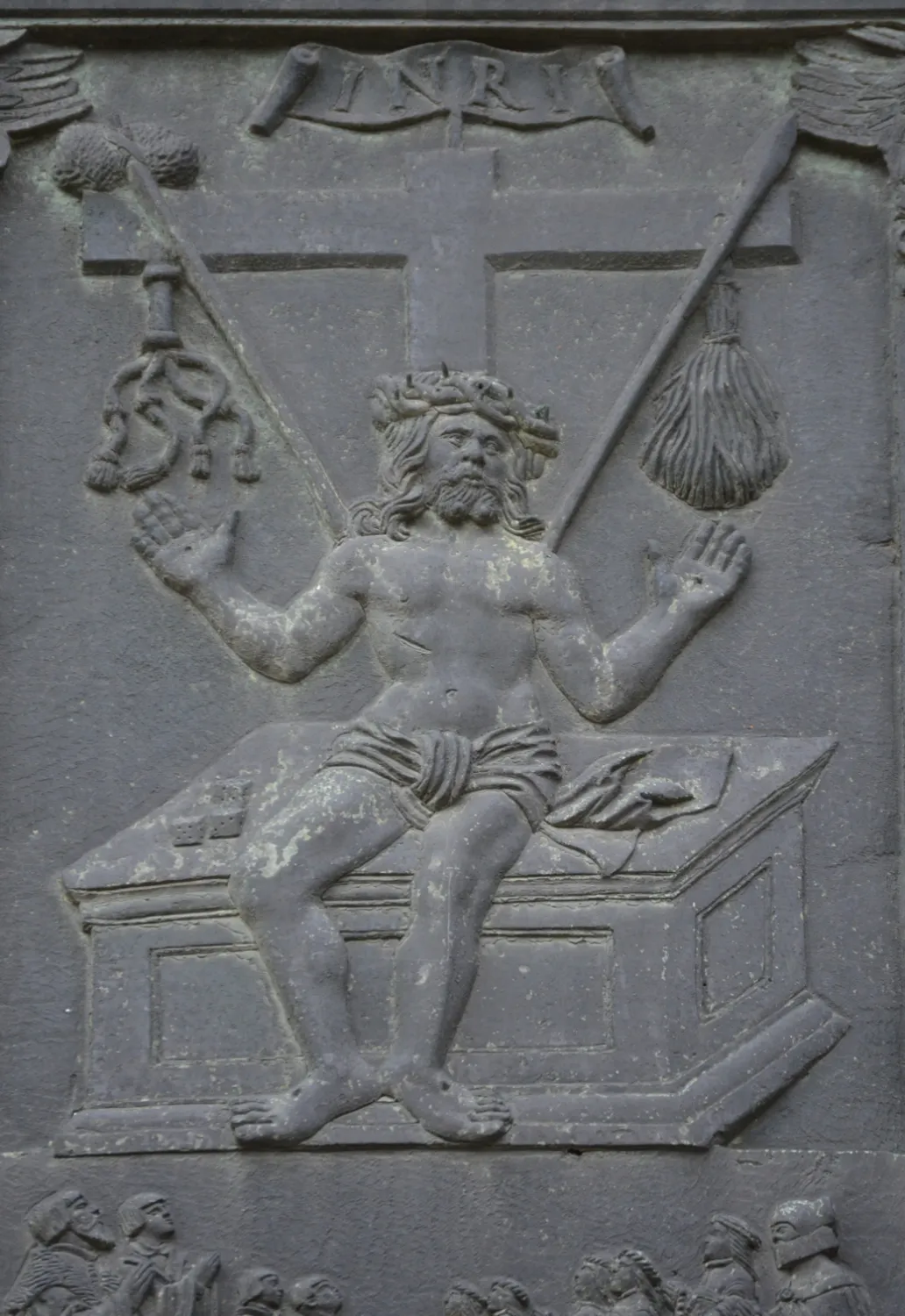
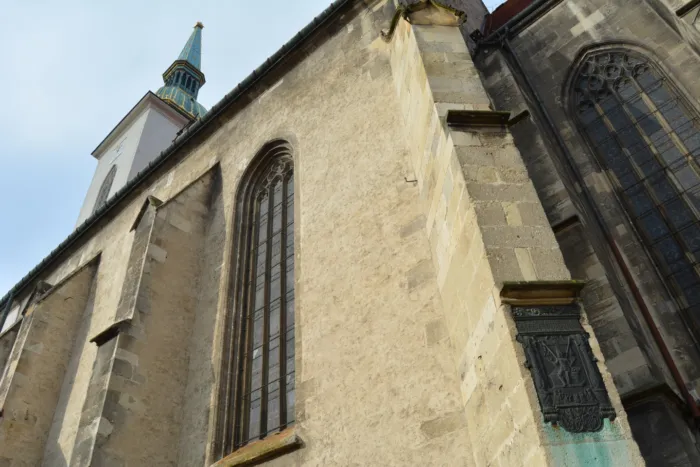
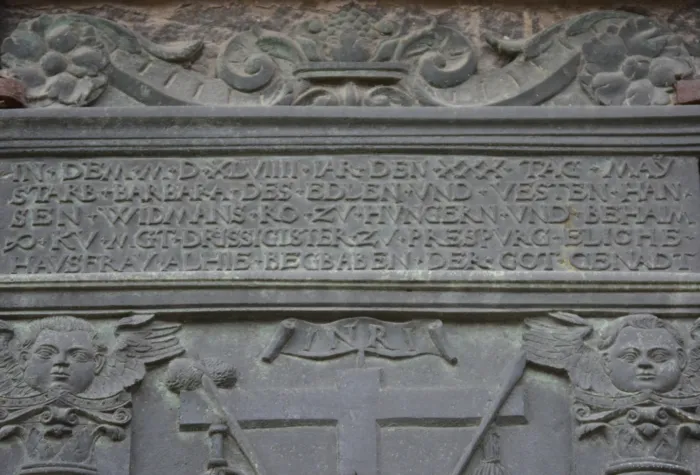
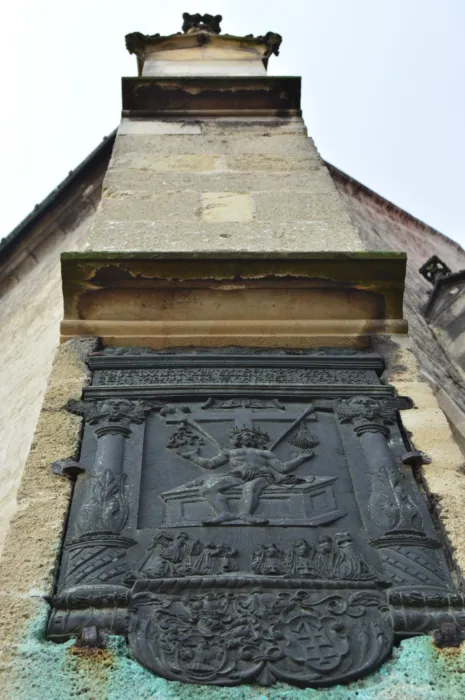
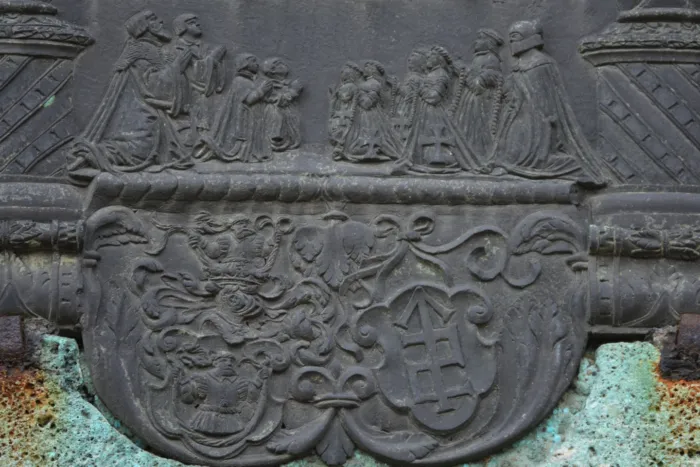
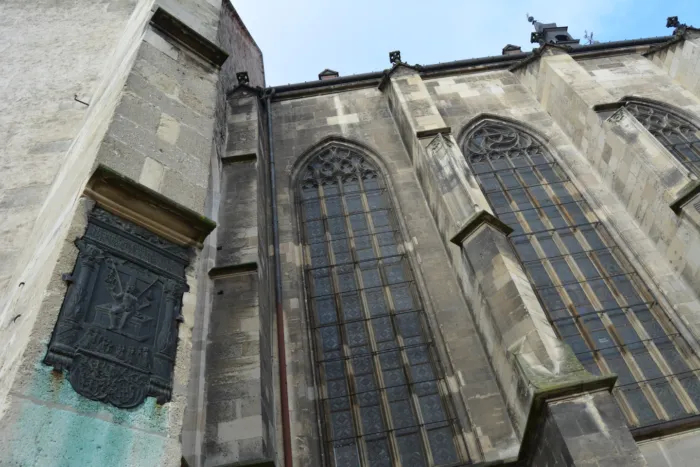
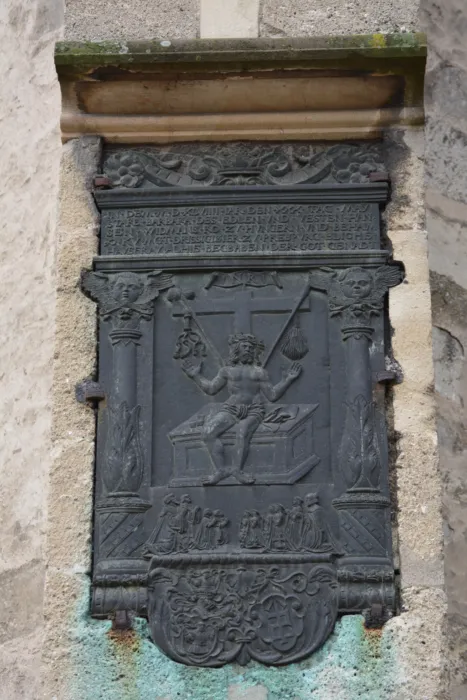
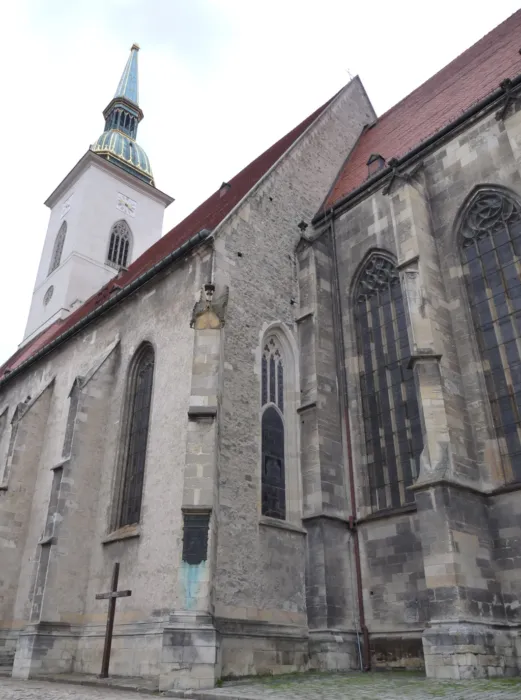
Several tombstones and epitaphs can be seen along the walls of St. Martin's Cathedral. The oldest of them is the epitaph of Borbála Widman (Barbara Widman), who died on May 30, 1549. ; Gyula Pasteiner writes the following about her: ; (The epitaphs) "mostly consist of two fields, which are enclosed by the architectural frame. One field is filled with an eloquent epitaph, the other has a relief work, which depicts the deceased and his relatives, as if they are kneeling at the feet of the crucified or suffering Christ and praying. Most of the relief works are finely crafted, the figure of Christ testifies to anatomical knowledge, the deceased and his relatives have individual features, are surprisingly characteristic figures and realistically show the attire of the noble and bourgeois class of that time. Four of the tombstones in the Coronation Church in Bratislava belong to this group. The bronze monument of Borbála Widman is from 1548, the work of an artistically less initiated hand, in its field, enclosed by two Renaissance columns, the suffering Christ sits on a coffin and at his feet two men, two boys, two women and four girls kneel and pray." ; (Note: The inscription on the epitaph is not from 1548, but from 1549.) ; ; An epitaph is a decorative tablet erected in memory of the deceased, which is not always directly connected to the grave. The composition and construction of the epitaph had its own rules. (Gyula Pasteiner also refers to this above.) ; - In addition to the date of death, the inscription provides information about the "social status" of the deceased and his family. The social rank is also indicated by the double coat of arms placed at the bottom. The family of the deceased is depicted in the kneeling mourners. ; The population of Bratislava during this period was largely German-speaking, which is why the tablet was written in German (and not Latin).